

Preparing Cities for the Future
What to learn from You Say Amsterdams‘ inclusive city strategy
Preparing Cities for the Future: What to learn from Amsterdams' inclusive city strategy?
The City of Amsterdam and its creative sector are bouncing back from the Covid19 crisis through innovation. Maximizing resources already present, and strengthening the sector in years to come – aims cities in Europe share in the attempt to re-built better, especially if focusing carbon neutrality by 2050. In Europe around 80 cities are UNESCO Creative Cities focusing the cultural creative industries as driver for revitalizing the urban communities after the Covid-19 pandemic.
We, at the City of Amsterdam, want to prepare our city for the future by the focus on inclusive city strategies for a creative, diverse, fair and green community. But where do we start? And where do we want to go to concretely? In this piece we outline the major elements of our inclusive city strategy for the years to come and hope they are inspirational for all cities in finding their ways.
Where do we start?
When people think of Amsterdam, they often think of our rich cultural heritage and a thriving creative sector. From our museums to our cultural incubators, from festivals to the facades of centuries-old canal houses splashed with art projections. Arts and culture are present at every corner of this city. Even after sunset, in our lively club scene.
Home to some of the most forward thinking entrepreneurs and creatives, Amsterdam is a natural testbed for startups as well as a magnet to some of the world’s best-known creative brands. The region offers a strong support system and collaborative spirit that’s ideal for driving growth, while local connections between businesses, investors and universities are strengthened by its frequent community meet-ups.
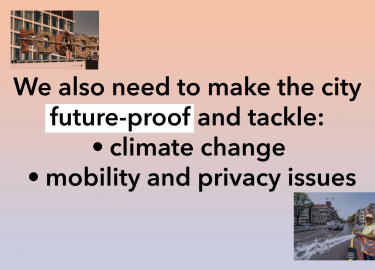
The pandemic has had an immense impact on the creative sector of Amsterdam. It underscored existing urban problems such as inequality of opportunity and in representation. To top these challenges, we need to make the city future-proof in times of climate change, while finding answers for urban mobility- and privacy issues.
Elements for the inclusive city strategy
Digitalization
Due to lockdowns, digitalization and innovation got a head start. Inspiring makers and cultural institutions to discover new uses of digitalization and online business models. We want to use this momentum to make our cultural sector more future proof. Attracting broader audiences and extending the reach of culture and the arts.
Inclusion and diversity
Amsterdam’s unique character and culture have been shaped by its diversity. Already before the pandemic, our city’s cultural and creative sector emphasized inclusion, diversity and participation. Working on solidarity, strengthening intercultural connections by making diversity and our collective cultural heritage more visible and accessible.
Sustainability
We’re making museums and theaters future-proof in times of energy crisis and climate change. It’s a must. Particularly for those institutions housed in historical buildings. In general we are dedicated to making our cultural heritage more sustainable. And we’re supporting the Amsterdam festival scene to turn circular. The Amsterdam fashion industry is also committed to sustainability and innovation.
Education
Our ecosystem for interdisciplinary and multidisciplinary arts education is an unique breeding ground for creative students and talent. By supporting cultural education in schools Amsterdam encourages access to arts and culture for all young children
Tackling urban challenges with creativity
We invited creative minds to come up with innovative solutions and design methods for our city’s social challenges. Artists and other creatives contribute by using their vast imagination and unorthodox approaches.
A livable and creative city for everyone
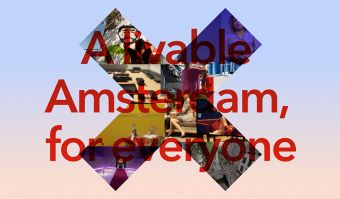
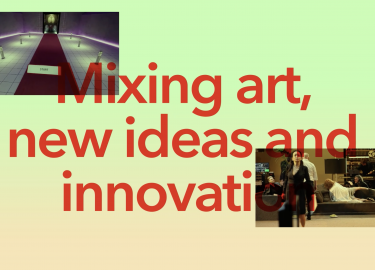
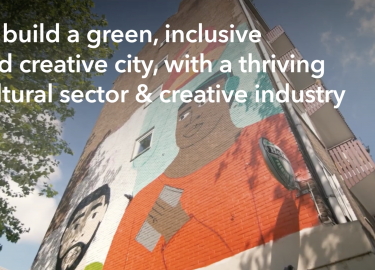
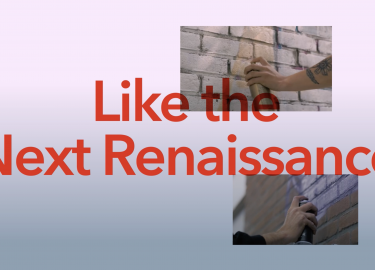
Together with citizens, visitors, education & knowledge institutes and businesses, we mix art, new ideas and innovation to a unique blend of new technology and creativity. Studying the impact of technology on our city and translating the latest developments into new policies and investments. Like a new 21th Renaissance. The 14th century Renaissance partially succeeded due to its embrace of the sciences and arts after recovering the plague. So in these equally unprecedented times, we might find insights to positively alter cities for generations to come. Together we strive for an open, green, creative and inclusive city. A livable city, for everyone.
Sources
All pictures on this page are taken from the City of Amsterdam’s promotion video, which was especially prepared for the Next Renaissance Project. It can be downloaded below.
Copyright: City of Amsterdam
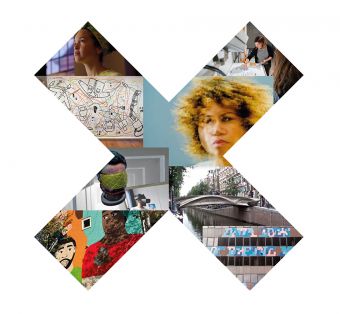
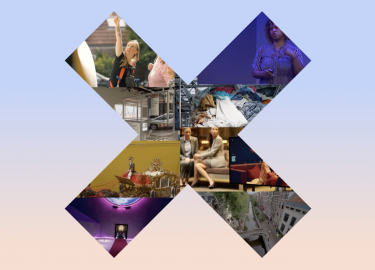
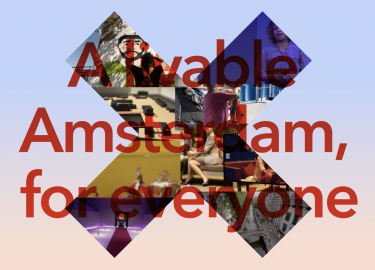
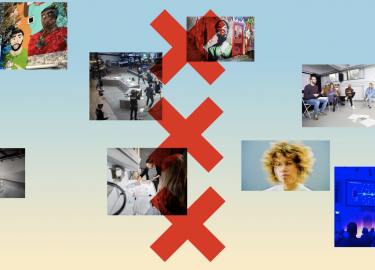
Captions & Sources of the pictures in the Cross Visual underneath the header above are as following:
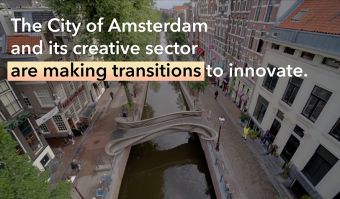
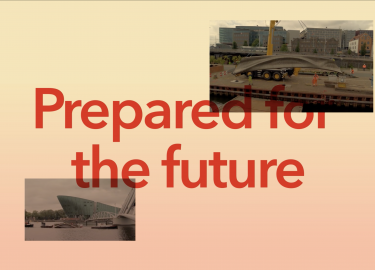
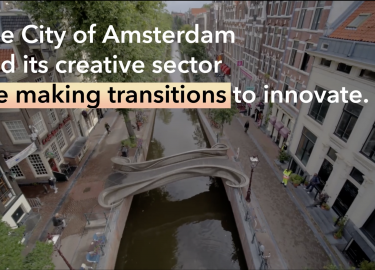
Expositions Gouden Koets & Refresh (artwork: Elisa van Joolen) at Amsterdam Museum; virtual reality artist Ali Eslami during ‘Digitale Daadkracht’; Privacy Project by Street Art Museum Amsterdam (SAMA) – artwork York One; Installation ‘Amsterdam Senses’ at NEMO’s studio developed by the Responsible Sensing Lab (credit DigiDaan); futurist Karen Palmer opening the festival ‘Me Myself & AI’ at cultural centre Felix Meritis; world-first 3D printed 12-meter long stainless steel pedestrian bridge crossing one of the Amsterdam’s canals designed by Joris Laarman and printed by MX3D; Privacy Project by Street Art Museum Amsterdam (SAMA) – artwork Oxenmystic.
City of Amsterdam
You Say Amsterdam, we say creativity & innovation
When people think of Amsterdam, they often think of our rich cultural heritage and a thriving creative sector. From our museums to our cultural incubators, from festivals to the facades of centuries-old canal houses splashed with art projections. Arts and culture are present at every corner of this city. Even after sunset, in our lively club scene.
Home to some of the most forwardthinking entrepreneurs and creatives, Amsterdam is a natural testbed for startups as well as a magnet to some of the world’s best-known creative brands. The region offers a strong support system and collaborative spirit that’s ideal for driving growth, while local connections between businesses, investors and universities are strengthened by its frequent community meet-ups.

Transformation & European-African cooperation- A podcast
Game-thinking, Gamification and Digital Transformation experts
A podcast about Transformation & European-African cooperation
Bethlehem Anteneh and Christoph Deeg got to know each other during a workshop on the transformation of cities through game mechanics in Addis Ababa. This was the beginning of an intensive, international cooperation and a special mutual transformation process. In this podcast the two talk about their common path, their view of transformation and whether the European-African cooperation means special opportunities for transformation processes. It’s a podcast about transformation, gamification, cooperation, learning, failure and life.
Bethlehem Anteneh
Game-thinking expert and Founder of BlueLeaf and PlayLab
Bethlehem Anteneh is a game-thinking expert with an architectural design background who uses games as tools to design environments, frameworks and processes that elevate human perception, experience and problem-solving-instinct. In this field, she has worked by managing various projects, conducting workshops, speaking/talks, and designing platforms with partners, organizations and universities internationally in 25+ countries around Africa and Europe being invited in happenings such as Gamescom Congress, AmazeBerlin, DeutscheWelle, Electronic Arts, ZKM-Karlsruhe, etc. After being the Game-Thinking Lead in 15 African countries on the project ‚EnterAfrica-Gamify Your City Future!‘ with the Goethe-Institut, she’s currently consulting the GIZ on learning experience design (LX) and curating the first of its kind gaming convention in Addis Abeba with the Goethe-Institut amongst other major projects such as ‚LUtopia: Rethinking the City of Ludwigshafen‘. She had co-founded an international and national play-based networks and companies such as ‚Chewata-Awaqi‘ and recently founded BlueLeaf & PlayLab; an entity bringing together GAME-Thinking, ART-thinking, and FUTURES-Thinking.

Christoph Deeg
Consultant and Speaker for the topics of Digital Transformation, Gamification & playful participation
Christoph Deeg describes himself as a “designer of the digital-analog living space”. He is a consultant and speaker for the topics of digital transformation, gamification and playful participation. In this context, he advises and supports national and international companies and organizations in the development of comprehensive and sustainable overall digital-analog strategies. He also deals with the strategic use of gamification, for example in the context of digital transformation processes, urban development or the development of digital-analog cultural strategies. Another focus of his work is the development of participation processes using analog and digital games or game models. The basic idea behind his work is the idea that digitization is not essentially about technologies, but about people with their individual digital-analog realities.
