

What does it mean to be human in the age of artificial intelligence?
European Commission
What does it mean to be human in the age of artificial intelligence?
Introduction
A friend of mine recently complained that ever since his 14-year-old son Jacob downloaded the new social networking app TikTok, he can’t seem to get away from it. My friend says he hasn’t seen this happen to his son before. What has actually been happening with Jacob and his relationship with the new app? Researcher Jason Davis, who has looked into TikTok in detail, describes it very well. Once Jacob started the app, he didn’t have to define his favourite topics or hobbies. The AI algorithms immediately went to work and started analysing Jacob’s behaviour and his emotions. They figured out what he liked and disliked. What he can stand to look at and what he quickly skips over. They started offering him all sorts of content and soon they knew Jacob better than Jacob knows himself. They knew with incredible precision which videos would engage James and which wouldn’t. What content would evoke a positive or negative emotion in him. And this is exactly what plays the most important role in the new type of economy we call the attention economy. Our time and our attention is of great economic value to digital platforms and their advertising partners, as is knowing our likes and activities.
You might say to yourself, I don’t care because I don’t use TikTok and I’m not going to. It’s just that TikTok is just a small and fairly innocuous illustration of something big and transformative that affects us all. Artificial intelligence will radically change our lives and our society. This change, which has in fact already begun, will most likely be the most profound and rapid change humanity has experienced in its existence. We need to start talking about it. Among experts, politicians, but also ordinary people. This change will affect everyone.
The question in the title of this text, which has been asked by philosophers and religious figures for hundreds, perhaps even thousands of years, does not resonate well with ordinary people. But that is likely to change in the next few years. Artificial intelligence, which is entering our lives and the functioning of society at rocket speed, will make us think about what defines a human being and what we already consider to be a machine. We may have to define some new categories that will be intermediate between man and machine. Artificial intelligence is a technology that is, in fact, for the first time in the history of mankind, entering us directly and has the potential to change not only man, but also the society in which we live. In his book Life 3.0, Max Tegmark calls for a broad discussion about the future of humanity and calls it the most important conversation of our time. But it is not just a discussion for elites. It will have to involve virtually everyone who cares about our future and wants to shape it. It is possible, even likely, that we will see more significant changes over the next ten years than we have seen in the last hundred years. This is well illustrated by this year’s report on neuro-technology by the United Nations Educational, Scientific and Cultural Organisation (UNESCO) Commission on the Ethics of Technology. In this report, the members of the Commission call for a review of fundamental human rights. Human rights were defined more than 70 years ago, primarily as the protection of citizens from dictatorial regimes. According to the authors, this is no longer sufficient and people must also be protected from technologies that have the ability to alter our thinking and enter human consciousness.
Good intentions will not protect us from transformational change
Artificial intelligence is already much better at tasks that are narrowly defined, such as recognising images, graphic patterns, sounds, and processing large data sets. Human intelligence still has the upper hand in a number of cognitive and emotional tasks, in the ability to generalise, or to diametrically change the topics it deals with in a fraction of a second. But how long will this be the case? We don’t quite know yet, but we do know that billions of euros are being invested in the world’s largest laboratories in the development of so-called general artificial intelligence that could match human intelligence on these complex issues. However, one thing is already quite clear. The interconnection and interaction between human and artificial intelligence will become a normal part of our lives. It may not even be necessary to use the future tense, as some hybrid systems already exist today. For example, to compensate for various cognitive disorders, so-called AI-based cognitive enhancers are already being used today. They are designed to treat multiple diagnoses and so Alzheimer’s patients have a good chance of seeing their condition improving soon. But what is to prevent these tools from being used on a large scale for ‚recreational‘ purposes? After all, who wouldn’t want to have a better memory, creativity or learn a foreign language faster?
Until now, humans have used their cognitive abilities based on genetic makeup, or on elaborate methods to support our thinking. This means that even the non-wealthy with good cognitive abilities were able to apply themselves in any place in society. In the future, however, this may not be the case. Technology may create a class of super-humans with abilities hardly comparable to those genetically determined. And we’re still not talking about human-brain-computer interfacing, or brain implants. These are not the fantasy and fiction of novels, but a reality being tested in laboratories and companies today. They can significantly help in the treatment of neurological diseases, but they can also lead to so-called digital immortality, in addition to a special class of super-humans. This means that after physical death, our thoughts, memory, and parts of consciousness will be able to exist in virtual space and become immortal. Are we ready for this? How will this change our society? Coping with the challenges associated with new AI-based technologies will require expanding the traditional dialectic of risks and opportunities and viewing them in a broader societal context.
The struggle for human emotions is becoming the struggle of the 21st century
We passionately debate whether machines can have emotions and if so, what they would look like. What we completely miss is that artificial intelligence algorithms are already much better at decoding and influencing human emotions than we are. Couple this with insights from the behavioural sciences, which show that up to 85% of our decisions are based on emotion, and we can see the breadth and depth of the problem we face. How we make decisions defines us as individuals, and our collective decision-making defines our society. Whether it is making a decision in a free and direct election, deciding to buy a product, deciding on a life partner, or any other of hundreds and thousands of decisions, depends on emotions. If someone, or something, is controlling or manipulating our emotions, are we still free people? Liberal democracy and the free market are essential features of our society. But what happens to them if the free decision-making that underpins them is not free? It will not be free because the emotions that are central to decision-making will be manipulated.
Again, we can fall back on innocent intentions that can lead to problems. In the beginning, there were algorithms whose job is to keep the client engaged as long as possible with some content that is mostly „free“ and thus with the accompanying advertising that someone pays for. Artificial intelligence, which sets the algorithms, is defined as a system capable of observing its surroundings and then making autonomous decisions. Artificial intelligence has observed that negative, hateful, often deceptive content attracts people more, and so it naturally makes the decision to offer controversial content more often in order to keep people’s attention longer. One of the negative, and at the beginning probably unintended, consequences is the spread of untruths and the polarisation of society. It is certainly not the only reason for this unhappy state of affairs, but it is certainly one of the important ones. Another unfortunate impact that nobody expected, and one which we still do not fully understand, and which is most likely linked to the digital transformation, is the explosion of mental illness in children and young people. Over the last decade, this is an increase of between 15% and 25%.
Creativity is no longer just the domain of humans
Years of digitisation of cultural content have led to unprecedented accessibility and personalisation. Today, people can watch cultural content from anywhere and at any time. At the same time, the boundary between the producer of cultural content and its consumer is gradually blurring. Artificial intelligence, which first entered the field of art and culture through personalisation of offerings and preference tracking, is now connecting, reproducing and even creating new artistic products from cultural content—music, visual art and text. At the same time, it opens up completely new horizons for artists and scientists that were unknown to them. The question of whether “machines” will become artists is becoming ever more intense. Some today radically reject it, but in all likelihood we will soon also see in art and science a fusion of the human and the „machine“, produced by artificial intelligence.
Psychological resilience will be key to life with artificial intelligence
The entry of artificial intelligence into society will bring a great deal of change to everyday life and work. Many jobs will disappear, many new ones will be created. We are already seeing a growing momentum of change in work, and this will only accelerate. This will involve the need to change established ways of working and living and to learn new skills much more frequently than has been the case to date. However, change is stressful for people. The beginning of the 21st century has clearly brought us a global pandemic of stress, and we are only at the very beginning of epochal change. Psychological resilience, the ability to cope with stress and change, will become the most important skills for people in the future. Just as we have become accustomed in recent decades to the normality of going to the gym or playing sports and strengthening our bodies, we will quickly have to get used to the need to strengthen our spirits and become psychologically resilient. This will be a shared responsibility between the education system, employers and each person individually. Emotional skills such as empathy, compassion and mindfulness, which are relatively little talked about today, will gradually come to the centre of our attention.
Conclusion
stop it. The benefits of artificial intelligence for humanity are indisputable and will be enormous. Our task is not to underestimate its transformative potential but to grow with it. We must have the courage to change ourselves and society and find new qualities in the relationship between technology and man. If we try to preserve society as it used to be, it may have unforeseeable consequences for all of us.
Vladimir Šucha
Head of European Commission Representation in the Slovak Republic
Vladimir Šucha is a Head of the European Commission Representation in the Slovak Republic since 2022. Before he was a senior policy adviser at UNESCO, detached from the European Commission. He was in the leading positions of the Joint Research Centre – a scientific and knowledge service of the European Commission since 2012. Before he spent 6 years in the position of director for culture and media in the Directorate-General for Education and Culture of the European Commission. Before joining the European Commission, he held various positions in the area of European and international affairs. Between 2005 and 2006, he was director of the Slovak Research and Development Agency, national body responsible for funding research. He worked at the Slovak Representation to the EU in Brussels as research, education and culture counselor (2000-2004). In parallel, he has followed a long-term academic and research career, being a full professor in Slovakia and visiting professor/scientist at different academic institutions in many countries. He published more than 100 scientific papers in peer-reviewed journals.
Dr. Jean–Philippe Gammel
Director for Talent Management & Diversity – DG Human Resources at European Commission, Brussels
Jean-Philippe Gammel has been an official of the European Commission since 2008. He has held various positions, including as a member of Cabinet of the Commissioner for Education, Culture, Youth and Sports. He is currently advising the Director for Talent Management and Diversity. He has been leading the office of Vladimir Šucha, when Vladimir was the Director-General of the Joint Research Centre. They also co-authored a report on the longer-term impacts of Artificial Intelligence published in April 2021. Before joining the European Commission, Jean-Philippe was the manager of several technical assistance programmes for South-East Europe and Russia in the Council of Europe. He has also been a visiting professor on European affairs in many universities including Sciences Po Strasbourg, the Centre Européen Universitaire or the Ecole Nationale d’Administration (ENA).

Renaissance 4.0: a vision of the cultural and creative industries
Professor of Music at Université Côte d’Azur, Nice
Renaissance 4.0: a vision of the cultural and creative industries
What can universities contribute to rebuilding society by a novel mix of arts and science?
Europe is currently going through an unprecedented crisis. In addition to the economic, demographic and migratory challenges that have traditionally been part of the reform of this large territory, the last decade has seen the addition of the climate challenge and the upheaval linked to the COVID-19 health crisis. By now, Europe has moved into what is known as the 4th industrial revolution, a new way of organising by combining a networked organisation and digital and collaborative development tools with the means of production in the real world. The European society, multicultural and cosmopolitan, is facing a new deal characterised by new technologies such as artificial intelligence and the virtualisation of sensory experiences. Major scientific advances coincide with new global issues. Faced with these doubts, society must question its traditional categories and rethink its objectives and its organisation.
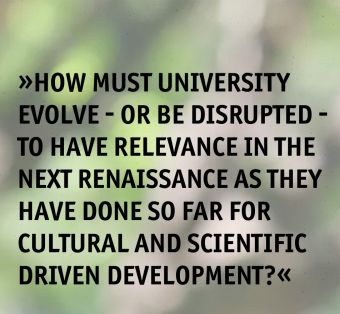
Access to resources becomes a fundamental issue. The liberation and concentration of energies is an essential pillar of any strategy and any initiative. The collective, the local anchoring, becomes fundamental not only to reactivate the creative forces, but also to ensure to minimise their environmental impacts and to refocus the questioning of tomorrow’s production modes on the human, on the sustainable. Towards a more inclusive, resilient society. Towards a more shared academy. Towards a meeting where several platforms, several laboratories, in direct access, cohabit and share their information, and several ecosystems come together by mixing artistic and scientific perspectives. The great thinkers of the historical Renaissance had established this spirit of rupture, this capacity to embrace both the rigour of artistic thought and the formidable intuitions of scientific rationality. What does this imply for the future of universities? How must university evolve—or be disrupted—to have relevance in the Next Renaissance as they have done so far for cultural and scientific driven development?
Changing universities at the rupture of artistic and scientific perspectives
It is in this context and in order to respond to new challenges that Université Côte d’Azur has decided to undertake a profound transformation of its organisation. It has identified cross-disciplinary scientific axes to allow for multidisciplinary encounters. It is directly involved in the New Renaissance: the Arts and Sciences research program, for example, has been a driving force for the development of cross-disciplinary thinking around the history of art and the avant-garde, the practices of the performing arts, musical creation and composition, and the use of new technologies and digital technology. Thus, artistic creation is associated with the creation of new tools and new technologies, allowing the incubation of new projects, such as in music composition research, including a Cotutelle with Hamburg and the film In minimis maxima, a cross between artistic film-making and archaeological research. Innovating universities—as we are doing here at Université Côte d’Azur—is a prerequisite for an active form of creative research and transdisciplinarity.
Evolving new educational forms for a Renaissance in Europe
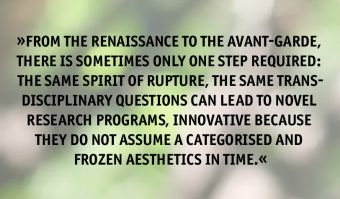
From the Renaissance to the avant-garde, there is sometimes only one step required: the same spirit of rupture, the same transdisciplinary questions can lead to novel research programs, innovative because they do not assume a categorised and frozen aesthetics in time.There are in expressionism and futurism, in dada and fluxus, eerily premonitory resonances with the trajectories of today. “Relaunching the Avant-Garde” is one such new educational format, questioning the typical modes of production of the historical avant-garde and the new avant-garde of the 1960s.
Here the collective creation experiences of yesterday become the Creative Labs in free access, in open source, a common reflection on artistic creation and research in a world in crisis. Our daily life is now full of art and design. The number four touches all experiences: the revival 4.0, 4D cinema, 4D sound. The border between the real and the virtual, between the tangible and the digital, now immediate, needs to be probed.
Evolving organisational education structures—and what novel technologies have to do with it
The COVID-19 crisis gave birth to this grouping of researchers within Université Côte d’Azur around this simple idea: Sometimes experiences in extended reality (XR) require the implementation of new technologies, new methodologies, so we move from the interdisciplinary to the transdisciplinary: to propose the vision of a common project, a common work in order to consider new experiences of existence. Probing the continuum between the real and the virtual, these forms of immersivity require a high level of expertise, transdisciplinary, and its exploration using innovative technological platforms AND Université Côte d’Azur has set up a novel research centre dedicated to extended reality (XR2C2). This cooperative dynamic questions narrative as well as performativity, the formalisation of uses, curatorial practices as well as the effects of training and rehabilitation.
Another innovative mix of science and arts driven by new technologies is the Virtual Reality for Gender Equality in Education (RevEGO) project. It works against gender inequality and discrimination in digital domains and in particular in the field of education and career guidance. The Project Perception Toolbox for Virtual Reality (INRIA) allows the creation of visual perception experiences in virtual reality, with a research purpose but also a reading aid for people with low vision.
Experiences of Université Côte d’Azur teach us that education and research starts local, and they led to society matters.
Such radical intersections of artistic and scientific experiences—as at U7+ Alliance of world universities and Université Côte d’Azur—should lead the whole of society to immerse itself in a reflection on otherness, on a certain form—in the aesthetic sense—of vision of the world, so that art can, at times, revive the place it once occupied in the Camerata Fiorentina. Or as it was described in Henri de Saint-Simon’s The Artist, the Scientist, the Industrialist (1824), „It is we, artists, who will serve as your vanguard: the power of the arts is indeed the most immediate and the most rapid. We have weapons of all kinds: when we want to spread new ideas among men, we inscribe them on marble or on canvas; we popularize them by poetry and song; we employ alternately the lyre or the galoubet, the ode or the song, the history or the novel; the dramatic stage is open to us.”
Damien Ehrhardt and Hélène Fleury recall the extent to which the great figure of Alexander von Humboldt prefigured the current challenges of history. By combining science and aesthetics, by associating observation, artistic fascination and understanding of the world, Humboldt was one of the great operators of transdisciplinarity, of the connection between the fields of knowledge, learning and art, by reviving the spirit of humanism. The place of science, art and technology in our societies is fundamental, and even more so when it is aimed at education. In a digital, globalised environment, thinking about this next Renaissance also means, paradoxically, giving meaning to local energies, to the forces that combine in proximity and in education, mutual aid, and local culture.
Today’s organisational challenge to empower novel creations in a Next Renaissance is that a global university such as Université Côte d’Azur must, first of all, interact at the level of local authorities to federate the players, to develop techniques of knowledge and education in direct access, so that everyone can access the data and the tools to transform tomorrow’s society. It is to all of these challenges that we are responding. To quote Saint-Simon again, „the power of imagination is incalculable when it takes off in a direction of public good.”
MORE INFO ON UNIVERSITÉ CÔTE D'AZUR
Université Côte d’Azur is an experimental, research-intensive multidisciplinary university. It was created out of the desire of research centers and major educational establishments to build a university with exceptional academic potential that is creative and humanistic. It is developing a strategy based on both excellence and interdisciplinarity, which places it in the top 3% of the world’s universities and makes it one of France’s 10 major research-intensive universities (IDEX label).
Jean-François Trubert
Professor of Music at Université Côte d’Azur, Nice
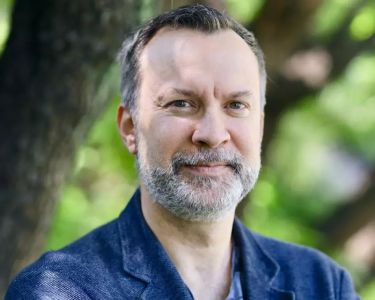
Jean-François Trubert’s work focuses on the creative process of music, especially in contemporary opera and new music theater, but also in multimedia and digital environments, with an emphasis on the question of gesture and its relationship to the aesthetic form of the works. His research include the works of Kurt Weill, Luciano Berio, Mauricio Kagel, and Georges Aperghis. Former Dean of the Graduate School of Arts and Humanities “CREATES”, he is a member of the Transdisciplinary Center in Epistemology of Litterature and performing Arts (CTEL), and founded a interdisciminary Center for Research and Creativity in Extended Reality at Université Côte d’Azur. He is co-director of the collection Arts, Cultures, Pouvoirs at Presses Universitaires de Savoie-Mont Blanc, he is involved in research projects founded by the National Research Agency and European Council Europe Creative. He has published in the Brecht-Yearbook, the journals filigrane, Dissonance and in the Contemporary Music Review, as well as in collective works.
Picture: © C.A. MACARRI université d’Azur

For the word and freedom, one industry stands for free discourse
Represents interests and is central service provider of the German book industry

For the word and freedom, one industry stands for free discourse
This text is a joint contribution of several colleagues at the Börsenvereinsgruppe.
„A conversation presupposes that the other person might be right.“ With this statement, the philosopher Hans Georg Gadamer formulated the basis for respectful interaction. It is a basic prerequisite for a lively culture of debate and indispensable for a democratic opinion-forming process. The book industry has set itself the task of promoting this process and making younger generations aware of its importance. Recently, the discussion about the stand of a right-wing publisher at the Frankfurt Book Fair 2021 showed that a constructive exchange of opinions cannot be taken for granted and that the current climate of debate in our society is highly heated.
This debate was triggered by the call for a boycott by the black German author Jasmina Kuhnke, who stated that she did not feel safe due to previous racist threats caused by the presence of a publisher from the right-wing end of the spectrum at the Frankfurt Book Fair.
She cancelled her participation in an event at the book fair and called on other participants to do the same. Some authors followed her example; others demanded to participate in the Frankfurt Book Fair for this very reason: in order to show their face there and stand up for diversity and against racism. While the traditional media such as print, TV and radio took a differentiated view of the issue, a wave of indignation broke out on social media. On the one hand, this helped that right-wing publishing house to receive a great deal of attention, whose content would otherwise hardly have been disseminated at the book fair. On the other hand, it overlapped the reporting and discussion of other topics at the book fair, leaving little room for a diverse range of topics.
It also became clear during those days in October 2021 that the limits of freedom of expression that apply to our society must be constantly re-discussed.
The Corona crisis also reinforced existing divisive tendencies in our society. During the pandemic, society’s ability to discourse was under particularly high pressure. Expressions of opinion that, under certain circumstances, deviated from the unanimous majority view or ran counter to a vocal minority provoked an aggressive backlash. Riots at demonstrations and physical attacks on reporters in public spaces were just as alarming as the hate and incitement to violence on social media. Germany moved down two places in the 2021 press freedom ranking.


TOGETHER FOR FREEDOM OF EXPRESSION WORLDWIDE
The Börsenverein Group, which consists of the Börsenverein des Deutschen Buchhandels and its subsidiaries Frankfurter Buchmesse GmbH, MVB and Mediacampus, sees as one of its core tasks to defend the freedom of the word as an elementary human right and to guarantee freedom of expression as a prerequisite for freedom of publication and literary diversity. To allow different opinions and currents as long as they remain within the bounds of the law, and to argue one’s own values, is, in the view of the Börsenverein, the right way forward in a pluralistic and democratic society.
At the same time, freedom of expression is under threat from the state in many countries. In an increasing number of countries around the world—be it Saudi Arabia, Turkey, China, Russia, Belarus, Egypt or Vietnam—people are persecuted, imprisoned or murdered simply because they criticise the actions of the government. But in Poland and Hungary, countries in the European Union, free reporting is also restricted.
Publishers and bookstores in Germany stand up for persecuted authors, publishers and booksellers worldwide. The Börsenverein sees it as its task to draw attention to the fate of persecuted cultural workers and to call on the political leaders in Berlin and Brussels to consistently stand up for freedom of expression.
#MehrAlsMeineMeinung
/ #MoreThanMyOpinion
In May 2021, „Freedom of Expression Week“ was held for the first time. Especially in times of pandemic, the Börsenverein felt the time was ripe for a deeper examination of freedom of speech. Together with partners, the association organised a major celebration from May 3 to 10 for the freedom of the word, the value on which everything the book industry stands for is based. Under the motto „More than my opinion,“ around 40 partner organisations took part, including Amnesty International, Reporters without Borders, the Goethe Institute and Eintracht Frankfurt, along with many prominent supporters such as Wolfgang Niedecken, Susanne Fröhlich, Jagoda Marinic and Michel Friedman. The media response from radio to television to print was great. There were also many reactions on social media, most of them very positive.
Central to this week—which will now take place annually and be expanded internationally—was a dialog about the prerequisites and limits of a free and diverse society. The content of the Freedom of Expression Week was based on the Charter of Freedom of Expression. Signing the Charter is a commitment to recognise the eleven principles set out in it, to act in accordance with them and to carry them into one’s own environment and network.
As special places of cultural encounter and social exchange, bookstores moved into the public eye. They positioned themselves as places of freedom of expression: „We booksellers can do a lot to improve the culture of debate in our stores: by making the spectrum of opinions on controversial topics visible in our product range or by organising events that explicitly invite controversial discussions. This is how bookstores can become places of freedom of opinion,“ says Michael Lemling, managing director of the Lehmkuhl bookstore in Munich and spokesman for the Börsenverein’s freedom of opinion interest group.
„We want to promote critical debate and differentiated opinion-forming that uses the power of arguments rather than polemics,“ says Alexander Skipis, Chief Executive Officer of the Börsenverein des Deutschen Buchhandels. “This is the hour of civil society. Let’s work together to ensure that all people can express their opinions freely and without fear, and in such a way that a constructive exchange of ideas emerges from it that moves us forward as a society. Freedom of expression is the driving force of our democracy. Thanks to it, all citizens can have their say in addressing the problems of our time. But we don’t have freedom of expression per se; we have to make use of it every day.“
BOOKS THAT EXPLAIN THE WORLD
Another component of the Group-wide commitment to free discourse is the German Nonfiction Book Prize, which was also awarded for the first time in 2021. The Stiftung Buchkultur und Leseförderung (Book Culture and Reading Promotion Foundation) of the Börsenverein awards this prize to the nonfiction book of the year (Deutsche Sachbuchpreis). The prize is awarded for outstanding nonfiction books written in German that provide impetus for social debate.
The judging criteria are the relevance of the topic, the narrative power of the text, the way it is presented in generally understandable language, and the quality of the research. The nonfiction prize, worth a total of 42,500 Euros, will be awarded at a ceremony in Berlin. It is intended to raise awareness of nonfiction books as a basis for conveying knowledge, forming well-founded opinions and providing impetus for public discourse.
“I can’t imagine a world without books that explain the world. Nonfiction books do just that, and sometimes they even change the world, or at least make it a little better,“ says Margit Ketterle, publishing director of nonfiction at Droemer Knaur, a member of the German Nonfiction Book Award Academy.
Equally important in this context is the role of reading promotion. The group’s reading promotion activities, such as the German Book Trade’s reading competition, the Book Kindergarten Seal of Approval, and campaigns for World Book Day, focus on communicating the joy of reading and awakening reading motivation.
Reading is a basic prerequisite for education, personal development, professional success and creative participation in society. Nowadays, this social participation is more important than ever if we, as individual members of our society, are to actively combat social division and be involved in social debates throughout our lives. In 2021, Stiftung Lesen and the Börsenverein therefore initiated the National Reading Pact, which aims to improve reading promotion in Germany with more than 150 partners. The kick-off event was the National Reading Summit on March 3, 2021.
Conclusion
The Börsenverein des Deutschen Buchhandels (German Publishers and Booksellers Association) and its business enterprises are united in their support for a culture of open debate and create offerings to strengthen the freedom of expression. In doing so, they make a significant contribution to social participation. After all, in order to emerge stronger from a crisis—in line with the Renaissance 4.0 and to enter a new era together with innovative ideas—the Börsenverein group believes that responsible citizens and readers are needed who identify reliable sources, recognise fake news as such, and want to live in an open culture of debate. Everyone should have the opportunity to play a part in tackling our collective challenges in a goal-oriented way. For the word and freedom.

Börsenvereinsgruppe Germany
The Börsenvereinsgruppe represents the interests and is the central service provider of the German book industry. From political work and cultural projects to trade fair organisation, training and continuing education, publishing and technology services, it bundles service and educational offerings for the book and media industry. The group consists of the Börsenverein des Deutschen Buchhandels (German Publishers & Booksellers Association) and its three business subsidiaries:
The Frankfurt Book Fair annually organises the world’s largest book fair in Frankfurt am Main as well as international conferences and represents the German book industry around the globe with joint stands. MVB, a technology and information provider, enables publishers and bookstores in Germany and abroad to market their titles successfully and efficiently with its central platforms based on international metadata standards. mediacampus frankfurt is the central training and continuing education provider for specialists and managers in the book and media industry.
Picture: © Rainer Rüffer


Decolonial Thinking vs. The White Savior Industrial Complex (a Podcast)
Founder of Fashion Africa Now, interdisciplinary fashion curator,
creative producer & African fashion advocate
Decolonial Thinking vs. The White Savior Industrial Complex
Colonialism is over, but the colonial continuities are still present. Colonial reappraisal is still in its infancy and, following the Black Lives Matter movement, is increasingly calling for clarification. In the cultural landscape, there is an increasing presence of the topic, but the media and textile and clothing industry still show restraint. In the fashion and design scene, approaches with a decolonial orientation have developed in recent years that critically question the fashion and design system. A booming fashion scene in Africa and its diaspora is gaining more and more international attention, breaking stereotypes, doing away with clichés and reclaiming narratives. What is the role of African fashion and design aesthetics in decolonisation? In an increasingly fast-paced world where tradition meets modernity and innovation is unstoppable, a new interplay is beginning.
How can a European rebirth be shaped today? The active work of decolonial thinking is a first step to create a new definition and awareness to give space to sustainable and equal perspectives. One approach is deconstruction.
The values and history of design are taught through a Eurocentric canon, accepting work predominantly by European and American male designers, which forms the basis of what is considered „good“ or „bad“. This authority has the effect of undermining the work of non-Western cultures and people from the Global South so that, for example, Ghanaian textiles are classified as craft rather than design. Classifying traditional craft as something other than modern design deems the history and practice of design of many cultures inferior. We should strive to remove the conflation of craft and design in order to recognise all culturally important forms of making.
Redefining old ways of thinking
It is necessary to break down and redefine old ways of thinking. That is why we are reclaiming the narrative: A new generation of designers of African origin are rethinking contemporary „African fashion“. A self-confident self-image and an aesthetic from an African perspective is presented—beyond the (neo)colonially influenced thought patterns and beauty norms. This is the beginning of „Deconstruct Fashion“. That means the breaking open and reinterpretation of fashion. A new confrontation, historical and contemporary, guided by BIPoC (Black, indigenous and people of colour) perspectives. It is important to understand the origin of African indigenous fashion and the traditional aspects in order to interpret it correctly. Due to its universalist thinking, the previous design rhetoric excludes and ignores alternative productions of knowledge.
Actively and critically engaging with the history of colonialism will open our eyes to how power structures have shaped contemporary society and how they dominate our understanding of design and aesthetics. The realisation that capitalism is „an instrument of colonisation“ and therefore almost impossible to truly decolonise in Western society.
Beatrace Angut Lorika Oola
Founder of Fashion Africa Now, interdisciplinary fashion curator, creative producer & African fashion advocate
Beatrace Angut Oola has spearheaded the conversation around inclusivity, curated exhibitions, for example „Connecting Afro Futures. Fashion x Hair x Design“ together with Cornelia Lund and Claudia Banz (Kunstgewerbemuseum Berlin, 2019), has realised fashion shows, initiated POP UP formats, moderated talks in Germany and worked on knowledge exchange projects in African countries and has also championed best in class practitioners in the diaspora. In 2012, she founded the first high-end fashion platform for designers of African origin (Africa Fashion Day Berlin) and a creative agency (APYA) in Germany; this was followed in 2016 by (Fashion Africa Now), an online networking and information platform, serving as a bridge for African creatives to Germany. Last year was the birth of the Fashion Africa Now podcast, which additionally offers an exchange on the social perception in the global north of fashion from Africa and the diaspora. She has also been a guest lecturer at the Hochschule für Künste in Bremen since October 2020. Furthermore, she is one of the global pioneers of the African fashion movement and stands for inclusion, representation and diversity in the fashion industry.
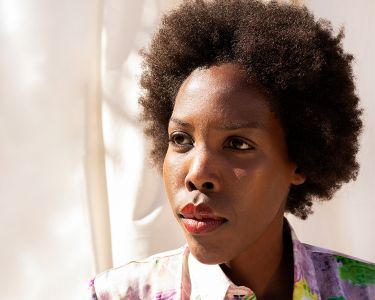

Ten Hypotheses on Society-Centered Design
Professor at Graz & Kassel University, Culture & Design Consultant, Manager & Networker
1. A world in transformation
Our world is currently undergoing an enormous transformation. Above all, young people who are aware of the negative effects of today’s economic model are discussing new approaches to the world: The inequality between the first, second and third worlds meets with criticism and measures are demanded to stop the increasing destruction of our environment. A growing number of people are participating in social initiatives and working hard to make the world around them a better place.
2. Design and its great social responsibility
Design has played a crucial role in the developments of industrial societies over the past 150 years, thereby affecting man and his environment. Subsequently, designers are aware of their great responsibility in using creative means to resolve the problems we are faced with now and in the future.
3. User-centered design
Until about 30 years ago, the design process was neither interested in man nor environment; it was chiefly about achieving entrepreneurial success and profit maximization. However, from the turn of the millennium on, the idea gained popularity that the design process should take account of human needs and the capabilities and behavioral patterns of individual users. User-centered design came to be the new creed in the design scene.
4. Individual success versus long-term consequences
However, in a globalized, networked world, anything that could benefit one individual could harm another – not to mention our planet. The negative consequences of a creative method that focuses too much on the individual, at the same time ignoring the political and societal dimension of design, have now become evident.
5. A new paradigm?
As early as 1971, Papanek in his book “Design for the Real World” criticized the trend toward producing “useless, potentially harmful, irresponsible and questionable items of mass consumption” from an ecological point of view. He spoke out against irresponsible design and developed a radio for the third world based on an old tin can.
6. Society-centered design
50 years on, Papanek’s approaches are now gaining increasing approval. Many designers are no longer prepared to pander to wealthy clients in their search for aesthetic segregation, but are beginning to question their role in the context of the widening gap between rich and poor and in the light of environmental problems. They participate in social movements, support grassroots initiatives and try to contribute to improving the world as quietly and unobtrusively as possible.
7. Society-centered design from a holistic perspective
Designers must be aware that they are shaping ecosystems and not just individual applications. They need to look beyond the individual user and immediate financial success in order to develop the best possible solution for man, society and nature. “Society-centered design” is sourced precisely from that design context. It not only addresses users and business, but also society and environment and their various different interdependencies.
8. Society-centered design – a better business strategy
Enterprises, too, feel that it is time for a new approach in product development. Today’s consumers are more informed and critical, they check on the item’s production process and if employees are fairly treated, or on the attitude of companies and brands towards social questions. Many people want to contribute to community welfare and environmental protection. Accordingly, they seek businesses and designers that offer products and services in line with their own mindset. Consequently, society-centered design is no idealistic ideology, but rather a competitive advantage for entrepreneurs who wish to reach out to the public (and realize profit).
9. Society-centered design: a new mindset
In order to do justice to society-centered design, we not only need a new mindset, but also committed strategies and augmented methods. Instrumental to the concept would be to additionally integrate the needs of non-human stakeholders – such as animals and the environment – in the design process. To that end, we require knowledge and creative technologies from human-centered design and usability, as well as from the realm of ecology, environmental sciences, sociology and philosophy.
10. The future of design
Primarily, designers need to internalize holistic thinking and let it flow into their daily work, besides convincing businesses and clients of how essential that approach is. Society-centered design is not an idealistic bubble, but a real competitive advantage for enterprises. The key to success is to get together and develop a new design approach. And think ahead: it all depends on collaboration — between politics, science, the economy, designers, activists and citizens — in order to find solutions and achieve and implement this new idea of design in the near future.
Prof. Karl Stocker, PhD
Professor at Graz & Kassel University, Culture & Design Consultant, Manager & Networker
Karl Stocker, PhD., historian, exhibition director, information designer, chair of bachelor programme Information Design (2004-2021) and Master programme Exhibition Design (2006-2021), head of Institute Design and Communication at University of Applied Sciences Graz (till 2021), professor at the Graz University (since 1988) and Kassel University (1996/97), founder and director of Bisdato Exhibition & Museum Design (1990-2021), author/editor of books and scientific contributions, manager of scientific research projects, director of exhibitions, ambassador of Graz UNESCO City of Design.
Picture: © Lex Karelly
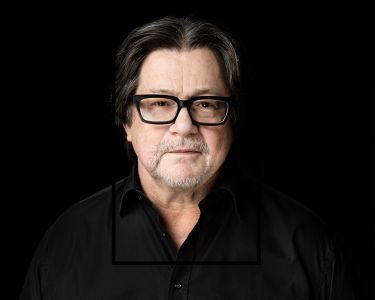

HOW WE LIVE TOGETHER
Founder and Creative Director of Streaming Museum, New York
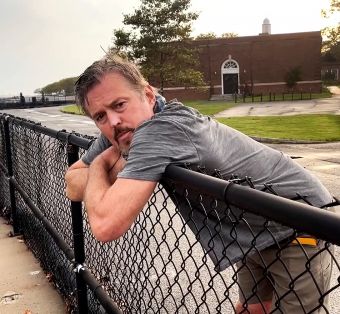
HOW WE LIVE TOGETHER – Artistic ways of understanding community, individuality, spaces, and rhythms of life for possible futures.
Four short films by Anne Katrine Senstad created in collaboration with Actor Bill Sage. 1
In a critical look at the human condition in current world affairs, filmmaker Anne Katrine Senstad suggests that a healthy value system has been disenfranchised and replaced by what the French philosopher Jean Baudrillard (1929-2008) called a simulacra—a postmodern imitation of reality, consumerism, and predatory systems. Senstad with actor Bill Sage express these theories in the films which were produced remotely along with sound producer JG Thirwell, within the confines of isolation during the pandemic. Senstad and Sage sharpen our understanding of today’s crisis to embark successfully to rebuild a better world.
Anne Katrine Senstad is a New York-based Norwegian artist. Her international practice lies in the intersections of installation art, photography and video, immersive installation art, and site specificity, with a focus on the phenomena of perception and ethics. Her sociopolitical projects engage in gender politics, community and critical philosophy through text and film.
Bill Sage is an American actor who has appeared in over 120 films, TV and stage productions. Throughout his career, Sage has been a champion for diversity and equality in the film industry. He has made a point of working with female Directors, Writers and Producers. Select film and TV performances include American Psycho, The Insider, Boardwalk Empire, and Hap & Leonard.
JG Thirlwell, is a sound producer and composer based in Brooklyn, NY. The state of the art sound for “How We Live Together” has been mastered by Thirlwell for an enhanced and dimensional experience of the actors performance. He has released over thirty albums and creates the musical score for the Emmy-winning FX show Archer, and the Adult Swim / Cartoon Network show The Venture Bros. foetus.org.


UTOPIE/UTOPIA (2020)
UTOPIE/UTOPIA (2020) theorises that tolerant co-habitation is a place of utopia, and reflects on ways of understanding community and individuality, societal and political systems, and solitude and the degree of contact necessary for individuals to exist and create at their own pace. Anne Katrine Senstad’s film explores the nuances of French philosopher Roland Barthes’ (1915-1980) term “idiorrhythmy”—a productive form of living together in which one is autonomous yet recognises and respects the individual rhythms of others.
In Senstad’s first film in the series of four, exploring Barthes text “UTOPIE/UTOPIA” from his 1977 book How To Live Together, acclaimed actor Bill Sage, in a personal and evocative monologue performance, assumes the character of Barthes in the creative process of preparation for his University lecture series of four decades ago. Set in the context of our contemporary world that is gripped by societal and political crises amplified by the 2020 pandemic, Sage’s character explores various forms of solitude through Barthes’ contemplations on history, psychology and societal structures. Barthes’ text concludes that our “Sovereign Good” is a form of tactful cohabitation and that an inner state—the state of tolerance—is a place of utopia.
MÔNOSIS/MONOSIS
Barthes contemplates the human monastic state—solitude, the isolated self, and seeks to identify the problem of separation, from community and from our internal unification as an aspect of iddiorhythmic Living-Together. Within societal structures, to be alone is construed as a punishment. However, in the place of utopic unity, the individual searches for a state of peaceful tolerance as distanced cohabitation.
MARGINALITÉS/MARGINALITIES
Those who live on the margins or who react to violence and oppression created by power are the source of intense social anxiety and considered dangerous—until they can be controlled and conform to society’s norms. The margins, however, are also a place of power, one which is untouchable and a form of a holy state. The isolated state on the margins is the creative space in which Barthes examines liberation.
XÉNITEIA/XENITEIA
The fourth chapter reflects on notions of exile and the displacement of peoples—politically, psychologically and due to climate change. The idea of being an outcast from ones home and not belonging o a community—to be ‘in the world but not of the world’. We are ultimately alone, exiled within the world and from ourselves. Barthes interweaves states of inner displacement and nostalgia—ultimately sentiments of isolation.
watch how we live together
An Exclusive Online Screening was presented October 31-November 15, 2021 at StreamingMuseum.org. The link below will lead to excerpts from each of the 4 short films by Anne Katrine Senstad, that were created during the pandemic in collaboration with acclaimed American actor Bill Sage and audio produced by JG Thirlwell.
Click here and enjoy watching: https://www.streamingmuseum.org/anne-senstad-how-we-live-together
Sources
1 This article is presented by Nina Colosi, founder of Streaming Museum and co-producer of the special UN 75th anniversary issue of the publication CENTERPOINT NOW, “Are we there yet?” A version of this article entitled „UTOPIE/UTOPIA“ appears in the publication. Copyright 2020, World Council of Peoples for the United Nations.
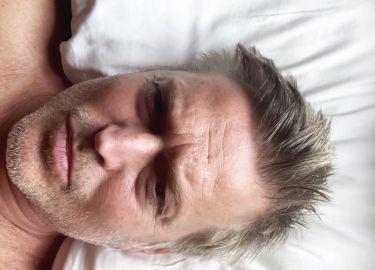
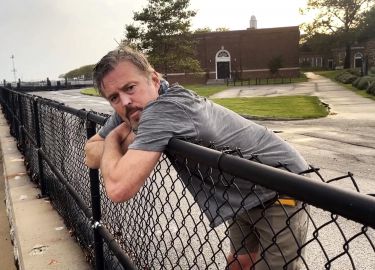
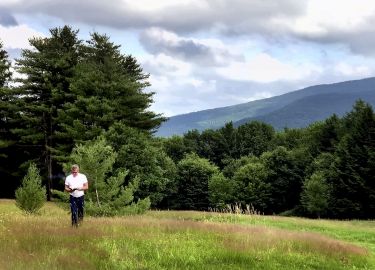
All pictures are film stills. Copyright by Anne Katrine Senstad & Bill Sage

Nina Colosi
Founder and Creative Director of Streaming Museum, New York
Nina Colosi is the founder and creative director of NYC-based Streaming Museum, launched in 2008 as a collaborative public art experiment to produce and present programs of art, innovation and world affairs. Streaming Museum programs have been presented on 7 continents reaching millions in public spaces, at cultural and commercial centers and StreamingMuseum.org. Following her early career as an award-winning composer she began producing and curating new media exhibitions and public programs internationally, and in New York City for The Project Room for New Media and Performing Arts at Chelsea Art Museum, Digital Art @Google series at Google headquarters, and many other collaborations. In 2020 Colosi co-produced Centerpoint Now “Are we there yet”, the UN 75th anniversary issue of the publication of World Council of Peoples for the United Nations.
Picture: © Jacqueline C. Bates


Plea for a European Renaissance from Below
Founders of Herr & Speer, Berlin
Plea for a European Renaissance from Below
Anyone looking at Europe today sees a continent struggling for its future. We have no doubt that the EU is no longer a stable house: Nationalist and populist movements are undermining Europe’s democracy, civil liberties and the rule of law are in danger, and many citizens‘ fears of decline and worries about the future are real. Instead of 28 states, there are now only 27 united under the umbrella of the European Union. And hanging over everything is the sword of Damocles of the climate crisis with its existential threat to future generations and to our fellow creatures. These and many other concerns are not easy to address and are even more difficult to solve.
But if you look at Europe today, you see not only shadows but also a lot of light. We see developments that give us courage and optimism. Civil society is resisting cuts to the rule of law, tens of thousands of young people are taking to the streets in support of better climate policy, and a new generation of politicians is taking up positions in parliaments and city councils with pro-European ideas and concrete commitment. At the same time, European entrepreneurs and cultural workers are developing solutions and offers that combine economy and socio-ecological responsibility, culture and politics. And all of this is increasingly happening across borders. Something is moving in Europe, a new spirit is blowing and the beginnings of a political, cultural and economic awakening can be seen—driven by the ideas and longing for the future of the young generation.
Rediscovering the Revolutionary Spirit of European Unification
In order for this tender seedling of European awakening, creativity, entrepreneurial spirit, political responsibility and the common good to develop, Europe will need the courage to try something new. Inspiration for this can also be found in the past. The European unification project itself shows with its development steps, which reconciled states and people and gave room to new ideas and methods, how it can be done. This spirit must be rediscovered, just as in the Renaissance, when people rediscovered what was once possible.
If we look at the history of European unification, it is nothing less than a revolution and one of the most successful ventures in history. European unification with its various stages of development—the Coal and Steel Community, the European Economic Community, the European Community up to today’s EU—has fundamentally changed the dynamics of European politics and its modus operandi from what was the continental custom for centuries: rivalry and war.
The result: never has there been a longer period of peace on the continent, never has economic and social progress been so comprehensive. Today, despite all the challenges, the EU is one of the most peaceful regions in the world, as the Global Peace Index shows. This idea would hardly have been conceivable in 1918 or 1945, or even between 1618 and 1871. In terms of peace, the revolution delivered what it promised. This was also due to the fact that this European Revolution was one of a special kind. Unlike many other revolutions with disruptive violent outbursts, political radicalisation and hasty throws, European unification was a process of careful steps, not too big, but mostly consistent.
Against the background of decades of enmity, especially between Germany and France who were central figures in the European project from the beginning, this mode is not surprising. But it has also been astonishingly successful. Traditional and nationally focused politics were not broken up and overthrown in one fell swoop, but reformed in small bites and introduced to a new Europe of cross-border cooperation. This was also due to the courage to come up with new and unusual ideas and proposals.
Ideas are the fuel
The EU embodies the courage to give new ideas a space and a chance, even and especially when the deceptive promise of settling down and staying put is at its greatest. This special spirit that can blow when we dare to do something new is described by Gerhard Brunn when the new Commission President Jacques Delors took office in 1985: „From the very first moment, he instilled new self-confidence into the demoralised, disoriented Commission and, with a handful of brilliant staff and a fireworks display of ideas, got it moving in such a way that some people lost their hearing and sight.“ Even if all these ideas (from Delors and many others) were not always implemented immediately, they often came to fruition via detours, and sometimes years later. Whether in the case of the common currency, the dismantling of border controls or a common security policy, a moment has always been found to take a further step toward integration.
In this way, revolutionary things were created through a gradual but constant evolution of political ideas. We call this modus operandi of the European Union and its predecessor organisations the European revolution of small steps. We think it is time to recall this revolutionary spirit, to revive it and to activate it, specifically for the future. While grand and long-term visions and castles of thought are important and can be beacons for the future, the immediate future of Europe is in the hands of those who understand and walk the fine line between too little and too much.
The EU thrives on constant development and movement forward. So pausing is not an option. At the same time, the history of European unification teaches us that taking too big a leap or doing too much in one fell swoop can be equally damaging and counterproductive. The United States of Europe, the European Federation or the European Republic may be inspiring goals, but the way to get there is through concrete, bold and feasible steps that directly and positively improve life in the EU.
Those who want to prepare the ground for a new European Renaissance do not always have to start at the top and with the big questions. We are convinced that change and progress always begin on a small scale. This makes the more than 450 million citizens important players. They help decide the direction in which Europe is heading. But far too often, obstacles are placed in the way of their ideas and their drive, or they are unable to realise their potential for financial reasons. If you want to think about the future, you have to be able to afford it. We have a proposal to change that and give more people the opportunity to drive social, cultural and economic innovation.
A start-up booster for all Europeans as a seedbed for innovation and progress
Europe is not a continent with a strong culture of entrepreneurship or innovation. This is particularly noticeable for young, creative and creative people with ideas. Anyone with an idea for a social innovation, an art project or a company is often confronted with skepticism, risk aversion and complicated access to financial support. Culturally and structurally, the European region tends to be geared more toward security and stability and less toward risk-taking and the ability to change. Anyone in the EU who has run a start-up into the ground or failed with a political idea or an ambitious art project rarely receives recognition or is encouraged to try again. Avoiding mistakes is more important than learning from them.
The European start-up scene is also underfunded. Nearly half of young European companies receive the all-important initial investment from outside the EU. „European investors are cautious and skeptical and want to see sales before they invest,“ writes journalist Grace Brennan. All of this puts the brakes on innovation. It’s no surprise, then, that in the top 10 rankings of the world’s most startup-friendly countries, with the exception of Germany in second place, EU states find themselves at the bottom of the list, in this order: Poland, Spain, Sweden and France. How many good ideas, groundbreaking works of art, smart products or innovative political approaches do not therefore see the light of day?
5,000 euros for all young people as a nationwide start-up booster
If Europe wants to put wind under the wings of the next generation with their ideas and see innovations take off, something has to change. While it takes time and perseverance to evolve cultural behaviours and thought patterns, it is possible to make direct changes in terms of funding and framework conditions.
We propose that every young person in the EU between the ages of 20 and 30 should have access to a so-called European innovation start-up credit. A minimum sum of 5,000 euros should be accessible to all those who want to start their own business with an entrepreneurial idea or a social, cultural or political innovation, or who want to continue their professional training. The sum would be provided by the EU budget from EU taxes and distributed by national and regional employment agencies and offices. Young people could register there or online with their business idea or educational project and thus receive their start-up credit with as little bureaucracy as possible. After a brief check, the funding amount of 5,000 euros would then transferred to the business account or directly to the respective educational institution. A one-time higher funding sum of up to 30,000 euros would also be possible if a convincing concept were presented and appropriate follow-up documentation ensured.
The start-up credit would pay particular attention to an aspect that is often neglected in the discussion about start-ups and innovations: the connection between a successful start-up and the socio-economic background of the founders.
Unfortunately, it is still disproportionately men who found companies. Around 93 percent of tech funding goes to all-male teams.1 So it’s not so much the individual’s dedication, sincerity or courage that determines entrepreneurial success in the early hours, but their financial and social background and gender.2
Those with a safety net can take greater risks. Those who are hyper-masculine take success home with them. The EU must counter this Anglo-Saxon and male-dominated logic and culture with something of its own and respond with an egalitarian, decentralised and diversity-oriented instrument. A European innovation starter credit will change hundreds of thousands of lives and make ideas fly in Europe.
Europe Bottom-Up as an Opportunity
What can happen when millions of people are given the opportunities to test or even implement their ideas and creativity can only be imagined. We are firmly convinced: Europe still has its best days ahead of it if we remember our strengths and values, carefully nurture our curiosity and ability to learn, and empower more people to be part of the path of progress. We, the citizens of Europe, have all the qualities and skills needed for this European path, this new European Renaissance.
Sources
1 Elizabeth Schulze, »93 % of funding for European tech start-ups goes to all male teams, new report finds«,
CNBC, 07.12.2018, https://www.cnbc.com/2018/12/07/ metoo-in-europe-93percent-of-tech-funding-goes-to-all-male-founders.html
2 Aimee Groth, »Entrepreneurs don’t have a special gene for risk – they come from families with money«,
Quartz, 17.07.2015, https://qz.com/455109/entrepreneurs- dont-have-a-special-gene-for-risk-they-come-from-families-with-money/
Vincent-Immanuel Herr & Martin Speer
Vincent-Immanuel Herr and Martin Speer are authors, speakers and consultants from Berlin. They are initiators of the EU mobility program DiscoverEU and are committed to a united Europe and gender equality. Their latest book „Europe For Future – 95 Theses that Save Europe“ was published by Droemer in 2021.
More info: www.herrundspeer.eu
Picture: © Phil Dera

Art for an inclusive Renaissance
Founder of the Creative Hub Incubator ZW Moto Republik, Harare
Art for an inclusive Renaissance: How Art can change narratives to include persons with disabilities
A podcast on the Nyakasikana Project in Zimbabwe
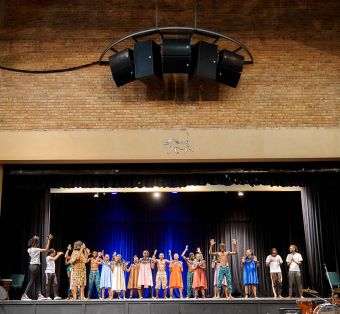
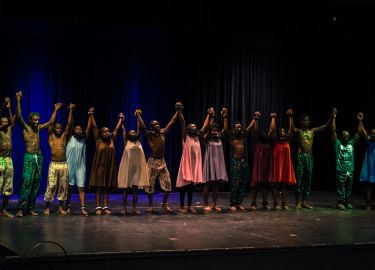
Vera Chisvo created a short podcast with the Tamba Africa Social Circus (TASC) on their NYAKASIKANA project, which is about using art to change the narratives of persons with disabilities in Zimbabwe.
»The Tamba Africa Social Circus (TASC) is a creative advocacy and inclusive arts initiative using intangible cultural heritage to address social issues affecting young people from marginalised communities. Their program NYAKASIKANA is a creative and inclusive culture action project for Gender Equality and the Empowerment of Women and Girls through women-centered leadership development. It seeks to equip girls and young women from marginalised communities (especially those with disabilities) with leadership, autonomy and other critical life and social skills through culture, inclusive arts and social circus tools. Social circus provides spaces for girls to freely explore their women-centered power, express themselves, build personal, functional and knowledge-based skills, and engage in gender artivism campaigns on issues that are important and real to them. NYAKASIKANA’s mission is ›Leadership for sustainable change and creation of creative spaces where gender justice goals can be realized‹.« (Quote by Tamba Africa Social Circus, Info Brochure)
More Info on the work of Tasc
Instagram: @TambaAfrica
Youtube: @TambaAfricaCircus
Facebook: @TambaAfricaSocialCircus
Twitter: @TambaAfrica
Sources
Header and Teaser picture left:
2019 CircAbility production ›Finding Your Feet – Raising Your Voice‹, Copyright: Siyano Media
First picture in gallery below:
International Day of the Girl Child 2020, Copyright: Halema Mekani
Vera Chisvo
Founder of the Creative Hub Incubator ZW Moto Republik, Harare
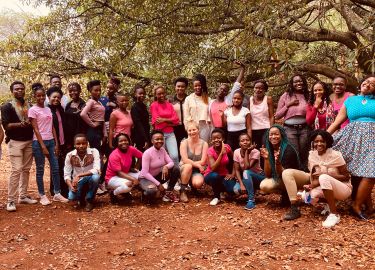
Maria Kudakwashe Chisvo has built a brand in music and is more popularly known as Vera. Vera has actively been in the music industry for 8 years. Her career has granted her the opportunity to travel both regionally and internationally. Vera has worked as an arts administrator for over 5 years from working accreditation at Harare’s biggest arts festival to managing the very first creative hub in Zimbabwe, Moto Republik. Throughout her career she has worked as a project officer at one of the longest running arts development organizations Pamberi Trust, and was responsible for running the Female Literary Arts and Music Enterprise that trained multiple female artists in Zimbabwe and has also worked as a project manager for Zimbabwe’s first hip hop dance festival Jibilika. Vera has also founded her own hub called Incubator ZW which focuses on creating art that inspires change and changes the narratives of minorities. She is also the founder and co-host of Her Hour Podcast which is a platform for young Zimbabweans to freely express themselves. Vera has over two years experience of working as a guest facilitator at LGBTQ+ trainings.
Picture: © Washington Njagu


Transformation & European-African cooperation- A podcast
Game-thinking, Gamification and Digital Transformation experts
A podcast about Transformation & European-African cooperation
Bethlehem Anteneh and Christoph Deeg got to know each other during a workshop on the transformation of cities through game mechanics in Addis Ababa. This was the beginning of an intensive, international cooperation and a special mutual transformation process. In this podcast the two talk about their common path, their view of transformation and whether the European-African cooperation means special opportunities for transformation processes. It’s a podcast about transformation, gamification, cooperation, learning, failure and life.
Bethlehem Anteneh
Game-thinking expert and Founder of BlueLeaf and PlayLab
Bethlehem Anteneh is a game-thinking expert with an architectural design background who uses games as tools to design environments, frameworks and processes that elevate human perception, experience and problem-solving-instinct. In this field, she has worked by managing various projects, conducting workshops, speaking/talks, and designing platforms with partners, organizations and universities internationally in 25+ countries around Africa and Europe being invited in happenings such as Gamescom Congress, AmazeBerlin, DeutscheWelle, Electronic Arts, ZKM-Karlsruhe, etc. After being the Game-Thinking Lead in 15 African countries on the project ‚EnterAfrica-Gamify Your City Future!‘ with the Goethe-Institut, she’s currently consulting the GIZ on learning experience design (LX) and curating the first of its kind gaming convention in Addis Abeba with the Goethe-Institut amongst other major projects such as ‚LUtopia: Rethinking the City of Ludwigshafen‘. She had co-founded an international and national play-based networks and companies such as ‚Chewata-Awaqi‘ and recently founded BlueLeaf & PlayLab; an entity bringing together GAME-Thinking, ART-thinking, and FUTURES-Thinking.

Christoph Deeg
Consultant and Speaker for the topics of Digital Transformation, Gamification & playful participation
Christoph Deeg describes himself as a “designer of the digital-analog living space”. He is a consultant and speaker for the topics of digital transformation, gamification and playful participation. In this context, he advises and supports national and international companies and organizations in the development of comprehensive and sustainable overall digital-analog strategies. He also deals with the strategic use of gamification, for example in the context of digital transformation processes, urban development or the development of digital-analog cultural strategies. Another focus of his work is the development of participation processes using analog and digital games or game models. The basic idea behind his work is the idea that digitization is not essentially about technologies, but about people with their individual digital-analog realities.
