We are all Creative Tech-ers!
Laure Kaltenbach, Chairman and co-founder of CreativTech, curator and scenographer; Faustine Charles, Lydia Meignen, Paris
We are all Creative Tech-ers!
Why choose between artists and engineers
Chicken or egg, tea or coffee, maths or literature, music or sport, nuclear or green, left or right brain, passion or reason, artist or engineer? Do we really need to choose in every compartment of our lives? What if we could embrace the best of all those so-called oppositions?
The artist, a figure integrated into our socioeconomic models
The opportunities of the health crisis for Culture?
As in all crises, we realise the extent to which culture plays an essential, central, and apodictic role in expressing itself, through the arts, in entertaining ourselves, promoting values, creating cohesion, in giving meaning to what seems to have none. The current health crisis is no exception to the rule and new forms of creation have multiplied to experience this unprecedented time of collective global confinement. Among the encouraging examples, the creation in Italy of Special Artistic Continuity Units (Usca) by the company il Barbonaggio Teatrale with theatre on delivery—the theatre at home—was conceived in response to the prolonged closure of cultural venues. From now on, it is possible to welcome a plastic work at home, such as
“Tipping Point,” a work by Barthélemy Antoine-Lœff. If you don’t come to Lagardère, Lagardère will come to you. Simple and efficient. Beyond its crucial role for individual and collective mental health, culture is the vector of three living dynamics in our territories: it drives and increases the attractiveness of rural areas, cities and regions; it is the engine of a diversified social cohesion; and finally, it creates economic value. Culture is an economic force that is now on everyone’s lips—those of politicians, institutions, companies in the cultural and creative sectors: 2250 billion euros, or 6.1% of world GDP; 353 billion euros in exports, or 3.4% of total world trade; and 29.5 million jobs, or 1% of the world’s active population. In Europe, culture employs more than 8 million people and represents 4.4% of the territory’s GDP in 20191 (i.e. before the COVID-19 crisis). These are higher revenues than telecommunications or the pharmaceutical industry! With more than 800,000 companies, 3.2% of the companies in the European Union, the cultural sector is also a source of human exchanges: in fact, 40% of inter-European tourists travel for cultural purposes.
Culture is now integrated and considered as an asset in our economic models. However, we still need to shift the focus on the role of artists and their contribution to innovation: social, technical, technological, scientific. Lilian F. Schwartz (born in 1927) was a leading figure of innovative artists thanks to science. She is one of the first artists to join the scientific team of a laboratory and served in Bell Labs in 1968 (known particularly for having worked on the Apollo Program). There she became a pioneer in computer-assisted visual experimentation, with 2-D and 3-D animated videos, a great innovation at the time! Yet, Schwartz is presented as a visual artist and not as a contributor to technical innovations, with her works staged hermitically in events and cultural institutions.
Back to the future
Culture is a combination of different imaginary worlds that we cherish beyond our borders. The creation of Ministries of Culture (Germany in 1955, France in 1959) marked a governance based on knowledge, recognition, and the sharing of values. The first international music festival created by Richard Wagner in Bayreuth, to share culture between nationalities and generations, dates back to 1876. More recently, the European Days of Culture were established in 1991. This is a Europe of culture whose milestones reveal both a proactive political construction and an enlightened renewal of artists and their understanding of societal issues. How should creative dynamics and artists take their place in a world that integrates ecological and epidemic ultimatums? Certainly, artists have and always have had a capacity to imagine, to shift, to reveal, to leave the beaten track, to dream, to scare, to question. Certainly, we need more than ever this capacity to invent and crystallise our aspirations. Certainly, we could be satisfied with a place of the artist reserved for museums, galleries, accursed
avant-garde, institutional spaces, or the oppositions between the arts from the street and those from the academic training. Of course, our time amalgamates, and everything becomes „art and culture“. Every evening we declare the death of art, and every morning it is reborn. With or without ashes.
One of the characteristics of our time is the capacity of artists to perform, to hybridise, to „hack“ techniques and technologies. An exploration that becomes polysensorial, simply listening to our senses. And it is in the search of the sense, of our senses, that the artist must create a new place and put his talents, his imaginations in the service of new social hybridisations. More and more of us are questioning ourselves, taking a step back. The artistic approach is a powerful one in a world where the link between the real and the virtual, between the physical and the digital spaces, between the material contents and the 0 and the 1 becomes more and more tenuous. The notion of a digital mirror world to ours, the umpteenth desire to live an increased polysensoriality in other spaces, materialises in the metaverse, a new Eden offering countless horizons. Let’s keep in mind the words of J.R.R. Tolkien in order „not to confuse the prisoner’s escape and the deserter’s flight“: embracing virtual worlds is in no way a flight, but a relevant anchoring to reality. To appropriate parallel digital worlds is not an ultra-modern obsession, unconscious of the stakes and dangers; it is, on the contrary, an opportunity to make those digital worlds deeply human and at the service of humans.
Artists are now producing hybrid works and exploring advanced
technologies for offbeat and sublime realisations. They also give impetus to applications that go far beyond the cultural sector. When Martin Cooper, a Motorola engineer recruited in the early 1970s, built a portable radio by trying to reproduce Captain Kirk’s “Communicator“, he invented the cell phone. The list goes on and on of other inventions, imagined by the creators of Star Trek, that have inspired companies and are now part of our daily lives: the “replicators“, ancestors of 3-D printers; the „Universal translator“ in charge of communicating beings and aliens from all galaxies, today revealed in automatic translation software, algorithms and artificial intelligence (AI); and the freehand kit of Lieutenant Uhura, the “tricorder”, which allows the user to detect and scan diseases, present today in almost all Internet of Things and wearable tech, but also giant screens, video calls, tablets, and of course PCs.
Back to the present: do you know Fragile? This installation, created by the Italian multidisciplinary studio, Fuse, explores human and organic life in its works. The installation, with evolving visual effects, is based on an algorithm that collects tweets to predict the level of stress they generate. As social networks are spaces that bring together an important part of humanity, the work gives a vision of the level of anxiety and, by (black) mirror effect, of the well-being of the actors of these networks. Among other fascinating disciplinary crossings, the TakT duo, building on the advances of neuroscience to understand our emotions, has designed an audiovisual work called „Scientific Emotions“ which deciphers our emotions through both artistic and scientific imagery.
New rules of the game
This context seems to be conducive not only to the reaffirmation of the place of artists in the economic and social ecosystem, but also to the intersectoral spread of talent. The multiplicity of paths, training, decentralised learning, the possibility of combining disciplines and fields of expertise change the rules of the game. In concrete terms, encounters with artists must multiply and go beyond the cultural and creative sectors. The image of the artist as an entertainer, or even as someone who is unfit for scientific and economic rigour, is long gone. This image is not only caricatured but also light years away from the reality of an artist who, like a scientist, relies on the senses, his intuitions to create, invent, draw, compose, repeat, make mistakes, take up again, undo, redo, in a long-term iterative creation cycle. The meeting between researchers, scientists, entrepreneurs, and artists is an exceptional source of creation. But it must be organised so that the result meets everyone’s expectations. The good news? It’s an equation that works every time! On a regional, national, and European scale! Examples are coming from all over the world, at the crossroads of all knowledge: research on biomimicry, which takes nature as a starting point and inspiration, is becoming a reference: from politics to medicine, from the arts to logistics, the behaviour of organic and animal species are rich in lessons and solutions. Bulletproof vests? Born from the observation of the resistance of spider threads! The physical-chemical engineer Kalina Raskin announces that life will endure without us. From now on, she is looking for ways to make different forms of life cohabit within the framework of a responsible innovation that considers the rhythm of nature, and this, thanks to… groups of thinkers from different „worlds”. Inspiring, isn’t it?
Mixing the worlds: a winning solution for the future
Desperately (really) seeking creative co-working
Today, no one questions the crucial role of collaboration in innovation: between brands, between teams of the same company, between teams of companies from different sectors, between generations, between countries, etc. However, the holy grail has not yet been found for an implementation on a European scale that would make it possible to embody these transdisciplinary collaborations on a large scale. We remember the innovative European programs, notably Kaleidoscope (one of the first financial support programs for artistic creation and cooperation, 1996-1998) and Culture 2000 (2000-2006), with disparate effects at European level. How to make collaboration between actors and territories concrete without confusing team-building and innovation?
This European ambition needs a program with a relatively long timeframe so that fertile crossings materialise and that tomorrow, an Italian neuroscience laboratory works with Swedish designers to
create a new banking service, a Dutch dancer gives new foundations to a German algorithm to facilitate inventories in warehouses, a Slovenian AI researcher relies on a French designer to invent a new industrial co-bot, a Portuguese musician virtualises a new Belgian technology to lay the foundations of a humanised call centre, a Luxembourgish quantum physicist makes new discoveries thanks to a Finnish photographer to secure protocols… It is a strong impetus that must be given so that examples do not just multiply but become a Pavlovian reflex for innovation. Will the European Knowledge and Innovation Community (KIC) for the cultural and creative sectors make the magic possible? The stakes are high and concern all stakeholders: companies have concrete innovations for their products or services, explorations but also managerial transformations; research renews its opportunities for opening up, highlighting its skills and contributing to the attractiveness of the scientific field; artists benefit from unprecedented industrial and scientific means to create an ambitious „work-innovation“. Concrete and successful examples of this approach exist. CreativeTech has produced several in France, notably, in the Pays de la Loire region.
Culture is future
Culture au Futur© (Culture is Future) is a transdisciplinary innovation and creation project conceived by CreativeTech for the Pays de la Loire region in France. This original program allows the creation of „innovation-works“ in the framework of workshops bringing together a company, one or more researchers in a scientific field and an artist (or a collective of artists). In other words, it is a question of simultaneously mobilising the cultural, economic and scientific actors of a given territory. The result is startling. The originality lies not only in the method invented by CreativeTech but also in the place of artists in the innovation process: it is indeed the artists who give the initial impulse to the collective work. All industrial sectors, all research fields and all artistic disciplines are concerned. The “innovation-works” already produced reveal the capacity of the trinomials to jointly respond to societal issues (ecology, recycling, over-cycling, acoustic waves, future industry, economic cycles, …) and technical issues (stabilisation of pigments, data restitution, remote control by algorithm or application…).
Pascal Denoël, President of the ZeKat Group, who participated in season 1 of Culture au Futur,sums up the experience as follows: „You abolish all boundaries. Everyone must create according to their technological and artistic sensibilities and within a project that has a dimension that goes beyond the company; everyone must remove their own barriers. At this point I see my collaborators differently as a leader, but they see each other differently. People talk to each other more easily and respect each other much more easily. (…) And the result is tangible: the technological innovations that were conceived together are going to be found in our products, to be marketed. And the spectacle is magnificent.“
Europe strikes back
It’s a credo that Europe is starting to put into action thanks to some truly original programs that think big in space and time. This is particularly the case with the audacious S+T+Arts program launched in 2015, where the world of technology brilliantly meets that of artists. Bringing worlds together also means bringing together nationalities and cultures. The Erasmus program embodies this brilliantly: bringing students together and benefiting from the lessons of other countries to enrich their future professional lives. The good news is that Europe is home to 23 million companies, 2 million scientists, and 1.4 million artists. What are we waiting for to make the intersection of disciplines for innovation the European trademark!
Human first! People at the heart of the transdisciplinary process
Yoga positions: Aligning humans in the centre of our path
The mantra seems „simple“: put in the same space (physical or virtual) a company, a scientist, and an artist. This collective star alignment requires a dedicated environment and a marked methodology to go beyond the often-deceptive concepts of hackathons or lightning exploration projects. It is indeed about combining mind and body, through rituals, a lot of discipline and a lot of intellectual flexibility but not only! Sonia Bergeot, planner for the Colart Fine Arts group of materials, saw the alchemy take place during the workshops of season 1 of Culture au futur: „The manipulation of products with chemists and artists awakens new inspirations for future developments of products or services for the company. That’s where the magic happens.” The credo is that each stakeholder—artist, researcher, company employee and animators-conductors of the “work-innovation”—highlights their own skills, without disguising themselves, in a spirit of curiosity. Indeed, it is a question of giving the best of one’s way of being, thinking, working, and interacting with worlds foreign to yours. This is one of the keys to success: everyone contributes to the project and comes out with collective skills linked to a concrete innovation. A great community of CreativeTechers is born.
The creation of artwork-innovation—“it's alive, alive!”
Within the framework of our interventions, we work on projects at the crossroads of innovation and creation. For example, a company making clothes for professionals had the ambition to think about tomorrow’s work clothes, by collecting data on individuals, to limit difficulties at work. A visual artist poetically re-examined the materials in order to illustrate the dynamics of the company immersed in issues of health and well-being at work. Cross-fertilisation also led us to the hacking of a Smart Guitar with the aim of completely reinventing the scenography of a show and the way in which one can remotely control the instruments on stage thanks to a virtual reality headset and a gyroscopic application. Or a textile manufacturer of more than 200 wished to re-examine the life cycle of its materials and, thanks to the crossed views of researchers in acoustics with that of an artist specialized in the fold, the company was able to upcycle these dormant stocks. The latter were transformed into powerful soundproofing sheets! What a smart collaboration…Ultimately, applying the CreativeTech’s methodology empirically means creating hybrid project methods according to the realities of the actors involved, guided by the same desire: to create a work and find an operational solution to a business problem in a “win-win” and transgenerational logic. Europe is the new playground, and with its protean resources, the possibilities are endless. Finally, some good news!
Join the CreativeTechers’ generation
The winning equation—companies x scientists x method artists x humans—is on its way to be disseminated in Europe. Our famous equation is endowed in—take note, exhibitors!—a proven method and people ready to take up challenges.
Approximately 4.2 million km2, 27 countries, nearly 90 territories with their own systems of governance, about 400 cities with more than 100,000 inhabitants, soon to be 448 million inhabitants, with Ode to Joy as its anthem—does this sound familiar? What if the result of this winning equation made it possible to create a European „overview effect“ (like the planetary overview effect described by the astronauts) that would sublimate all our creative resources in order to deploy a collective and enthusiastic vision of the future in the territories, regions, länders, provinces, and departments of all of Europe. „Arts and Crafts“ reinvented in the 21st century: easy, right?
“The history of science is not only the history of the constitution and proliferation of disciplines, but at the same time the history of the rupture of disciplinary borders, of the encroachment of a problem of one discipline on another, of the circulation of concepts, of the formation of hybrid disciplines that will end up becoming autonomous; finally, it is also the history of the formation of complexes in which different disciplines will aggregate by agglutinating themselves. In other words, if the official history of science is that of disciplinarity, another linked and inseparable history is that of inter-trans-poly-disciplinarity.” Edgar Morin2
References
1 Marc Lhermitte, Hugo Alvarez, EY, January 2021. https://www.ey.com/fr_fr/government-publi-sector/panorama-europeen-des-industries-culturelles-et-creatives-editio.
2 Edgar Morin, “La méthode”, 1981.
CreativeTech
Being: together! Born 2017, CreativeTech is a cultural engineering agency that orchestrates the meeting of artists, scientists, entrepeneurs to generate go-to-market innovations and exhibitions, both in digital and physical locations. This synergy of points of view, experiences and expertise embodies the current hybridization of profiles in all the industries. This Bigbang delivers supernova.tive makers and thinkers and constitutes the DNA of CreativeTech methodology.
Inspiring the future! CreativeTech also strives to think optimistically about the future, always integrating a responsible and conscious approach to social and environmental issues in the different territories. The aim: developing operational innovation for companies as well as institutions toward contemporary questions, such as living in the age of the blockchain and metaverse, hacking Time and Space, tapping into neuroscience to decipher the power of our emotions… to inspire all of us.

Preface to The Next Renaissance
Minister of Economic Affairs, Innovation, Digitalization and Energy of the State of North Rhine-Westphalia
Preface
Europe is undergoing a period of fundamental change. Whilst this comes with great challenges, we ought to recognise the enormous opportunity behind it. The top five issues of our time in all their complexity – globalisation, digital revolution, climate change, pandemics and natural disasters – are adding extra urgency to the question of where our European society is – or should be – heading. What do we want the future to look like? How are we proposing to get there? What type of innovation do we want to push forward for the benefit of our society? Those are questions of real concern.
Renaissance and its synonym, ‘rebirth’ are words that evoke inspiration. After all, the Renaissance period was marked by a variety of major innovations in art, science, technology, architecture and the trades. The ‘discovery of humanism’ was the game changer. Artists like Leonardo da Vinci, Artemisia Gentileschi or Albrecht Dürer are testimony to what really transformed things back then – the recognition of humans as subjects and as a creative and innovative force.
This wealth of ideas, of human creativity, needs to be called upon once more. We must use the potential of innovation in all its variety and simultaneity across economy and society and use it to get on top of the big challenges – digital transformation and the move towards climate neutrality by 2045. The key to innovation will always be the combination of creativity and technology.
The digital revolution has a huge impact on our proven concept of a democratic and liberal Europe. Future technologies such as artificial intelligence or blockchains hold enormous potential for innovation that we must exploit, but responsibly and in line with ethical values. Digital transformation of public services is the key to instilling trust in the work of government.
The transition to a climate-neutral economy and society is going to affect, if not upturn, all walks of life. We need renewable materials for the circular economy, new architectural and transport strategies, realignment of the energy system and forward-looking town planning philosophies.
There is a multitude of options for creative minds, innovative approaches and new business models. A major role is already set aside for the creative industries when it comes to realising the ‘European Renaissance’ envisaged here.
So, the EIT initiative to start a Knowledge and Innovation Community for the creative industries comes at the right time. North Rhine-Westphalia is backing the first-rate application that has been submitted for the launch of a creative industries KIC. The idea is that, over fifteen years, this agency will be spending some 500 million euros on innovation in the creative sector, designed to address the big challenges Europe is faced with. Such investment will be in line with the principles governing the Knowledge and Innovation Communities which the European Institute of Innovation and Technology (EIT) launched the first call for in 2008, banking on the interaction of education, research and innovation.
In these fast-moving times, the resourcefulness and innovation prowess of the creative industries are needed in Europe more than ever. The sector embodies crucial abilities, something that is more and more appreciated. The World Creativity and Innovation Day has been amongst the United Nations’ official theme days since 2018. In 2020, the World Economic Forum placed creativity at Number 3 of the ’TOP 10 Skills Needed’.
Europe needs to return to the heydays of ingenuity and innovation fervour. With a view to a European Renaissance of creativity, the ICE consortium is providing us with this publication which covers a wide spectrum of topics and will surely make for inspirational reading.
Prof. Dr. Andreas Pinkwart
Minister of Economic Affairs, Innovation, Digitalization and Energy of the State of North Rhine-Westphalia
Prof. Dr. Andreas Pinkwart, born in Seelscheid, Germany in 1960, after a banking apprenticeship he studied macroeconomics and business economics at the University of Münster and the University of Bonn from where he obtained his doctoral degree in 1991. He subsequently ran the office of Dr. Hermann Otto Solms, chairman of the FDP parliamentary group in the Bundestag, before continuing his academic career with professorships in Dusseldorf and Siegen. In 2002, he became a member of the German Bundestag and state chairman of the FDP (Free Democratic Party) in North Rhine-Westphalia. From 2005 until 2010, he was Minister for Innovation, Science, Research and Technology as well as Deputy Prime Minister in North Rhine-Westphalia. In 2011, he returned to the scientific sector. Until June 2017 Prof. Pinkwart was Dean of the HHL Leipzig Graduate School of Management and and ever since holds the Stiftungsfonds Deutsche Bank Chair for Innovation Management and Entrepreneurship. Since June 2017 he is Minister of Economics, Innovation, Digitalization and Energy of the State of North Rhine-Westphalia.
Picture © Ministry of Economic Affairs, Innovation, Digitalization & Energy, NRW


Intellectual Property and the Industry Commons
Industry Commons Foundation
Intellectual Property and the Industry Commons: Unlocking the Renaissance
Recognised as a major influence on economists, Leonard Reed’s 1958 essay ‚I, Pencil’ demonstrated that the invention of even the simplest of objects is the result of mass collaboration. A pencil is made by loggers, graphite miners and factory workers. Its form is predicated on the invention and widespread adoption of writing and drawing, and it requires an ecosystem of other technologies from pads of paper to marketing and distribution networks. The workers involved need to eat food and travel to work, and this all takes place within an elaborate economic and social web.
As interwoven, interdependent, cross-disciplinary and intricate as those systems were, Reed could not have foreseen the world to come. The extent to which the processes, raw materials and interconnected networks would become exponentially and globally more complex sixty or so years later would have been absolutely unthinkable. What had been the paradigm-shifting impact of Reed’s observation now needs to happen again at the next order of magnitude. We live in a context where the affordances of digital technologies, the entirely inescapable global supply chain networks and the ecosystemic challenges of the 21st century implicate and involve every single individual. We can no longer extricate ourselves from those global systems. Collaboration and the intersection of diverse ideas and specialisms are not merely beneficial for innovation in this context but fundamental for survival.
These intertwined framework conditions and cross-domain technological affordances lend themselves to the design of new supporting frameworks that are more inclusive and equitable. For the first time ever, the acceleration of industrial digitalisation provides an opportunity to build radical or disruptive innovation on top of existing intellectual property (IP), in a system that is fully trackable and accountable for all involved. Our tests conducted in the past five years2 demonstrate that ensuring traceability and attribution creates a powerful incentive to share data and other assets across fields, sectors and industries, helping humanity embrace innovation with greater motivation and efficacy than ever before.
Intellectual Property is a broad, complex and discursive area of study, subject to critique as a preventer of innovation and as a barrier to the creation of new ideas. Its fundamental condition as a category of property law has led to its status as a domain of guarded ownership, complicated routes to permission and a punitive legal minefield with steep costs for infringement – intentional or otherwise. The default position for access to industry IP has long been a blanket ‘no’ except under exceptional, usually expensive circumstances.

IP regulation has not followed the evolution of IP value creation.
In his ongoing quest to find out more about how people create and innovate, Professor Brian Uzzi, a professor of leadership at the Kellogg School of Management, Northwestern University, and his team, measured the citations of every paper available in the Web Of Science, a repository of some 30 million scientific papers dating from the early 1900s to the present day.3 The articles with the most significant impact, he discovered, were collaborative. “Since 1950, teams have become more prevalent as a production mechanism,” he said in an interview for the BBC podcast Sideways.4 “Teams are getting bigger over time, [and] they are three to four times more likely to write a hit paper or produce a hit patent than individuals.”
He also noted that these teams were primarily composed of specialists from different disciplines: “Biologists working with economists and anthropologists, or historians working with big data experts and ethnographers.” This meeting of minds across boundaries is known as recombinant innovation, and it has an impressive track record of helping humanity make significant strides forward.
Fear of sharing IP, however, is deeply embedded. Sandra Vengadasalam of the Max Planck Digital Library describes how researchers feel about the issue: “If you ask them ‘What are you afraid of?’ – and it doesn’t matter which discipline – it’s ‘Oh, I’m super afraid to get scooped’.” In other words, there is strong concern that colleagues or competitors will steal a march on you and publish first. “It starts when you want to share your PowerPoint presentation, some pictures of your last microscopic data, whatever,” she continues. “There’s always the fear of ‘Okay, what can I give out? And what about my intellectual property?’”5
In the corporate world, the issue of IP is broad, complex, and carries significant responsibility for erecting barriers to ideas and holding back innovation. Indeed, amongst the closely guarded IP locked away by industry lies a substantial proportion of the estimated $100bn value of data sharing. But this isn’t simply an issue of trust. There can be problems relating to interoperability and conflicting standards, which make sharing difficult, despite the obvious benefits of overcoming them.
Take the example of driverless vehicle data. In 2017, Chris Ballinger, Toyota Research Institute’s CFO and Director of Mobility Services, estimated that it would take ten years for any single company working in the field to collate all the information they need about roads and infrastructure.6 That information is almost instinctively placed under lock and key as it is collected. But if the data is shared between, say, nine other competitors, it could be gathered in a single year, allowing much more rapid progress to market. By pooling information and standardising interoperability, everyone would, metaphorically speaking, be using the same railway tracks.
To increase the value of IP, we need to operate on common railway tracks.
In his book How Innovation Works,7 Matt Ridley lists endeavours for which the free sharing of ideas was pivotal: “…the Dutch East India company’s cargo ship, the Fluyt; Holland’s windmills; Lyons’ silk industry; crop rotation in England; Lancashire’s cotton spinning; America’s engines for steamboats; Viennese furniture; Massachusetts paper makers…” He also notes: “It was the flowering of societies, clubs and mechanics’ institutes that gave Britain its lead in the Industrial Revolution.”
Just as societies and clubs provided meeting grounds and shared points of cultural connection, it is necessary to now share spaces of common understanding with culture as a pivotal element, and creativity as both facilitator and the reason for coming together. For the past decade, MTF Labs has demonstrated that music provides that shared cultural touchpoint, common ground, creative spark and “social glue” that connects otherwise divergent minds.
Music thrives on the melding of diverse perspectives. For instance, the ongoing global success of the Swedish songwriter Max Martin has relied on an extraordinary list of collaborators: death metal artists, classically trained pianists, musicians from Barbados, India and beyond. This has contributed to Sweden being the number one country in the World for music exports per capita.8 Writer and thought-leader Matthew Syed argues that pop music has become the “recombinatorial art form par excellence,” a product of “the constant search for the sweet spot of musical collaboration.”
Crucially, those collaborations are supported by an advanced IP framework, thanks to more than a decade of work by the music industry to develop platform alignment for metadata. That industry is also starting to adopt systems for rights registration at the point of creation, such as Sweden’s Session, now used by Spotify and YouTube,9 which can unlock hundreds more millions of euros in untapped value. The Industry Commons IP Framework Study (2021)10 identified several cross-domain use cases where this kind of approach to IP management is already speeding up time to market. Equally, expanding one’s sphere of influence may uncover unexpected markets. A study of the expansion of the European Open Science Cloud revealed that its FAIR system of data sharing (findable, accessible, interoperable and reusable) turns into a system of data valorisation when deployed by commercial organisations.11
The unlocking of an interoperable Industry Commons of data-driven assets also provides creative innovators with the opportunity to generate new ideas that include intellectual property owned by others. Placing a wealth of existing research, R&D, products, designs and creative works into the hands of creators radically accelerates the innovation process, provides rapid knowledge transfer across domains and carries the potential for cross-sectoral and hybrid projects that could not have taken place within an individual industry vertical or organisation.
Pablo Garcia Tello, Section Head of New Projects and Initiatives at CERN, calls this “The New Alexandria”, inspired by the colossal library of the ancient world, which contained more than 400,000 scrolls and was available to anyone and everyone. Whatever you may take from The New Alexandria, he says, the rule is that you give something back. This would, in his words, “democratise knowledge and innovation while giving credit and recognition to the creators.” Such an innovation ecosystem could, he believes, help to integrate cross-disciplinary innovation and entrepreneurship.
Christer Gustafsson, Professor of Sustainable Management of Cultural Heritage at Uppsala University, believes the innovation that such systems could unlock goes beyond mere economic value: “My focus today is to more-or-less completely change the mindset from starting with this ‘protection oriented’ idea… It could be the change from an industrial society to a post-industrial society.”

IP valorisation is dominated by systemic inequality.
Patenting is still by far the most commonly used system of IP valorisation, even though it still carries the signs of the era that launched it, when married women were not allowed to own any kind of property:
Women do not get a fair share when it comes to patenting and are far less likely to own patents. This disparity is in part because of not only the inherent biases in science and technology and in the patent system itself, but also because of the high costs of even applying for patents. […] Patents are a glaring exception to the unregistered protections provided in other areas of intellectual property, which are more egalitarian in design.12
Currently, European patent granting procedures are expensive, slow (three to five years, on average), burdened with obscure legal terminology and fraught with problems relating to the definition of ideas and similarity to other patents. IP Screener13 makes a powerful case for making all patents findable with AI-assisted technologies, so independent inventors can affordably source and track existing inventions using plain language, build their knowledge from existing inventions and avoid infringing on protected IP.
To the minefield of gender and economic inequality for independent inventors, data-driven systems introduce additional challenges for IP management. Bias inherent in data sets, problems with data provenance verification, and risks of negative impacts on social behaviours have prompted industries to increase the demand for testing of new data-driven industrial applications in low-risk “living labs” environments. This allows them to capture unexpected outcomes from novel applications of frontier technologies before deploying them at scale. The core assets of manufacturing and industrial production have all become digitised, and all industries are now data industries. As data becomes a critical raw material and crossing streams becomes much easier, the risks to widespread bias become all the greater.
Allowing data provenance to remain in the black box presents an enormous risk for society. While this points to a growing need for new regulation and standards for data markets, it also enables new economies and value systems, creating a major new economic paradigm for society. Solving how IP attribution and provenance work in data markets can result in an explosion of new types of innovation, and as data becomes central to every industry vertical, tracking innovation enables unprecedented exploitation of diverse global market segments.
To move the paradigmatic shift of Reed’s “I, Pencil” to the next order of magnitude, a shared commons of trackable, traceable and easily licensable assets must be provided as fuel for a creative and economic renaissance enabled by an explosion of human ingenuity and motivated by the 21st Century’s ecosystemic challenges. We cannot separate ourselves from those ecosystems – or from each other. Whether a pencil, an AI platform, a novel musical instrument or an RNA vaccine, innovation is a major enabler for people to benefit from each other’s contributions. This is what society is for – or should be. It is, therefore, necessary to embrace radical inclusion and stop thinking in terms of ourselves as separate entities with individual characteristics, capabilities and (self-)interests. Instead, let us start with the question: Where do we converge?
REFERENCES
1 According to Harvard Business School Professor Gary Pisano, incremental innovation for existing competencies and business models is routine; radical innovation builds new competencies for an existing business model; disruptive innovation proposes a new business model for existing competencies; and architectural innovation introduces both new competencies and business models. (Pisano, G. 2019, Creative Construction: the DNA of Sustained Innovation, PublicAffairs).
2 Experiments with creative innovation communities in partnership with blockchain technology companies and other decentralised platforms at MTF Labs in Helsinki, have demonstrated that it’s possible to establish new ways of recording, tracking, and tracing intellectual property live, in real-time, at the point of creation, using distributed ledger technology. These ideas have been codified and scaled up in the Industry Commons IP Framework study (2021).
3 https://insight.kellogg.northwestern.edu/article/science_as_team_sport/
6 Fortune Magazine, 22 May 2017: http://fortune.com/2017/05/22/toyota-mit-blockchain-driverless-cars/
7 Ridley, M., 2020. How Innovation Works: and why it flourishes in freedom, Harper, NY
8 Export Music Sweden, 2020: https://report2020.exms.org/
9 https://musically.com/2021/11/18/rights-data-startup-session-gets-1m-from-spotify-and-youtube/
10 https://industrycommons.net/ip-framework.pdf
12 Marcowitz-Bitton, Miriam; Kaplan, Yotam and Michiko Morris, Emily (2020). Unregistered Patents & Gender Equality. Harvard Journal of Law & Gender.
Michela Magas
Michela Magas is a designer who bridges the worlds of science and art, design and technology, academic research and industry with a track record of over 25 years of innovation. She is innovation advisor to the European Commission and the G7 leaders, member of President von der Leyen’s High Level Round Table for the New European Bauhaus, and member of the Advisory Board of CERN IdeaSquare (ISAB-G). In 2017 she was the first woman from the creative industries to be awarded European Woman Innovator, and in 2016 she was presented with an Innovation Luminary Award for Creative Innovation by the European Commission and Intel Labs Europe. She created the concept of the Industry Commons which has galvanised European industry around cross-domain data interoperability. She is the Founder and CEO of Stockholm-based MTF Labs, a global community platform of around 8000 creative innovators and scientific researchers, which provides a test case for innovation in areas as diverse as neuroscience, forestry and microcomputing. For 20 years she ran Stromatolite Design Lab in London creating design futures with global clients such as Apple, Nike and Nokia.
Picture © Nebojsa Babic square
Andrew Dubber
Andrew Dubber is is an author, academic, public speaker and broadcaster, Director of MTF Labs, and Steering Board Member of the Industry Commons Foundation. He has written extensively on the digital transition, cultural identity in popular music, and social innovation in the cultural sector, including Radio in the Digital Age (Polity, 2013) and Understanding the Music Industries (Sage, 2012). He is the manager of Erasmus+ projects about STEAM education and is an active participant in EU Horizon projects about innovation and the Creative Industries. Until 2015, Dubber was UK Arts and Humanities Research Council Knowledge Transfer Fellow and Professor of Music Industry Innovation at Birmingham City University’s Centre for Media and Cultural Research. As an academic he led and contributed to practice-based research and Knowledge Exchange projects focusing on digital mediation, intellectual property, the creation of meaning from media objects within social and cultural networks, and innovation for social change. As an early adopter of new media platforms, Dubber has been blogging since 2002 and podcasting since 2004.
Picture © Michela Magas
Rhodri Marsden
Rhodri Marsden is a writer and musician based in the UK. He was the technology columnist for The Independent newspaper from 2006 until 2016, and subsequently took on that role for The National, a leading English language paper based in the UAE. His other writing, on subjects ranging from male-pattern baldness to amateur perfume makers, have appeared in dozens of publications including The Guardian, i, Daily Telegraph, New Statesman, The Times, Glamour and Cosmopolitan. His annual fundraising efforts for the homeless every Christmas Eve on Twitter provided the catalyst for his most recent book, A Very British Christmas. A sought-after producer and musical director, he had an unlikely top 20 iTunes hit in 2019 with a disco album on the subject of Brexit, and he continues to perform as part of the much-loved pop group Scritti Politti.
Picture © Laura Ward


Space race for the people
Director of the European Cultural Foundation, Amsterdam

Space race for the people
A call for a European Public Space Programme
Europe needs a Space Programme. But instead of racing to outer space, as seems fashionable among global powers and private zillionaires, Europe’s Space Programme should be earthbound and race to reach the people of Europe. Creating a functioning European public space will not only fire up all sorts of technological innovation but most importantly strengthen a European sense of belonging, a European society of sharing and enable a 21st-Century Renaissance.
We are living through pandemic times. As well as Covid-19, there is a climate pandemic, a pandemic of inequality, a pandemic of polarisation. These individual pandemics are interconnected and together they are creating unpredictable dynamics. There is no way back to a normality which had already become increasingly self-destructive.
Human history has shown that crises can also be times of opportunity, creativity and invention. The 14th to 16th centuries were times of brutal power struggle, never-ending wars, Black Death and misery. But they also unleashed a movement of radical transformation, discovery and beauty, the first European Renaissance. Can our times unleash a similar creative boost? Can our times give birth to a 21st-Century Renaissance? Future generations will be able to tell. Our job is to make it happen.
Here is one element which I consider vital for the next European Renaissance to succeed.
Our public and civic spaces are shrinking, more restricted, more segregated, more commercial and covered in advertising. When governments turn autocratic, public spaces are especially vulnerable to mass surveillance abuse and manipulation.
The European public space is nascent. Where it exists, art and culture have been its forerunners. Look at the range of European orchestras, festivals, exhibitions, pop culture and architecture, Eurovision and the Champions League.

National filter bubbles
What do I mean by public space, anyway? Isn’t this just another abstract European buzzword? Well, yes and no. Yes, we should not waste time on hot air that distracts from real issues. And no, because we often fail to find common European answers to common European problems because we don’t have an effective space and mechanism for working things out. Maybe the Brussels bubble does, but the European public doesn’t—and that’s no longer good enough.
Our awareness of what’s going on around us is still largely determined by our national context and reality. We are still trapped in national filter bubbles. We adopt a national perspective on European issues such as pandemic responses, migration, the Euro, data security, energy, climate crisis, unemployment and tax evasion, seeing them in terms of national actors and national interests. But what would the solution to the European debt crisis have looked like if we had dealt with it through a truly European lens? Might the Germans have called for a European approach to refugee policy, not only when refugees arrived in Germany but already years earlier when Greece and Italy struggled to cope with rising numbers of boat people, had they taken a more European perspective to begin with? Could Victor Orban’s wacky conspiracy theories have gained so much traction if the Hungarian people had been part of a truly European public space and independent European media space?
A structural problem
Digital technology is making this challenge even greater. The internet could be a space for global enlightenment, but instead it risks becoming an anti-Enlightenment echo chamber. The digital filter bubble is narrowing our horizons to our own social media environment and likes. Those who understand how to play the filter bubble game best win attention, market share and elections.
The digital European public space has been colonised by non-European private platforms with little regard for democratic values and privacy standards. They have profited massively—and still do—from the systematic exploitation of European data, without paying their fair share for European content and for extracting billions and billions of Euros from European users while free-riding the European digital space. A genuine European public space is of little interest to the click-economy apart from data mining and maximising advertising revenue.
At the same time, the business model of quality journalism is being eroded. This is becoming a systemic risk for Europe and a threat to democracy at large.
In addition, in some EU countries even the national public space is coming under pressure: If media pluralism and independence are disappearing in places like Poland and Hungary, this has a direct effect on the whole way in which the EU operates and sets standards, or not.
Hence it is not surprising that we lack a shared understanding of problems and opportunities, let alone on finding genuine European solutions. In the long run, our European community, our European Democracy will flourish only if supported and controlled by a functioning European public space rather than fragmented national ones.

What to do?
We need a European Space Programme, a public space programme that connects people and is meaningful, safe, open for creative opportunities and inclusive. We need to invest in a European public space that offers a framework for togetherness, for exchange, for real European communication, for us all and not just for a select few. This task cannot be left to the invisible hand of the market, or be surrendered to operators like Meta/Facebook, Starbucks and Alibaba. This is about identity, democracy, and the future of the European model.
The European Space Programme must guarantee freedom of speech and maintain diversity without becoming mired in bureaucracy. It must not become a propaganda tool for the European Union in any way and must be subject to clear and credible governance.
This Space programme should support all formats which create a European public space, digital, analogue, as well as innovative combinations of the two. This includes European media, European social media platforms, games, but also festivals and events like Eurovision, awards, library networks and all kinds of other things we can scarcely dream of today.
The multilingual advantage
The killer app will be a solution to the language challenge. The EU has 24 official languages and a whole lot of semi-official ones. This makes it naturally more difficult to create a public space than in a community with only one language. Europe should take on this challenge proactively by exploiting the rapid development of digital translation technology. Serious investment in a multilingual public space will have spillover effects into other areas of our societies, and could be a key element of Europe’s innovation policy.

Show me the money
Space programmes cost money. We should be prepared to spend a multitude on a functioning, fair and inclusive public space on earth rather than spending on reaching outer space. Apart from sufficient funding, a successful initiative for a European public space will require a balanced mix of good governance, appealing formats, effective distribution channels, cutting edge language technology and fair regulation. What sounds quite straightforward will indeed mean squaring the circle, or put more optimistically, will be one of Europe’s most exciting and innovative ventures for the next decades—no less than a European Space Programme.
Much of the money needed could come from fees on big digital platforms like Facebook, Google and Twitter. This fee for platform providers will be part of financing the European public space and enable the currently dominant digital platforms that are already profiting from a borderless Europe to contribute to a functioning and healthy European public space. Protecting people’s personal data, and minimising the amount of advertising they are exposed to, can and should be a competitive advantage and a must for the European public space.
Creating a European Public Space is a big task. But there is a lot at stake: identity, democracy, freedom and the future of the European model. Over the past years, we have had many opportunities to see what can happen when civic public spaces are neglected and taken over by post-factual filter bubbles. That is why we need to invest in a European Space Programme to power up the Next European Renaissance.
André Wilkens
André Wilkens is the director of the European Cultural Foundation in Amsterdam which mission is to grow a European sentiment and in response to the Covid19 crisis has launched the Culture of Solidarity Initiative. André is also the Board Chair of Tactical Tech, the co-founder of the Initiative Offene Gesellschaft and a founding member of the European Council on Foreign Relations. In the past he worked as Strategy Director of Stiftung Mercator, as Director of the Open Society Institute Brussels and as Head of Strategic Communications of UNHCR in Geneva. André is the author of two books, on Europe (Der diskrete Charme der Bürokratie, S.Fischer 2017) and on Digitalisation (Analog ist das neue Bio, Metrolit 2015), and a regular media contributor.
Picture © Gerlind Klemens


Beyond Instrumentalism
Director of Creative Industries Policy & Evidence Centre at Nesta & Fellow on Art and Society, Metcalf Foundation
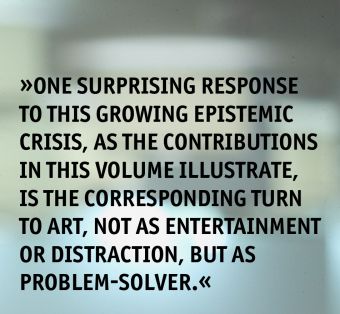
Beyond Instrumentalism: The Aestheticisation of the World
Climate change? Global pandemic? Collapsing biodiversity? Distressed migration? Spiralling inequality? Cutting across many of the urgencies facing humanity is a growing epistemic crisis, a widening gap between our knowledge paradigm and the problems of our day. One surprising response to this growing epistemic crisis, as the contributions in this volume illustrate, is the corresponding turn to art, not as entertainment or distraction, but as problem-solver. While this appears to be largely instinctive—a collective intuition ungrounded by conceptual or methodological clarity—it deserves investigation.
The Crisis of Knowing in the Age of Complexity
How did our problems and our problem-solving get so disconnected? During its rise to prominence, Western, Enlightenment rationality systematically divested itself of subjectivity in order to see the world objectively. Human values, perspectives, and beliefs were dismissed in pursuit of irrefutable facts. The complicated world has become the complex world and with a knowledge paradigm built for the former, we find ourselves, to use a recent metaphor, trying to play three-dimensional chess on a two-dimensional board. Our missing dimension often goes by the name ‘the normative’, indicating elements of identity, meaning, purpose, belief, senses of time and place, and the underlying ontologies shaping our conceptions of the world and ourselves within it. We see this in the declining capacities of our R&D paradigm, privileging science and technology and rendering contributions from the arts, humanities and social sciences illegitimate. The R&D paradigm is built for the problems of two-dimensional chess, but the crises that define our age cannot be resolved in two dimensions alone. Can knowledge creation which enriches our understanding of, and engagement with, these irreducible uncertainties, be of greater societal value in the Anthropocene?1
Art as Magic Bullet
Complexity features an entanglement of normative or human dimensions shaping the problems we are hoping to solve within a paradigm built to ignore those exact dimensions—leading much of the early 21st century on something of a fool’s errand. Yet why the turn to art? Might it weave human values, perspectives, beliefs, and activities back into how we make sense of the world, thereby allowing us to navigate—and manage—our normative entanglements more effectively? Is it, in other words, a means of shifting from the complicated to the complex by adding a third dimension to our chessboard?
From Plato’s suspicion of poets, to church and state controlling art’s expressive range, or Soviet Socialism’s faith in artists as “engineers of the human soul”, and climate activist Bill McKibben crying out “what the warming world needs now is art, sweet art,”2 the idea that art shapes worlds transcends history and ideology. These perspectives share neither politics, epistemology, nor cosmology. Where art happens, faith in its world-making power grows. We turn to art to shape our societies based on a tacit recognition of how art has shaped us, revealing both the durability and vulnerability of art’s relationship to social impact,3 from “did do for me” to “will do for others.” Herein lies the risk of instrumentalising art; often, our enthusiasm for art finds us trying to replicate effects rather than processes. In trying to replicate what art does rather than how art works we jeopardise the means by which art engages life in aesthetic terms, often disenchanting the very power for which its help was sought in the first place. These dichotomies—effects vs processes; what art does vs how art works—are not meant to dim our hopes to apply art to social challenges, but to distinguish between art as a descriptive capacity versus an epistemic capacity. If art is to expand our proverbial chessboard by shifting how we know the world beyond two-dimensional Western objectivity, it must recognise an often invisible fork in the road. Down one path, art forms a tool to serve our two-dimensional, complicated world; down the other, something potentially more transformative awaits. The latter invites the aestheticisation of the world, a reopening of that once-maligned plane of engagement we tried to close over the course of the Enlightenment.
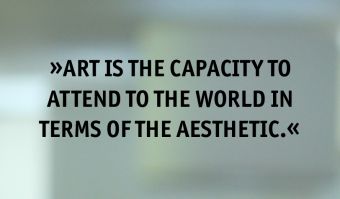
Art as Method
This growing intuition that art offers unrealised capacity to contribute to our growing epistemic crisis deserves enthusiasm. Coordinating the energy and reach of our cultural sectors while bringing them into more applied relationships to societal challenges could prove transformative. Yet such a vision implies an art-society relationship that is necessarily paradoxical—applied yet not instrumentalised, enfranchised yet not autonomous. One approach to this paradox is through a relationship between art and R&D. Historically, these fields dislike each other; art is too impulsive for R&D’s ‘systematic’ approach to knowledge creation, and R&D too reductive to admit the imaginative range of arts practices.4 Yet as art faces a destiny where it is more applied and accountable to its larger impacts, and R&D struggles with the normative dimensions of contemporary challenges, they may not be such odd bedfellows as they seem.
In terms of its value proposition, we often say art is a way of ‘seeing differently’, yet without specifying how, we jeopardise the capacity, while yielding little methodological clarity to contexts of application. Typically, art is considered a power of expression, the sounds, imagery, words, and movements it makes, often leading to its hasty use as a tool for making statements. Yet within this power of expression lies an equally important power of attention. Art is the capacity to attend to the world in terms of the aesthetic; perhaps more than its expressive power, it is perceiving via creative practice that generates such unique value. Consider this within the recursive relationship between mind and world, where mentality produces society, and society produces mentality. Such a dynamic is built for getting stuck. Agency, inspiration, reflexivity and creativity are constrained by design, and design is constrained by agency. Art as a power of attention, a means to engage the world less hampered by this recursive dynamic, offers a unique value that might make the arts vital to innovation. Rendering this explicit articulates a value proposition we can use to operationalise art in service of our worlds while protecting it from being reduced to a charismatic mouthpiece—that ‘power of expression’ alone.
Framing problems in terms of aesthetics is essential to effective applications of arts practices. How do we spot the arts-shaped holes in our world? Here we begin to shape that third dimension on our chess board. Often, we equate the normative with matters of taste and opinion, luring us into thinking that information, data, facts and reason might inspire the reflexivity societal problems like climate change, pandemics, and social and economic justice require. As is far too abundantly evident, divisive dialogue and increasing polarisation are the results of this misconception. Fostering reflexivity, agency, and change at the normative level—that is, navigating that third dimension of our chessboard—requires fashioning carefully constructed passageways that lead from one world to another. Consider how many of us are eager to depart toxic capitalism. Bringing such hope into an applied and accountable relationship with society requires careful consideration of method and evaluation. Clearer problem statements enable more specific questions of artistic method—e.g. what processes engage the problem? And how will stakeholders be involved? In terms of evaluation, words like ‘data’ and ‘assessment’ sound threatening to artists. With clear problem statements and corresponding methods established by the artistic process, can we reconcile the accountabilities of others with our own? In other words, what value does the artistic process seek to produce? Where was this contribution realised or not? What data do we need in order to know? And what processes will be used to interpret and integrate that data in decision-making? This more empowered relationship to assessment allows applied artistic processes to serve more accountable roles in society without trying to prove themselves on foreign terms.
Policy for Playing Three-dimensional Chess
Our core suggestion is that within a much-needed expansion of the R&D paradigm, art might contribute its unique epistemic value to the growing epistemic crisis.
The starting point is to reflect the arts’ distinctive contribution to R&D in the international bible for R&D policymakers, the Organisation for Economic Cooperation and Development’s Frascati Manual: Guidelines for Collecting and Reporting Data on Research and Experimental Development. Now in its seventh edition, the Manual is used by policymakers, statisticians, academics, and others, to help standardise the data collection guidelines and classifications for compiling R&D statistics. In successive revisions, the Frascati Manual has evolved to recognise arts R&D, but it has done so by shoehorning art into scientific understandings rather than extending its own definitions and parameters, e.g., referring to “observable facts” and “knowledge of the underlying foundations of phenomena” not to behaviours, and to “systematic work… directed to producing new products or processes” not to human experiences. Elsewhere in the Manual it is made clear that R&D must aim to resolve scientific and technological uncertainty. It is of fundamental importance that the Frascati Manual and the R&D definitions within it are made fit for purpose for the complexity economy.5
National statisticians in turn must adapt their measurement activities to measure R&D so defined.6 The basics of an approach are already in place with the OECD’s Fields of Research and Development (FORD) classification. Statisticians can use this classification in their R&D surveys to measure R&D expenditure and personnel by fields of enquiry—in other words, broad knowledge domains including the arts–based on the content of the R&D subject matter. Survey returns on R&D spending by FORD are only as good as the accounting data that organisations collect, however, so national statistical institutes need to engage with businesses, public bodies and charities to ensure they too are adapting their R&D measurement systems accordingly.
Armed with more inclusive definitions and metrics, governments can then ensure their R&D strategies, subsidies and tax incentives are fit for purpose too. They can fashion interventions that are designed to fully avail society of the R&D potential of the arts. What, for example, would the missions’ turn in innovation policy look like if artists participated in the setting of grand challenges, foresight exercises, policy design and planning? How would skills and policies for the knowledge economy change if they privileged the aesthetic as much as science and technology, and what would this mean for innovation and productivity? If the qualifying expenditures for R&D tax reliefs were widened to embrace arts R&D, while the arts learned to structure inquiry towards compelling data production, what new interdisciplinary business solutions to society’s problems might we see?
Sources
1 David Maggs, Art and the World After This. Metcalf Foundation, June, 2021.
https://metcalffoundation.com/publication/art-and-the-world-after-this/
2 Bill McKibben. “What the warming world needs now is art, sweet art,” Grist Magazine. April 2005. http://grist.org/article/mckibben-imagine/
3 David Maggs and John Robinson. Sustainability in an Imaginary World: Art and the Question of Agency. Routledge, New York, 2020. See, in particular, chapters 7 & 8.
4 Hasan Bakhshi, Alan Freeman and Radhika Desai. “Not Rocket Science: A Roadmap for Arts and Cultural R&D,” MPRA Paper 52710, University Library of Munich, Germany, revised 01 Jan 2010.
https://ideas.repec.org/p/pra/mprapa/52710.html
5 Hasan Bakhshi and Elizabeth Lomas. “Defining R&D for the Creative Industries,” Nesta/AHRC/UCL, 2017. https://ahrc.ukri.org/documents/project-reports-and-reviews/policy-briefing-digital-r-d/
6 Hasan Bakhshi, Jonathan Breckon and Ruth Puttick.”Understanding R&D in the arts, humanities and social sciences,” Journal of the British Academy, volume 9.
Hasan Bakhshi
Hasan is Director of the AHRC-funded Creative Industries Policy and Evidence Centre, a Nesta-led, AHRC-funded research consortium of ten universities, charged with improving the evidence base for policies to support the UK’s creative industries. Prior to Nesta, Hasan worked as Executive Director at Lehman Brothers, as Deputy Chief Economist at the Foreign and Commonwealth Office and as an economist at the Bank of England. He has published widely in academic journals and policy publications on topics ranging from technological progress and economic growth to the economics of the creative and cultural sector. He is also Adjunct Professor of Creative Industries at the Queensland University of Technology, has an honorary Doctorate from the University of Brighton for his work on economic policy for the creative industries, and in the 2015 New Year’s Honours was awarded an MBE for services to the creative industries. Hasan is a member of the government’s Creative Industries Council, the Department for Digital, Culture, Media and Sport’s Science Advisory Council and Advisory Board for its Culture and Heritage Capital Framework. In 2017, he was elected to sit on the Royal Economic Society Council.
Picture © NESTA

David Maggs
David Maggs carries on an active career as an interdisciplinary artist and researcher focused on arts, climate change, and sustainability. He is the founder and pianist for Dark by Five, has written works for the stage, and collaborated on large augmented reality and virtual reality projects (see Mummer’s Journey). David is the artistic director of the rural Canadian interarts organization Gros Morne Summer Music, and founder and co-director of the Graham Academy, a youth training academy founded in honour of his teacher and mentor, Dr. Gary Graham. He initiated and coproduced the CBC doc channel film The Country, exploring the Canadian government’s handling of indigenous identity in Newfoundland. As a fellow at the University of Toronto’s Munk School for Global Affairs, David co-authored Sustainability in an Imaginary World (Routledge Press, 2020) with mentor and longtime collaborator John Robinson. He is former senior fellow at the Institute for Advanced Studies in Sustainability in Potsdam, Germany, where he led work on culture and climate change. Currently he is the inaugural Innovation Fellow in residence at the Metcalf Foundation where he will explore the role of art in society, with particular focus on innovation, climate change, and cultural policy.
Picture © Grady Mitchell

A Culture of Ecology: the 21st Century Renaissance
Fellow at King’s College London
and The National Gallery X, London
A Culture of Ecology: the 21st Century Renaissance
Beauty, epiphany, neurons
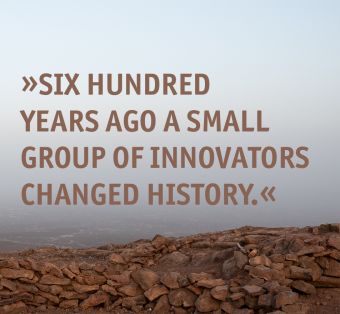
Six hundred years ago a small group of innovators changed history. They lived in Italy, and the name of their era, the Renaissance, is delightfully compact. It means rebirth, renewal and the emergence of new character. Europe has experienced more than one renaissance, but the Quattrocento occupies a special place in the imagination. The reason is clear. Unlike comparable eras, the Italian Renaissance produced colourful characters who embody wide-ranging achievement: Renaissance people who excelled in the arts, science and engineering. The influence of Filippo Brunelleschi, Leon Battista Alberti and Leonardo da Vinci spread throughout Europe, and they continue to inspire the world. In most eras we discourage polymaths, but we make an exception for Quattrocento genius.
Header photo: View from Erte Ale volcano in Ethiopia
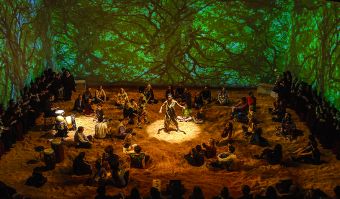
This was a study for the performance installation ›Epiphany: The Cycle of Life.‹ (c) 2015 Ali Hossaini
Photo below: Epiphany: The Cycle of Life
Singer Netsayi and the Young People’s Chorus of New York City perform ›Epiphany: The Cycle of Life‹ at BAM in New York City. (c) 2015 Ali Hossaini
What lessons can we take from the Italian Renaissance? Contemporary society demands specialisation for good reason. Centuries of research, documentation and industrialisation have created deep wells of knowledge. Sub-disciplines of art, science, engineering take long years to master, and they possess cultures that minimise outside influence. Specialisation has brought spectacular results, but perhaps it has limits. One of the Quattrocento’s best-known products, drawing in perspective, offers a case study in the benefits of multidisciplinary training.
Perspective uses optical codes to create realistic images. Painting dominates discussions of it, but the technique’s application goes beyond art. Perspective is a science in its own right, and the ability to represent objects with mathematical accuracy supported a spectrum of progress in Europe. Engineers adapted perspective to develop machines. Anatomy, botany, astronomy and other sciences benefited from accurate drawings. Cartographers created navigational maps, and maritime nations used improved technology to pursue interests at home and abroad. The Renaissance boost to Europe upset the world’s balance of power.

It was not a given that 15th-century Italy would invent perspectival drawing. Euclid codified optics over two thousand years ago, and some scholars argue that the ancient Greeks applied perspective to painting, architecture and theatre. As the name implies, the Renaissance was a rebirth of classical learning. But the Italians of the Quattrocento went further than the ancients, and perspective spread across Europe from Italy, and from Europe to the world. We can describe perspective in one stroke. By applying science to art, and shaping science with art, Renaissance polymaths created the flat panel display.
The beauty of perspectival art reveals the structure of space. Our first guide to perspective is Alberti’s 1435 treatise On Painting, a slender volume which generated incalculable economic value when its techniques were applied to new disciplines. Within a century of Alberti’s treatise, inventors used the camera obscura to automate perspectival drawing, and, within decades, Louis Daguerre and William Henry Fox Talbot industrialised it by inventing photography: drawing with light. To this day, cameras are a locus of innovation, notably in mobile handsets, that charge economic growth. At the same time, the camera is a useful metaphor in digital media. Gaming and animation developers use a ‚camera tool‘ to define the user’s point of view. Today’s 3D design software is one of Alberti’s many heirs.
Here is a curious fact. We perceive the world in three dimensions, and people desire rich immersive experiences. Huge investments have been made in next-generation spatial media platforms since the 1950s. Yet 3D cinema, VR and other forms of immersive media have not replaced flat panel perspective. Investors have waited more than half a century for the transition to spatial media. Why do 600-hundred-year-old techniques—the linear perspective of Brunelleschi, Alberti and da Vinci—continue to dominate creative production?
The stakes are high. When aggregated into XR (Extended Reality), spatial media could transform the Internet into a ‚multiverse‘, a pervasive data environment that merges with the physical world. Nations, corporations and individuals are vying to create the first-generation multiverse, and whoever founds it stands to gain enormous capital through first-mover advantage.


We can speculate on why a spatial multiverse eludes us. Is it because polymaths invented the flat panel display? Renaissance engineers were accomplished artists and scientists; indeed, it is impossible to characterise them with a single word. Their aesthetics embodied intellectual and technical rigour, and they combined innovation with humane values. Consider Brunelleschi’s architectural masterpiece, Il Duomo. Accidents commonly mar construction, but, during Brunelleschi’s management, Florence’s cathedral was erected without a death. Renaissance polymaths studied ancient texts, but they probed nature with tools of their own invention. They envisioned modern science by creating humane environments filled with beautiful objects.
Contrast the Quattrocento with today. Contemporary professionals specialise while the paragons of the Italian Renaissance embodied wide-ranging talent. Perhaps this explains their lasting influence. Drawing in perspective was not instantly popular. Now we take the medium for granted, but 15th-century audiences treated perspective as advanced technology: difficult to learn, marginalised and controversial. Perspective’s utility did not immediately show, and its power to create illusions seemed a gift from Satan. But Renaissance paintings incorporate fine aesthetics. Their masters created paradigms for the media they invented.
Perspective could have been popularised earlier. By the Middle Ages, the science of perspectiva, or optics, was well-established in European universities. After the classical era, Islamic scientists such as Ibn al-Haytham refined it, and mediaeval European painters such as Giotto experimented with spatial illusion. Finally, in the late 14th century, Claudius Ptolemy’s Geography surfaced in Florence’s educated circles. In Geography, Ptolemy describes how to portray the Earth’s sphere on a flat surface, and it is likely that this technique inspired Renaissance experiments. What did Brunelleschi and his colleagues add to the established science of optics? An aesthetic tradition and the desire to draw with scientific accuracy.
Let me speak as an artist. What’s missing from spatial media is a coherent world view. Unlike Renaissance paintings, recent generations of spatial media dropped into a creative and ethical vacuum. Renaissance inventors drew on the ascendence of humane values, and their work embodied visual harmonies that were ethical as well as aesthetic. They were creatures of their time who championed ascendent humanism.

Let me ask again: What lessons can we take from the Renaissance? Aesthetics and contemporary ethics should drive engineering. Technology should express its time; it should express the possibilities and necessities of the moment. Consider another great polymath. In the early 19th century, the Prussian explorer Alexander von Humboldt travelled the world in a quest for grounding principles. Arguably the founder of ecology, von Humboldt published illustrated books that demonstrated interconnections among the physical world, the biological environment and human interventions. Though celebrated while alive, von Humboldt’s star faded and his holistic, interdisciplinary theories were replaced by specialisation and linear causality.
Humanity stands at a precipice, and creative industry is both problem and solution. Our ability to create artificial environments has masked disastrous mismanagement of nature. At the same time, cultural conflicts have paralysed our capacity to act. Why can’t we save ourselves and the innocent creatures who share our planet? The answer turns on the exclusionary cultures we have created—cultures which oppose the ecologically transcendent humanism of Alexander von Humboldt and other ecologists.
The time of art for art’s sake has passed. Likewise, science for the sake of knowledge. Ironically, the culture of purity—the very concept of purity—has created societies antithetical to life. Disciplinary silos, plodding research tracks and philosophy’s retreat from reality into signs maintain this dangerous state. We must engage the world as it is, not as we imagine it. Our paradigms have failed. We need a culture as well as a science of ecology. This is the mission of a 21st-century renaissance.
The people of the 21st century must solve the contradictions caused by specialisation. Paradoxes abound in today’s society. Connections divide rather bind. Governments exhaust a tired planet with economic stimuli. Facts are scorned; forests burn; glaciers melt. To dispel confusion, we must dispel illusions—the illusions created by a fragmented culture that abdicates responsibility for the whole.
Hope lies within the irony of our position. Global infrastructure must be rebuilt, but we need new ways of building that conserve resources. Doing more with less requires new conceptual frameworks. Progress relies on education, innovation and labour—all sources of economic, ethical and aesthetic value. In brief, successfully addressing global crises means growing opportunities. What is the 21st-century renaissance? A context for the cross-disciplinary training, holistic thinking and collective action that creates a sustainable, circular economy: An economy that thrives within nature.

Let us return to spatial media. How should the multiverse evolve? Should it sever humanity from nature, or can it bind society to ecology? Should it enable monopoly, even tyranny, or provide opportunities for all? Markets will determine the multiverse’s form but so will designers. Rather than inventing for its own sake, the multiverse’s engineers need to judge outcomes. Good intentions alone are a recipe for disaster. In the 1990s, I deployed social media into television networks. My goal was to create media for a democratic society. Massive channels, controlled by a few, should be fragmented into capillaries run by individuals. Social media would—I thought—encourage critical thought, dialogue and solidarity.
Here’s another lesson from the Quattrocento. Its polymaths did not separate thinking, making and doing. Nor did they separate ethics, aesthetics and technics. Today holism is deeply unpopular, but I think it is vital for innovators to adopt it. And I argue that holism is vital for producing commercially viable forms of spatial media. The multiverse is not an end in itself: it is the foundation for future generations to innovate. My work in developing standards for ethical design of AI and brain-computer interface has convinced me that media will converge with architecture, urbanism and biology. The next-generation Internet will transcend our current conceptions. Did Alberti imagine streaming media when he wrote On Painting? Imagine the value unleashed by 21st-century infrastructure which supports decades, even centuries, of progress.
Contemporary crises stem from narrow expertise coupled to wishful thinking. Like Quattrocento polymaths, future designers should hold clear aesthetic and ethical values, and they should embed them in their inventions. Alberti, Brunelleschi and da Vinci were humanists, and here they are obsolete. Man is not the measure of things: We need to embrace the biosphere. Like von Humboldt, we should be ecologists who position humanity in nature. A culture of ecology reflects this understanding. It understands the depth of our crisis—the survival of humanity—while driving economic growth.
In a world where inventions are quickly commoditised, culture generates profit. Renaissance polymaths were supported by mecenati, patrons motivated by fame coupled to humanism and social progress. Investors in the New European Renaissance require similar motivations. As Alexander von Humboldt observed, everything is connected. Europe must progress, but European progress should serve, not overrun, the planet.

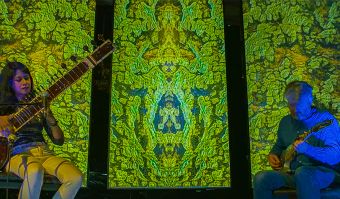
The New European Renaissance could mesh creative industry, science and engineering with an ethos of global awareness. It would preserve the cohesion of European institutions, and it would support the relevance of European industry—and the European project—in a world of superpowers. Let us invest in a 21st-century Renaissance that starts in Europe but benefits every global citizen. Europe’s institutions, the heirs of the mecenati, can generate vast new wealth, and they can also ensure the benefits of prosperity for future generations. What illuminates this path to a bright future? Humanity, technology and ecology coupled to creative imagination.
Photo left: GROUPTHINK: The Internet of Neurons
Neuroscientist Shama Rahman and computer scientist Mick Grierson collaborated with Ali Hossaini, an AI and a cohort of artist-engineers to create GROUPTHINK. Performed at National Gallery X in London and broadcast via Ars Electronica Festival 2021. (c) 2021 Ali Hossaini
More info on the artworks
Epiphany: The Cycle of Life.
https://pantar.com/epiphany/
GROUPTHINK: The Internet of Neurons
https://www.nationalgallery.org.uk/national-gallery-x/groupthink
Sources
All portrayed pictures and paintings in this contribution are (c) Ali Hossaini, 2021.
Dr. Ali Hossaini
Fellow at King’s College London and The National Gallery X, London
Ali Hossaini works at the cutting edge of art, technology and science. Acclaimed by the New York Times, which calls him “a biochemist turned philosopher turned television producer turned visual poet,“ he is noted for cross-disciplinary work that addresses thorny problems. He is a Visiting Senior Research Fellow in the Department of Engineering at King’s College London. In this capacity, he has developed use cases for 5G with Ericsson, studied unequal healthcare outcomes at the Institute of Psychiatry, Psychology and Neuroscience, and assessed the threat from AI with security think tank RUSI. He serves on IEEE committees developing standards for safe AI and brain-computer interface, and he is active as a visual artist, writer and director. In 2019 he co-founded National Gallery X, a program that researches the future of art and audience, where he serves as co-director.
Picture: © Leslie Cummins

Arts Education for All: The Case of Finland
Managing Director at KAAPELI cultural centre, Helsinki
Arts Education for All: The Case of Finland
Cultural capital supports the capacities of children and young people to actively participate in society. Experiences from Finland show, however, that a generous public service provision doesn’t necessarily mean equal service offering for all. Children with a minority background and children coming from lower social classes are underrepresented among the users of the cultural programs aimed for children and young people. Recent initiatives in Helsinki, the Finnish capital, may have found a new way to tackle this challenge.
A national program for Arts education
Finland was named the happiest country in the world in 2021 by the UN Sustainable Development Solutions Network for the fourth time in a row. Alongside with the other Nordic welfare states, the country is well-known for its generous public services. These services include the public school system as well as the public healthcare system, but Finland invests heavily also in children’s arts education. And for good reason: arts and culture are known to have a positive impact on children and on young people and their future.
The national program called Basic education in the arts provides after-school-hours arts education in the local art schools in Finland. Training is goal-oriented, tied to a national curriculum and taught by professionals in the field. There are nine different art forms to choose from: architecture, circus, crafts, dance, media, music, literary art, theatre and visual arts (Luoma, 2020). Typically, education is subsidised both by the national and the local government. However, as the services are provided by private organisations, participants are required to pay to fee in order to participate.
Although, this model has resulted in admirable results—especially in the field of classical music that can be monitored both in the numbers of people playing classical music themselves and in the popularity of classical music concerts—the system hasn’t been as successful in reaching all demographic groups of the Finnish society. A study conducted by the City of Helsinki in 2016 showed that the proportion of students attending the program was much higher in wealthier social classes than in the lower ones.
Socially disadvantaged children cannot be reached
When dividing Helsinki’s neighbourhoods in three groups according to their socio-demographic profiles, it could be concluded that participation in the arts program was most frequent where the socio-demographic profile was highest, where the services were easiest to reach and where the educational offering was highest. Participation was the lowest in the lowest socio-demographic profile and where the distance to the training places where the longest. An additional finding was that a large portion of the participants in the educational program were children and youth that had already multiple other hobbies (Vismanen et al., 2016).
Another study looking at the cultural policy and cultural diversity in the Nordic countries revealed that “people belonging to minorities, immigrants, and natives with a foreign background are mostly underrepresented both as artists, as people employed by arts institutions and organisations, and as public or audience” (Saukkonen, 2018). In addition, the challenge to reach these underrepresented groups had become more complex over time as the number of minorities had and diversified ethnically, linguistically and religiously.
Academic research and experiments
In attempting to find solutions to the situation, Finns have relied on one hand on academic research and on the other on experimentation with new ideas.
In 2016, The University of the Arts Helsinki started a six-year project called ArtsEqual. It was the largest research initiative in the field of arts ever to have taken place in Finland studying arts as public service and aiming for better equality and resulting in policy recommendations. All in all, six research groups studied the subject from various sides. The group “Basic Arts Education for All” emphasised in one of its policy briefs (Laes et al., 2018) that although arts and cultural education strengthen the cultural capital of children and young people and support their capacities to actively participate in the society, the unequal access to them could also increase the social exclusion of the children that could not participate in the program for some reason. In turn, a policy recommendation (Anttila et al. 2017) by the research group “Arts@School” suggested that public schools should be seen as “Finland’s largest cultural centres, where high-quality, diverse arts and cultural education is equally available to all.”
In parallel to this research work, the City of Helsinki launched a pilot phase of the Helsinki Model of arts education that brought the activities to suburbs and, thus, closer to the disadvantaged groups. Also, an arts education project called “Art Testers”, led by the Association of Finnish Children’s Cultural Centres was launched targeting teenagers.
The pilot phase of the Helsinki Model that lasted three years (2016-18), consisted of four case studies in four different suburbs around Helsinki (Lindholm & Päiviö-Häkämies, 2020). It relied on the cooperation of the cultural department of the City of Helsinki, of neighbourhood associations and of cultural institution ranging from theatres to museums and to dance and circus companies. The pilot succeeded in improving the perceived quality of life in the pilot suburbs but it taught that the local population couldn’t be reached simply by delocalising the old model of arts education. The content needed to be adapted to the setting. And yet, the most challenging groups—socially most marginalised and minorities not speaking Finnish—were still very hard to reach. This was partly because they didn’t have any previous relation to art or had even a hostile attitude toward it. City of Helsinki continues the Helsinki Model program and keeps fine-tuning it.
Art Testers integrated cultural offerings to the school curriculum initially from 2017 till 2020. Every year, it brought all Finnish 8th graders (15-year-olds) to a visit in one or two high-esteemed art attractions across Finland, such as opera or theatre performance, a concert, or an arts exhibition (Art Tester, 2021). School groups were provided with tickets and transportation to the events. Approximately 60,000 teenagers participated in the project yearly. The project ended up being so popular and successful that in the fall 2020 the Finnish Ministry of Education and Culture secured the continuation of the program.
Towards the future with “Hobi” and “Culture Kids”
Based on the research results of ArtsEqual and on the experiences gained from Helsinki Model and Art Testers, Finland is now complementing its Basic education in the arts with Hobi, the Finnish model for leisure activities (https://harrastamisensuomenmalli.fi/en/). In parallel, a new project called “Culture Kids” is being launched in Helsinki. Both initiatives aim to make their offering as accessible as possible so that truly every child could take part in the activities equally. However, the age groups targeted in each project are different.
The main objective of Hobi is to increase the wellbeing of school children by providing them a leisure activity free of charge through the school system (Hobi, 2021). However, the model is not restricted only to art-related leisure activities, and sports activities, for example, are included as well. The activities are funded by the ministry and organised by professional actors in the field of leisure in cooperation with schools. Hobi’s website started operating in August 2021.
Culture Kids’ target group, in turn, is babies, as well as their families (Culture Kids, 2021). For every child born in 2020 or after and living in Helsinki the project will designate a cultural operator that will sponsor the child’s initiation to art. The cultural sponsor is determined by the year of birth of the child. Children born in 2020 are sponsored by the Helsinki Philharmonic Orchestra, and children born in 2021 will be sponsored by theatres in Helsinki. Every year, the sponsor will invite the child and his/her family to at least two cultural events that are designed to support the child’s developmental stages and promote the well-being of their family. Culture Kids events are free of charge and the activities will continue until the child starts school. By inviting the whole age group with their family members, the program hopes to attract families that wouldn’t otherwise be prone to participate in cultural activities and by maintaining the sponsorship for six years, it aims for a lasting and living relationship between the children and art.
The Finnish example shows that even successful arts education programs have flaws and that if an arts education program has social aims, its practices need to be regularly revisited, as the demographics of our societies change. Finland believes that all children irrespective of their social background deserve to experience and practice art regularly. Let’s hope that in the future this will be true for all children all over Europe.
References
Anttila, Eeva et al. Peruskoulu: Suomen suurin kulttuurikeskus, (2017), ArtsEqual Policy recommendation 2/2017
Art Testers website (2021), https://taidetestaajat.fi/en
Culture Kids website (2021), https://kummilapset.hel.fi/brochures/en.pdf
Happiness Report 2021 (2021), https://happiness-report.s3.amazonaws.com/2021/WHR+21.pdf
Hobi – The Finnish Model for Leisure activities website (2021)
Laes, Tuulikki et al. Toimenpidesuositus Saavutettavuus ja esteettömyys taiteen perusopetuksen lähtökohtana (2018), ArtsEqual Policy recommendation 1/2018
Lindholm, Arto & Päiviö-Häkämies Laura (ed.). Helsingin malli – taidetta ja osallisuutta lähiöihin Miten pilottikauden hankkeet tavoittivat alueiden asukkaat 2016–2019?, (2020), Humanistinen ammattikorkeakoulu julkaisuja, 114.
Luoma, Tiia, TAITEEN PERUSOPETUS 2020 – Selvitys taiteen perusopetuksen järjestämisestä lukuvuonna 2019–2020, (2020), Opetushallitus, Raportit ja selvitykset 2020:4
Saukkonen, Pasi, Cultural policy and cultural diversity in the Nordic countries (2018), https://pasisaukkonen.wordpress.com/category/kulttuuripolitiikka/
Vismanen, Elina; Räsänen, Petteri, & Sariola Reetta, Taiteen perusopetuksen tila ja kehittämistarpeet Helsingissä (2016), Helsingin kulttuurikeskus
Dr. Kai Huotari
Managing Director at KAAPELI cultural centre, Helsinki
Dr. Kai Huotari (b. 1972) has 20 years of management experience in the fields of culture, academia and technology. Since 2015, Huotari has worked as Managing Director at KAAPELI the largest cultural centre in Finland. Huotari has held managerial positions also at EIT Digital, at Helsinki Institute for Information Technology HIIT, and at DocPoint – Helsinki Documentary Film Festival. In 2010-2012, Huotari worked as visiting scholar at UC Berkeley School of Information. He is a member of the board of YLE The Finnish Broadcasting Company and he serves as chairman of the board in Kunsthalle Helsinki. Huotari has a doctoral degree in economics and business administration, an M.A. degree in filmmaking, and a M.Sc. degree in computer science.
Picture © Mr. Vertti Luoma
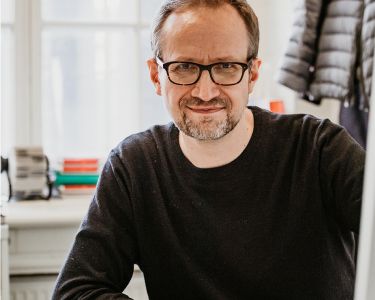

A Tribe Called Zimbabwe
Program Lead at Magamba Network

A Tribe Called Zimbabwe
A Tribe Called Zimbabwe is a powerful Zimbabwean brand and company that celebrates Zimbabwean culture and heritage through fashion and architecture. It is the brainchild of Nomakhosazana Khanyile Ncube, known popularly as ‘Zana K’. She is a multifaceted Zimbabwean woman, former Miss Zimbabwe 1st Princess, Former Miss Bulawayo 2005, an Architect, Poet, Blogger, Cultural Activist, and Founder and Creative Director. Zana’s brand positions itself to explore creatively what being African and Zimbabwean means in today’s world, showcasing the nation’s fashion and cultural identity to both Zimbabweans and the world around it.
Zimbabwe has a broad spectrum of tribes, including the Ndebele, Kalanda, Tonga, Venda, Sotho and the Shona, the latter of which is an umbrella identity of an ethnic Bantu people that comprise the Zezuru, Rozvi, Korekore, Karanga, and the list goes on. While different in language and practices, there are commonalities, and one of the strongest is cattle. The tribes place great value on cattle and their role in society. Viewed as a symbol of wealth and royalty, cattle also carry socio-cultural connotations. A Tribe called Zimbabwe expresses the differences in ethnic roots and identities between the broad communities that make up Zimbabwe, while also amplifying the shared values that unite them as one. Drawing from the shared view of cattle, the brand’s choice material is cowhide. Handmade, the products are built on a concept of durability and recycling.
Header Picture: Zana K, Copyright by Ernest Mackina
Picture left: Zana and her mother at Zana’s graduation, Copyright by A Tribe Called Zimbabwe
In an interview on Asante Africa, Zana says that “our vision is to grow into Zimbabwe’s centerpiece of Afrocentric Apparel and Interiors, and master the art of translating our African identity and heritage into relevant modern products. We aspire to make an overwhelming impact in the fashion industry by creating a high consumer demand for our products through strategic relationships, advertising and participation in local and international fashion shows, as well as other relevant trade shows.” This vision in itself shares a commitment to get not just Zimbabwe, but the world understanding and appreciating the concept of Zimbabwe culture and identity.
»The same way I envision making art out of how concrete, steel and glass join together to form an aesthetically pleasing building, is the same way I make art out of how cowhide, chiffon, feathers and horns come together to form a beautiful garment.« – Zana Kay


The integration of architecture and fashion is potentially the most fascinating aspect of the brand. “I see no difference between the principles in architecture and those in fashion, because both are about tectonics… which is the technique of how materials come together,” says Zana. “The simultaneous transition between architecture and fashion for me is easy. The same ‘presence’ and experience I want to create in my architectural spaces is the same presence I like to invoke in my fashion garments, which is Royalty, and the celebration of rich African/Zimbabwean culture.”
Picture above: Detachable Bows, Copyright by A Tribe Called Zimbabwe
Picture left: Zana K with Sandra Ndebele at Roil Bulawayo Arts Awards in A Tribe Called Zimbabwe Outfits, Copyright by CNC Productions
The brand in today’s world
There has always been a question about Zimbabwe’s sense of cultural identity, particularly because of dominance of a more Westernised fashion culture in the continent. The fashion world continues to shape narratives about the identity, practices and value systems of countries and societies. The threat of generations growing up ignorant of their cultural roots and identity is one the brand is standing up to. The brand is a leading voice on what being Zimbabwean means, and speaks to the responsibility creatives have to use their art to preserve identities, while also utilising others’ discarded materials to create masterpieces that can be used to sustain cultural identities and create employment. The brand has tailored products that celebrate and recognise the powerful role of women in our past and present, and while this may not present itself as political, it carries the potential and capacity to use fashion to demystify the views that have for generations been used to confine women to certain gender roles.
Zana has challenged the use of colonial regalia by the Mayor and town clerk in council chambers. She still feels that the colonial identity runs the city because while whites were removed from the governance of cities in independent Zimbabwe, the blacks that came after couldn’t wait to step into their clothes and shoes. She has on different occasions proposed a commitment to help re-approach council regalia to ensure it is a representation of the society it stands for today. While that door remains closed to her, she remains convinced that genuine appreciation of the Zimbabwean identity involves adoption of materials in clothing that define the nation. This action speaks into the powerful reflections cultural fashion allows people to have, the manner in which it challenges us to rethink how our lives everyday feed into or take away from who we truly are.
As the world looks forward, to learn from each other, to share ideas, to ride the wave of change occurring in different ways and places, fashion must be seen for what it is. As an advocacy tool. As an educational instrument. As a marker of identity. It must be allowed through brands like Zana’s, to breathe life into a world that might otherwise be lost.
Mantate Q Mlotshwa
Program Lead at Magamba Network
Mantate coordinates Arts4Change, a creative arts and media program under the new Narratives for Accountability in Zimbabwe (NNAZ) Project which is a joint initiative of Accountability Lab Zimbabwe, Magamba Network and Kubatana Trust. She sits on the national board of the Zimbabwe Coalition on Debt and Development (ZIMCODD) and the African Women Leaders Network Youth Caucus Committee for Zimbabwe. She is a producer and co-host of ‘The Resistance Bureau’, a podcast that convenes leading voices on critical issues confronting Africa. Mantate is the Founder and CEO of the creative fashion brand U Motle. She is a poet, speaker, blogger and published co-author of Turquoise Dreams. Mantate is a Psychology graduate from the University of Zimbabwe.
Picture © Naka Visuals


For those who are inside the whale: We need a new enlightenment
Writer, playwright and filmmaker from Zimbabwe

For those who are inside the whale: We need a new enlightenment
Peace Prize of the German Book Trade 2021 – Acceptance Speech of Tsitsi Dangarembga, held on 24.10.2021 in Frankfurt am Main
Dear honoured guests all, I feel, standing before you here today, as I imagine Jonah must have felt when he was inside the whale. Taken in by a great beast like a bit of plankton floating by, landing within the entrails of a massive mammal, not knowing how he will find his way out of the great churning gut, but knowing very well what the end process of being digested is and therefore, while feeling grateful at no longer being tossed in the raging sea, nevertheless also feeling highly excited.
Indeed, the award of the Peace Prize of the German Book Trade 2021 is a cause for great excitement in my life. I did not ever imagine that one day I would stand in this lovely venue in Frankfurt, a city in a country that I conceive of as having been the strong umbilical chord of western empire, in order to receive the German Book Trade’s most distinguished prize. Therefore, I am astonished to stand before you today. At the same time, I am delighted, and I am humbled at this unfolding of events. I am thankful to my publishers, Orlanda Verlag, who first published my work, and then submitted it for consideration; and I thank the jury who recognised positive value in my voice, a voice from that part of the world so often described as other and so often preceded by negative qualifiers. There are seven billion human beings on the planet. I am now one of the few of that great number who understands what a great privilege it is to find oneself in a place that not even imagination had been capable of transporting one to.
Zimbabwe, the nation-state I come from, has never known peace. Various institutionalised forms of violence were practised on black bodies by white bodies in Zimbabwe when British settlers arrived to occupy the land. Officials of the British South Africa Charter Company, the private company founded by Cecil Rhodes in 1889, whose members were outriders of the British Empire, used brutal tactics to bring the local people to heel.
Cecil Rhodes‘ Pioneer column of 500 men armed with an assortment of weapons that included Maxim guns, marched into the area that is now Harare, capital of Zimbabwe, to annexe the land formally for the British Empire in 1893. Ensuing economic violence saw black bodies being taxed in money for the houses they lived in when the invaders arrived. The population did not utilise a money economy at the time, thus the requirement for money forced the population into labour for the settler community on the terms the settler community offered, in order to obtain the money required to comply with the taxation system. Other forms of economic violence included different rates of payment for the same agricultural products, depending on the skin colour of the producer, with black producers being paid less than white producers. There were also restrictions on the goods black people could trade. Nutritional violence was practised by settler authorities through side-lining traditional small grains commercially in favour of less nutritious maize that had been introduced by European settlers. Metaphysical violence included the denigration of pre-colonial belief and other symbolic systems, such as religious, political, knowledge, legal and language systems. This metaphysical violence was part of a deliberate British strategy to create a metaphysical empire.


Various forms of violence were unleashed on black bodies as the new settler state evolved. These forms of violence included the banning of black political parties, police brutality, judicial harassment, abduction, detention and torture. The violence of the denial of freedom was encoded in laws that determined such things as where black bodies could be at what time, where minds embodied in black bodies could obtain education, where a black body could purchase land or farm, and what kind of alcoholic beverage could be sold to or imbibed by a black body where.
In 1965, the British settler community of the country, now called Rhodesia, declared their own independence from Great Britain. This declaration of independence by the white population was in response to the British policy of decolonisation through negotiating independence with its colonies that evolved in the 1950s. The new policy was an imperial response to unrest in the colonies where there was political agitation for independence through majority rule. As majority rule in a predominantly black state meant rule by black people, the settler community of Rhodesia acted to prevent it by unilaterally declaring independence from Britain.
Black agitation for majority rule continued in Rhodesia after the Unilateral Declaration of Independence by the white settlers in 1965. New forms of racialised violence were practised. For example, the settler state, fearing being swamped by a rapidly increasing black population, secretly instituted policies for black population control that included tubal ligation of fertile black women without their consent. At the same time, efforts to retain its white population prompted the settler state to institute repressive regulations designed to prevent its white citizens from emigrating. Zimbabwe has always been a violent and repressive state.
As a result of this history, at independence in 1980 Zimbabwe had a violent outgoing settler state. Being born through a brutal liberation struggle in which atrocities that I cannot go into here were committed on both sides, the incoming nationalist state was just as violent. Its military rhetoric focused on conflict, antagonism and enmity, and this is the philosophy that holds sway amongst Zimbabwean authorities to this day. The antagonists and enemies are any entities, including citizens of Zimbabwe and their organisations, that do not comply with the military rulers‘ wishes. Complaints of intimidation and torture by the ZanuPf authorities began as early as 1980, the year of independence. A whole genocide was overlooked by the rest of the world a few years later. Since then violence that uses the atrocious tactics of the liberation struggle has flared up whenever power is contested, usually at election time, but also on other occasions.
The formative violence of the Zimbabwean nation state is not an isolated historical occurrence. The greater part of the world has experienced the multi-faceted violence that I have described in the Zimbabwean case at the hands of western empire. This violence is standard for all the imperial enterprise practised by the western quarter of the world on the rest of the globe, a process that began in the fifteenth century. In fact in some cases, such as the USA the process was even more violent with entire nations being wiped out through genocide. We should not be surprised then that violence – physical, psychological, political, economic, metaphysical and genocidal – is too often the order of the day in postcolonial countries. These kinds of violence are structured into the global order that we live in, and have their root in the structures of western empire that began to be formed over half a millennium ago. This is to say that the west, with all its technology and belief systems and practices, is built on these multiple ongoing forms of violence, which it exported to the rest of the world and which are now practiced as eagerly in postcolonial states as they were by imperial and colonial states.
Obviously, peace cannot thrive under these conditions. Only violence thrives in conditions of violence. It is a well-known fact that violence begets violence and we see this all over the world today, even in the various homes of empire. Imperial violence created conditions that caused many people to leave their homes and migrate to imperial countries. Citizens of the imperial countries resent this and mete out violence onto the bodies of the immigrants in various ways, including through institutional violence that is justified as an administrative necessity, a justification that was also given during the colonial era. At the same time, nationals of imperial nations who have a more developed sense of peace and justice take on their country mates who mete out violence to immigrants and conflict results in the imperial heartland. It is clearly a no-win situation. What are we to do, then, to foster peace? Clearly the world structure that ushered in the specific kinds of violence of our era cannot easily be undone. The more than seven billion of us human residents of this planet are today all connected to and embedded in that global system.
Here is an answer, and I personally believe that this answer is simpler than we might think. The violent world order we live in now was brought about by certain hierarchical modes of thinking. The solution is to undo the racialised and other hierarchical modes of thinking based on demographics such as gender, sex, religion, nationality and class, and any other, that were and continue to be the building blocks of empire throughout history, throughout the world.
Our current global dispensation does invest large amounts of money into influencing group behaviour. Methods of influencing group behaviour are taught in courses for disciplines such as marketing and business studies, politics and propaganda studies all over the world. Such courses teach students how to define a target group by segmenting a population according to a range of demographics. The desires of this population are then manipulated with the aim of this manipulation being not the good of the people concerned or an increase in peace, but in order to maximise something that we refer to as profit. This may be financial, political, social or any other kind of human profit.
I put it to you that this thing we call profit does not in fact exist. In absolute terms, the notion of profit is a fallacy. In the dimension of the human, and the world we inhabit physically, events and matter are localised in time and space. Value that appears in one time and place is value that has been removed from another time and place. A system based on profit, on receiving more than is given, is a system of exploitation. Systems of exploitation result in concentration and deficit. A system that manufactures concentration on the one hand and deficit on the other is a system of imbalance. Such a system is inherently unstable and therefore not sustainable. How then have we come to invest in an unstable, unsustainable system that is bound to lead to our downfall?
A little less than four hundred years ago, a Frenchman wrote a long paragraph on the nature of certainty, that is the nature of knowledge without doubt. One phrase of this long paragraph has come down to us. This is the phrase „I think therefore I am“, now one of the most famous and well-known phrases of western philosophy. In this conceptualisation of the world, „I think“ is the only direct, irrefutable evidence a person has of their existence. All other evidence could be false. „I think“ was said to indicate „I am“ or a person’s being, and this position came to be formulated as „I think therefore I am“.
To me, a person who has had the good fortune to access another knowledge system besides the western, experientially rather than intellectually, since childhood, the dangers of such an epistemology are glaring. Firstly, as is well recognised, the famous phrase is only a short version of what was originally expressed. The original expression included the useful nature of doubt in ascertaining knowledge: I doubt, therefore I think, therefore I am. But those very thought processes said to obtain knowledge through doubt refused to doubt and instead opted for the certainty of „I think therefore I am“, the version that has now become common philosophical currency.
What are the effects of such a common philosophical currency? To think is to conduct an inner narrative. This process of inner narrative is composed of process on one hand – how we narrate to ourselves; and content on another hand – what we narrate to ourselves. Equating the process of one’s, or the „I’s“, thinking or inner narrative with being results in multiple errors in our knowledge. Allow me to mention two, that are particularly relevant to my feeling like Jonah inside the whale. Both of these errors refer to difference.
Let us consider the case of a mind that is not one’s own. Let us assume that this other mind that is not one’s own, holds a different content to the contents in one’s own mind; or that it utilises a different system of evoking and arranging contents and thus of delivering meaning; or that it differs from one’s own mind in both content and process. Those who believe that being in the world and knowing in the world is based on „I think“, may very easily come to the conclusion that a mind that uses different contents for representing and different processes of combining contents does not think at all, and therefore does not represent an „I“ at all.
Let us now go on to assume that this mind that is not one’s own is embodied. It is easy to see how such an embodied being that is not oneself, that does not think as oneself does, and therefore is said not to think, is very likely to evoke in one’s mind the content „They do not think, therefore they are not“. Since the thinker of „I think therefore I am“ perceives of themself as human, those who think differently are perceived of as being not like me, or not human. As we know, this denial of the human value of other human beings has the effect of raising the human value we ascribe to ourselves; and as we also know, this mechanism of differential attribution of humanity has been responsible for much of the violence that human beings have visited on each other.
I make this point not to discredit the Enlightenment. It is very hard for me, someone who is not personally connected directly to the history of Europe and its narrative, to imagine what life here was like during the Dark Ages through the Middle Ages, and how deeply the thought revolution that was the Enlightenment was needed. My point is to add my voice to those who say the Enlightenment of yester-century has run its course so that we, all of us on this planet today are in great need of a new enlightenment.
The knowledges of yesteryear and yester-century do not suffice. They did not save us. In my part of the world, our philosophy of living was encapsulated in the idea „I am because you are“ now recognised as the philosophy of ubuntu. This philosophy is still expressed in greetings such as „I am well if you are well too“, but this philosophy did not save us. We must invent new thought, drag it out from where it is nascent in the folds of the universe to effect the paradigm shift in our ways of knowing and valuing and ascribing meaning that is necessary for our survival as we see oceans polluted, ozone depleted, climate changing, temperatures and shorelines rising, diseases ravaging in spite of science, hunger proliferating, and black bodies drowning in oceans on their way to join those who first sailed to join them, becoming this epoch’s most enduring sacrifice to what it calls progress.
There will be no miracle cures for our errors of thought. What we can look to is to change our thought patterns word by word, consciously and consistently over time, and to persevere until results are seen in the way we do things and in the outcomes of our actions. I would like to suggest that one way in which the human community in Germany may contribute to do this is through changing thinking around the N-word. I have heard that there is an ongoing dispute here about the nature of the N-word and whether it is inherently violent, with some arguing that it is not, so that those who choose to use it are not choosing to use a violent, but only a factual content. At the same time, those who are the object of those who use the N-word to refer to them, and their allies in the country, testify to the N-word’s violent nature. In such cases, the choice is ours, whether to valourise the „I“ of „I think“ or to look beyond this „I“ to „We“ in our choice of the contents we entertain in our minds. To look beyond the „I“ to the „We“ could lead to mind-expanding reformulations of the Frenchman’s phrase, to, for example, „We think, therefore we are“; or even to „We are, therefore we think“, thereby, with this latter, changing the location of valourisation from the rational „think“ to the experiential „are“
Indeed, my sense of being inside the whale may not apply only to myself. It is increasingly clear to me that we are all inside the whale of our current paradigm. Unlike Jonah, we will not be vomited out as this paradigm that we exist in is of our creation. We have constructed it through our own choices, according to what we perceive of as knowledge and certainty. We will emerge, if we emerge at all, through our own choices to dismantle these constructions and build sustainable others.
Our choices of thought content and process are ultimately a choice between violence producing and peace producing contents and narratives. This is true whether these contents and narratives are expressed only to ourselves in thought, or whether we go on to express them to others around us. Both are generative.
The relationship between thought and narrative and violence and peace is what makes the Peace Prize of the German Book Trade so remarkable. The German Book Trade recognises that the symbols, the words that are put down in books are active in the way that they transmit themselves into our minds and influence our thoughts, with the result that these words in books can play a part in shaping our tendencies towards either peace or violence. The German Book Trade has chosen to honour those contents, words and narratives that promote peaceful understanding of the differences we perceive to exist between us. Indeed, that someone such as myself, who in not-so-distant ages past was, on the basis of several demographics, categorised as not thinking at worst; at best, not thinking in any way that is valuable, and therefore not existing in any way that is valuable, is awarded this prize today is testimony to the capacity we have as human beings for transformation. And so I would like to end by wishing us all happy, paradigm-shifting reading of the kind that effects positive transformation for peace, that is championed so excellently by the Peace Prize of the German Book Trade.
Thank you for your attention this morning.
Tsitsi Dangarembga
Tsitsi Dangarembga, born on February 14, 1959 in Mutoko in present-day north-eastern Zimbabwe, is one of the most important writers, playwrights and filmmakers in her country. Her internationally successful trilogy of novels tells the story of a young woman striving for self-determination in post-colonial Zimbabwe and illustrates the complex mechanisms of oppression associated with gender, colonialism and racism. In 2018, her debut novel Nervous Conditions (1988) was included by the BBC on its list of the 100 most important books that have shaped the world. The 1993 film Neria is based on one of her stories and counts among the most popular films in Zimbabwe. Her latest novel This Mournable Body was shortlisted for the Booker Prize in 2020. In addition to her work as an author and filmmaker, Tsitsi Dangarembga has been active for many years in promoting freedom, women’s rights and political change in Zimbabwe. In 2021, she received the PEN Pinter Prize as well as the PEN International Award for Freedom of Expression, which honours authors who continue their writing despite persecution. On October 24, 2021, she was awarded the Peace Prize of the German Book Trade.
Picture: © Mateusz Żaboklicki


A Plea for Digital Humanism
Vienna Business Agency
A Plea for Digital Humanism: How we can set the correct course for the future
1. The system is failing!
Ground-breaking technological innovations are causing fundamental changes to our society, both for the better and for the worse.
Our ability to reflect and create is what sets us humans apart from other species. We love to develop ideas and are proud of our new achievements. At the same time, however, we are afraid of change. There are good reasons for this. History has taught us that ground-breaking innovations also often have unintended consequences that present us with great social challenges.
In this sense, the invention of the printing press in the 15th century not only laid the foundation for emancipation and enlightenment, but was also an instrument for propaganda and thus one of the precursors of the increasing polarisation of our society, culminating in riots and mass murders in the 30 Years War (Beerens, 2008).
At the end of the 18th and beginning of the 19th Century, the steam propulsion came up and became a game-changer. The use of steam engines increased productivity and made it easier to travel and trade goods around the world. At the same time, however, it led to structural unemployment and growing inequality and was thus amongst others an initiator of the two World Wars in the 20th Century (Perez, 2017).
Without steam engines, the industrial revolution would not have been conceivable in the way it took place. Coal was the fuel for this increasing industrialisation. It is true that coal has become less important, but the overall consumption of fossil fuels has continued to rise until the present day. The greenhouse gases that are released this way have led to the climate crisis, which is the greatest threat humanity is currently facing.
Microchips have ushered in radical changes since the 1970s. The Internet has accelerated this development further. As a global computer network for the decentralised operation of various services, it has created fundamental change in the economy and in our society since the 1990s. It is now easier than ever to overcome geographical borders, we have access to unlimited knowledge, our everyday life has become even more convenient in many ways and some groups have seen the opening up of completely new opportunities to participate in and shape society.
Internet pioneers saw the basis of completely new freedom in this technological innovation. The Internet was to become the open platform on which information was shared free of charge and monopolies of power could be undermined. It was driven by a counter-culture and was characterised by a very strong sense of freedom. In his much-acclaimed article “How the Hippies Destroyed the Internet”, Moshe Vardi (2018) describes how the lack of transparent market mechanisms led to the development of non-transparent, web-based business models. It is precisely because the Internet does not belong to anyone and is provided to us all at no cost, and therefore cannot be monetised as such, that business models were developed that aim to maximise clicks and increase advertising value while the information appears to be “free of charge”.
This indirect monetisation of the Internet forms the basis for many worrying developments. Fake news is spread across social media and is undermining democracy. Filter bubbles distort our perception. Digital monitoring technology leads to a loss of privacy and companies act in a non-transparent manner while consumers are transparent (Strassnig et al. 2019). Large technology companies influence our behaviour with algorithms in order to make even more money. Many of the most profitable companies have secured a worrying monopoly on the Internet and beyond with digital marketplaces and platforms.
Given these developments, Tim Berners Lee, the inventor of the World Wide Web, attracted attention in 2017 as he was warning that “the system is failing”.
It almost seems like digital technologies have taken over and are shaping our society and our culture today. For decades now, we have seen regular dystopian magazine headlines with alarming predictions that robots and artificial intelligence will take over. However, history has taught us that inventions and technological developments do not just happen, but rather are always the product of social culture. Or as the French philosopher Gilles Deleuze (1986, P. 39) put it, “The machine is always social before it is technical”. Charlie Gere (2008) also provided evidence that digital culture is not the product of digital technologies but digital technology is the product of digital culture. Society is not the victim of technological developments but rather the very thing that creates and shapes new technologies.
Therefore, it is up to us to mould digitalisation in such a way that it benefits us humans and does not lead to our downfall. Experts are increasingly calling for elected governments to play a strong role in the shaping of our digital future. The market will not take care of it for us.
2. What can cities do for a human-centred digitalisation
The Republic of Florence is considered to be the birthplace of the Renaissance. Soon other Italian city-states followed. In general, cities were the main drivers in the transition to modernity in the 15th and 16th century. Once again, cities should now play a vital role in the New Renaissance and could be the nucleus for a human-centred digitisation.
The City of Vienna aims to shape the Next Renaissance in the digital transformation of society and economy. With its Digital Agenda 2025 Vienna hat set the framework for a Viennese Way of digitisation and has defined 12 principles as guidelines for its journey into the digital future in a dialogue with representatives from companies, research institutions and civil society initiatives that was broad and, of course, digitally supported. Equal opportunities, participation, focus on service, an open culture of error, gender equality, innovation, consolidation, sustainability, openness, cooperation with the regional economy, independence and security are to characterise the Viennese path of digitalisation
This commitment of the City of Vienna is supported by the Vienna Manifesto for Digital Humanism, which leading scientists proclaimed in Vienna in May 2019. In it, they formulate a “call for reflection and action in the face of current and future technological development” and announce 11 key demands to academic communities, educators, industry leaders, policy makers and professional societies around the world.
The commitment to digital humanism also points the way forward for Viennese economic policy. The Viennese path to digitalisation was pinpointed as a central topic for economic policy in the new Viennese economic and innovation strategy WIEN 2030. Vienna is to stand for digital solutions that guarantee fairness, transparency, safety and self-determination. Vienna does not want to copy Silicon Valley, but rather quite the opposite. It wants to build on the fact that Vienna already has an excellent reputation around the world when it comes to cyber security, digital citizens’ rights, transparent and trustworthy artificial intelligence, assistive technology for older and handicapped people and the calculation of complex predictions for the future.
In this connection, Vienna’s rich tradition in art, culture and science inspires and secures the basis for a vibrant and democratic society of the future. Art and culture create social spaces that need to be open and accessible to the population as a whole and in its diversity (Stadt Wien, 2021). Through the intersection of culture and technology in the field of the creative industries, new points of access as well as innovations are created. This is at the centre of our focus on Culture & Technology in the creative industries in accordance with the motto Digital Humanism (Vienna Business Agency 2022).
As employees at the Vienna Business Agency, we ask ourselves if it is possible to position Vienna as a pioneer for digital humanism in the international race for talent and business ideas and to differentiate Vienna from other emerging centres of innovation.
In this article, we discuss concrete developments in which digitalisation brings dynamic and sometimes also worrying changes. We believe that we have collected noteworthy ideas and concrete initiatives that show how the course for the future can be set correctly in the spirit of digital humanism.
3. Who owns the data?
If we set the course correctly, then people will gain sovereignty over their data.
Data has become a central building block of capitalism in digital society. In her book “The Age of Surveillance Capitalism” Shoshana Zuboff (2019) describes very vividly how companies have commercialised data about our behaviour and how they have created a market for it. The ubiquity of “smarter” technology today, from a loudspeaker to a child’s toy, makes it possible that conversations, patterns of behaviour, habits, emotions, etc. can be collected. Some of this data really is used for product improvements, but smart assistants also collect and process data that goes well beyond that. This data, which Zuboff calls “behavioural surplus”, is converted into prediction products, or calculations concerning a person’s next actions. In this way, humans become a free commodity for the data economy through their behaviour on the Internet. Companies like Google, Amazon, and Facebook (Meta) generate billions based on their behavioural predictions.
However, it is not only predictions that are commercialised but also the modification of behaviour by smart technology. In some cases, social media makes people addicted on purpose, influences elections and purchase decisions. That mainly happens in secret and is not visible to the users. Surveillance capitalism was created as a business model to monetise the use of “free of charge” Internet (Zuboff, 2019).
The European Union already reacted to this development in 2016 with its General Data Protection Regulation (GDPR) to protect users from surveillance capitalism. This Regulation has been directly applicable in Austria since 2018 and is therefore binding for all organisations that process data. It obliges the implementation of Privacy by Design as well as Privacy by Default and guarantees private individuals a right to get information about and claim the deletion of their data. The GDPR imposes high fines in the event of violations.
Politically, this regulation is a great success, attracting a lot of attention worldwide and serving as an example for other regions. Further regulations followed or will likely follow. The Data Governance Act and above all the Data Service Act will further strengthen the state’s right of intervention and create more transparency.
We see this increase in state intervention as a positive development. These regulations are necessary, but not yet sufficient. Since the GDPR came into effect we have observed that companies make the necessary declarations of agreement as complicated as possible, so that the users of Internet services give their authorisation for the use of all data without even knowing how the data is processed. Rights and obligations concerning the handling of data are transparent in theory but in practice they are unknown and data protection continues to be a challenge for individuals.
At the same time, data protection limits innovative business models and is also often seen as an obstacle in research. It prevents researchers from breaking down data silos and exchanging data from different sources to analyse complex correlations. While the implementation of GDPR has presented small and medium-sized companies with great challenges, large companies hired lawyers who adapted their terms and conditions in such a way that they hardly needed to adjust their data handling in practice.
Further technical and non-technical approaches are therefore necessary to ensure the consistent protection of private data. One interesting proposal comes from the Austrian association OwnMyData, who considers itself a data sovereignty enabler for individuals and companies. The association recommends making consent forms machine-readable and also provides a technical solution for this, with which you can record how you want to handle your data. An algorithm aligns these preferences with the machine-readable information about how a service processes data. Consent is given automatically by the individual values that were entered. Otherwise, consent has to be given or refused manually. This can simplify the handling of complicated declarations of consent. Unfortunately, it is still rare for providers to publish their data processing information in a machine-readable manner. Additional state regulation may be required.
Corresponding data competence among citizens is necessary for citizens to use and share their data in a self-determined manner. The state is also challenged to ensure the teaching of humanistic values, knowledge about the mechanisms of the data economy and skills in handling data by the publicly funded education system. Currently, many large companies are benefiting from the lack of data competence in the population.
Data sovereignty is the objective. This means the right to self-determination, the right of each individual to determine when, for what purpose and at what price his or her data can be used. Data sovereignty also enables full control over people’s data – regardless of whether this is personal data or the data of a company.
Still, data sovereignty should also promote innovation by encouraging self-determined data exchange and a modern data economy. Data donation is an exciting idea that allows someone to actively support civil society initiatives, research projects and innovative business ideas by sharing your data. Data that is provided voluntarily can lead to ground-breaking insights and thus improve the lives of all.
We also find the MyData initiative noteworthy. It is a global association of scientists, lawyers, software developers and political activists who wish to drive a human-centred data economy. MyData aims to advance the discourse on data sovereignty with position papers, concrete case studies and regular meet-ups at the regional hubs: “The core idea is that we, you and I, should have an easy way to see where data about us goes, specify who can use it, and alter these decisions over time.” (MyData)
4. Open as a matter of principle?
If we set the course correctly, the many will benefit from new insights and the data that is collected.
Open Data is data that can be made available for free use in a standardised and machine-readable form. Cities are at the forefront of this movement. This data may be used, distributed and re-used for any purpose. Personal data and other sensitive data cannot, by definition, be Open Data. There are similar concepts, which sometimes overlap, in the areas of Open Source, Open Hardware, Open Educational Resources and Open Access in the scientific sector. The term Open Government Data relates specifically to the public sector.
Open Data and Open Government Data provide a great additional social value. Positive social, political and economic effects, in particular, have been shown. Open Government Data strengthens transparency, promotes the provision of innovative public services, favours the participation of citizens in political processes and plays an important role in the generation of social capital in a society. Company founders develop new business models that would not have been possible before, administrations offer central databases that can be used commercially, scientific work can be accelerated, and processed data improves decision-making processes by various stakeholders (Gurin, 2014). Concrete economic benefits are also well studied. In the study “The Economic Impact of Open Data” (2020), initiated by the European data portal, a market size of 184 billion Euros was calculated in the year 2019 for the EU27 countries plus Iceland, Liechtenstein, Norway and Switzerland.
The relevance of Open Data and Open Government Data was recognised early in Europe. The European Union already issued the Public Sector Information (PSI) directive in 2003. The directive aimed to make more data from public administration accessible to the public. In 2019, the directive was replaced by a new one so that data from public companies and publicly funded research data is also covered by the directive. Moreover, the availability of dynamic real-time data and application programming interfaces (APIs) and the use of standard licences are pushed, and the charging principles are simplified and made more transparent.
The City of Vienna has taken on a pioneering role in the area of Open Government Data. Vienna was the first German-speaking city with a dedicated Open Data portal. More than 500 data sets provide detailed information on one-way streets, public transport, historical aerial images, measurement data on air pollutants and Wi-Fi location, to name just a few of the areas. The City of Vienna is following the guiding principle of “open by default”. This means that all databases that are classified as public are published as Open Government Data. In the current ranking of the Open Data Maturity Report 2020 Austria is in the leading group of “Trend Setters” in 7th place of all 27 European states.
There are numerous databases, particularly in public administration, which cannot be published because of data protection requirements. However, these data sets have a particularly high potential for society, research and, with some caution, also companies. Technologies that protect privacy but still allow evaluation can help to increase this potential. The creation of opportunities for targeted evaluation in trusted environments with transparent and safe processes that guarantee the lawful processing of this kind of sensitive data, would have a major effect on the innovative use of this data. This would make it possible to use data as an instrument for public funding.
So-called data synthesization is another approach. Here, AI technology learns the patterns and statistical correlations of a data set and then generates a synthetic, completely anonymous data set. This data set does not contain any personal information but is still highly statistically representative, with the quality retained for analytical purposes, unlike with conventional anonymisation techniques. The City of Vienna is also testing the creation of synthesized population register data in a pilot project.
Felix Stadler and Mélanie Dulong de Rosnay (2020) describe a promising approach with the Digital Commons, a kind of digital common ground. They point out that several parties are often involved in the creation of data and it is not possible to simply allocate data to one person or organisation. Stadler (2020) names electric scooter sharing as an illustrative example. The data is created jointly by users, mobility providers, other road users, the city and other stakeholders. However, it currently “belongs” exclusively to the electric scooter provider. At the same time, open data is processed by large companies and the profit that is made in this way is privatised, even though many stakeholders have contributed to the generation of the valuable data. Stadler argues that data commons provide a third way to produce and use data collectively. In this process, the stakeholders who are involved need to jointly establish rules on how the data can be used.
5. Can we trust artificial intelligence?
If we set the course correctly, then digitisation does not heighten human prejudices but rather guarantees transparency and fairness.
Artificial intelligence (AI) is a promising technology and is already used in various areas such as image recognition, human speech processing and assistance systems. When used correctly it can improve the common good and our quality of life. However, AI also has a dark side.
In general, applications that are based on AI use historical data. This serves as training data to teach the desired behaviour to artificial intelligence. The rules upon which these decision patterns are based on remain unrecognised and, above all, unexamined. We call it a black box. A lot of training data contains unconscious biases. In practice, this leads to questionable decisions or predictions. As decisions by AI cannot be traced there is a very serious risk that existing biases will be further exacerbated and, additionally, will be perceived as the seemingly objective decisions of a machine.
There are numerous concrete examples of this: Amazon used AI, at least in test settings, to prioritize applications from potential employees. The AI displayed a clear gender bias after it was trained using the CVs of the predominantly male team members. Applications including the word “woman” were automatically rated badly. As a result, applicants who had attended a “Women’s College” had a substantially worse chance of being successful in automatic recruitment than other applicants (Dastin, 2018).
Another alarming example comes from courts in the USA that used COMPAS software to estimate the probability of reoffending. Historical data showed that white people were evaluated in a more positive way than black people (Tashea, 2017). The software should lead to neutral decisions but in practice, people’s racist and misogynistic biases were further exacerbated by the algorithms, and seemingly objectified.
Strong regulation is therefore needed here as well, so that AI is able to enhance the common good and our quality of life. The European Commission has also taken on a pioneering role here and has formed an expert group to create a guideline for trustworthy AI (HLEG, 2019). According to these regulations AI must adhere to all valid laws and provisions, follow ethical principles and stay robust with regard to technical and social issues. The ethical principles are based on fundamental rights: respect for human autonomy, the prevention of harm, fairness and accountability. Concrete demands for trustworthy AI are the priority of human decisions, technical robustness, protection of privacy, transparency, ecological and social well-being, non-discrimination and fairness as well as accountability.
The next step is to embody these principles in law. The European Commission submitted a first draft for regulating the use of AI in spring 2021. The proposal aims to create a legal framework for trustworthy AI. The law follows a risk-based approach and classifies applications into different risk classes. AI applications with unacceptably high risk because they violate fundamental rights should be prohibited. For example, a toy with an integrated language assistant that should encourage minors to engage in dangerous conduct should be banned. Applications with high risk should be strongly regulated. There are high-risk systems in many areas, including the education sector, where systems that are designed for decisions concerning university admission or for the evaluation of students, are classified as high-risk systems. Most AI applications, however, are considered to be low-risk and therefore are hardly regulated.
There is no schedule yet for when the directive will come into effect and many stakeholders do not think that the draft goes far enough. Even if this regulation initiative is in principle going in the right direction, many demands are being made to block significantly more applications or to regulate them more strongly. Human Rights Watch (2021) argues that an approach, that is too narrow, has been chosen and that the focus lies only on the technical avoidance of biases (also called debiasing).
Action is also being taken at a municipal level. The City of Vienna has developed its own strategy for the use of AI in 2019 with the involvement of scientific, economic and civil society experts as one of the first European cities. In the Viennese AI strategy, one chapter is dedicated to the topic of ethics and risk and ensuring human-centred AI. The strategy document states that: “Transparency, traceability and verifiability must be guaranteed in AI systems so that effective protection against distortions, discrimination, manipulation or other improper uses is guaranteed, particularly with regard to the use of forecasting and decision-making systems. This also means that the decision-making sovereignty is not left to a computer system, but remains the responsibility of a human”.
The certification of AI systems is also an important step to achieving their trustworthiness. The public utility company in Vienna (Wiener Stadtwerke) has positioned itself as a pioneer in this regard. This group of companies organises public transport and the energy system in Vienna on behalf of the city and is thus an essential player in the city’s organisation and development. The public utility company in Vienna was the first organisation in the world to have an AI solution certified by IEEE in 2021, thus ensuring its ethical soundness. IEEE is the world’s largest technical professional association with more than 400,000 members and has developed its own certification programme for ethically sound software systems (Ethics Certification Program for Autonomous and Intelligent Systems). This certification is a designation for safe and trustworthy AI systems and aims to achieve transparency, accountability and the prevention of biases.
In connection with Vienna’s rich cultural tradition, art and design can take on the important role of contributing interference or intervention in order to offset the supposedly objective “decisions” made by machines, and to counter the chaos of new media through active skill building. With our focus on Culture & Technology, the Creatives for Vienna and Content Vienna competitions, we promote creative innovations in the field of digital design at the Vienna Business Agency and support their implementation. (Vienna Business Agency, 2022)
6. Forever young?
If we set the course correctly, then digitalisation will provide us with additional, healthy years of life.
The aging of society and the increase in chronic illnesses is placing enormous demands on the health system. At the same time, digitalisation promises ground-breaking improvements, particularly in the health system. In diagnostics, some machines are already trumping what humans can achieve concerning the speed, precision and even analytical interpretation. In his book “Deep Medicine”, the cardiologist and geneticist Eric Topol shows how AI is fundamentally changing medical research. AI tools allow us to learn more about ourselves than we could ever imagine (Topol, 2020).
In their book “Die digitale Pille” Edgar Fleisch and his colleagues from the University of St. Gallen also showed how digitalisation can contribute to a healthy life and an efficient health system: Big Data and AI improve diagnostics. Standardised treatments will soon be a thing of the past because therapies can be tailored individually to each patient in the digital age. Telemedicine permits a regular exchange on an equal footing between doctors and patients and comprehensibly processed information empower us all to live a healthy lifestyle (Edgar Fleisch et al., 2021).
However, even these rosy prospects for the future are countered by justified concerns. Doctors are already permanently overstretched and human interaction with patients comes up too short. There is a risk that pressure on the system will increase even further if digitalisation promises increased efficiency and reduced costs and is used as an argument for cost savings. Instead, the time that is freed up by machines taking over routine work should improve the individual support of each patient.
This would also incidentally mitigate a second justified concern: We have learned that AI works through pattern recognition. As a logical consequence of this mode of operation, it has blind spots where people differ from the norm, e.g. intersex people have justified concerns that they will no longer have a place in digitalised medicine. This concern can also be countered with consistent customer orientation of the health system.
The fear surrounding the transparent person, who can only count on support from the public health system if he or she meets the expectations of a healthy lifestyle, is also quite justified. This mistrust of the public health system is the only way to explain why people in Europe cannot be motivated to use digital devices for seamless contact tracing and thus contain infections during the COVID19 pandemic.
Solid financing of the health system, the reliable protection of highly sensitive health data and the development of capacities to provide this data in anonymised form for research and innovation must therefore be given the highest priority if we wish to use the benefits of digitalisation in the health sector.
INiTS, the Viennese high-tech incubator, has initiated Health Hub Vienna to drive digital health innovations. Pharmaceutical companies, medical product manufacturers, private and public insurance companies, health service providers, and start-ups work within Health Hub Vienna on the development of patient-centred health solutions. At Health Hub Vienna, startups receive custom support in the critical steps associated with the development of products and services and their introduction on the market within a complex health system. There is a particular focus on the fulfilment of regulatory requirements around data protection and the certification processes.
7. Fake or News?
If we set the course correctly, we will stop polarisation and create a transparent media landscape.
The dissemination of fake news has been a source of concern for a few years now. In his book “Lie Machines”, Philip N. Howard, Director of the Oxford Internet Institute, traces how leading politicians influence people with the help of modern communication technologies, both in democracies and autocracies. Individuals, companies and governments develop “lie machines”, as Howard calls algorithms, that distribute incorrect information and thereby undermine both the authority and legitimacy of persons and institutions and the voters’ capacity for judgement. Howard shows how political interests are manipulated by combining social media profiles with data from credit card history, credit information, political donation records and other data to send tailored messages to individual voters using “microtargeting”. He pleads for an educational offensive so that citizens understand how lying machines work and critically question them. The algorithms for social media services should be subject to public control to stop the dissemination of fake news (Howard, 2020).
The well-known Austrian journalist Corinna Milborn and media manager Markus Breitenecker tackle the dark side of the digitalisation of the media landscape in their book “Change the Game”. They argue that Google, Facebook (Meta) and Amazon are not only useful platforms for the sharing of content but rather a media system that plays content curated by algorithms, in newsfeeds, personalised supermarkets, search results and automatically generated playlists. The targeted distribution of this content can be purchased from these companies at high prices: Google and Facebook (Meta) alone account for 60% of the online marketing market in the USA. Remember: web-based business models have been established because the Internet itself is free of charge.
Milborn and Breitenecker advocate to learn from past media upheavals how we can win the Internet back from Facebook (Meta) and Google and actively shape the digital media revolution. With media laws the right to freedom of the press had also been contrasted with responsibility on the part of the media companies.
Media companies need to test information for truthfulness, may not invade people’s privacy, must protect minors and the rights of ethnic and religious groups and may not steal content from others. Violations against these regulations will be punished. Furthermore, the state ensures, through antitrust law, media funding and public service media, that there is a diverse media landscape. Milborn and Breitenecker argue that the media companies Facebook (Meta) and Google need to be subject to exactly the same regulations if we want to stop the dissemination of fake news and the increased polarisation on the Internet (Milborn & Breitenecker, 2018).
In 2016, the private TV station that Milborn and Breitenecker work for, namely ProSiebenSat.1 PULS 4 GmbH, facilitated the launch of the 4Gamechangers Festival in Vienna. This annual festivalis a mixture of a symposium, an innovation fair and a cultural festival at which pioneers, visionaries and rebels develop a road map on how digital transformation can be used for the common good.
In addition to statutory obligations, a varied and innovative regional media landscape is also a recipe against polarisation and the uncertainty that is created by fake news. In Vienna, the „Vienna Media Initiative“ funding programme of the Vienna Business Agency started in autumn 2019 with a budget of 7.5 million Euros. This funding programme is Vienna’s reaction to the increasing digitalisation of the media landscape and aims to promote increased diversity in media and quality journalism.
8. Job guarantee or basic income?
If we set the course correctly, automation does not lead to job losses and performance pressure but rather to a higher quality of life.
In its Future Jobs Report 2020, the World Economic Forum predicts that 85 million jobs will be lost by 2025 because machines will take over tasks that were previously done by humans. At the same time, the new division of labour between people and machines will create 97 million new jobs. In this context, further training and retraining measures will play an even more important role in the upcoming years than had previously been the case.
For the state, it is essential to ask how social balance can be achieved considering these upheavals. Wolfgang Becker describes two possible scenarios of how digitalisation could affect the welfare state. Increasing automation could lead to structural mass unemployment because the factor of labour is increasingly losing importance due to greater capital input (e.g. robots, AI). A welfare state that is based on the taxation of labour income would thus face the problem that it needs to support more people with less income. Social equity can then only succeed if there is a radical change in the tax system. However, Becker also counters this scenario with a more optimistic version: digitalisation could create inclusive growth. Digitisation could provide a powerful productivity boost and thus real wage increases for the broader society and even meet the pressure of an ageing society on the welfare state. In this case, the financing of the welfare state would be assured. In Becker’s opinion, no robust evidence currently exists for such scenarios (Becker, 2019).
In his bestseller “Utopia for Realists” Rutger Bregman advocates for a 15-hour week and unconditional basic income. He argues that our rapid technological advances lead to a polarisation of the labour market, in which jobs for those with many or few qualifications remain stable for the most part while the number of jobs on offer for those with low qualifications is constantly reducing. This causes the foundations of modern democracy to crumble, challenging politics to reallocate the available work and the resulting added value (Bregman 2020).
The philosopher and economist Lisa Herzog also made it onto the bestseller list with her appeal “Die Rettung der Arbeit”. She describes work as something that is fundamentally human and that holds societies together and proposes to ensure work not only for the few privileged people but rather for everyone. She refers to empirical studies that show that even the much-quoted supermarket cashiers enjoy doing their jobs. The point is not only securing your livelihood financially but also about making a contribution to society. The complaint is not about the work itself, but rather about a lack of co-determination and appreciation. This is why Herzog advocates for a job guarantee and democratisation of labour (Herzog, 2019).
The MAGMA project in the Lower Austrian community of Gramatneusiedl (model project for guaranteed work in Marienthal) aims to provide evidence of the effects of a job guarantee. This study follows on from the 1933 study „The Unemployed of Marienthal“, with which the social scientists Marie Jahoda, Paul Lazarsfeld and Hans Zeisel demonstrated the dramatic social consequences of the closure of the textile factory, which caused many community members to lose their jobs. They showed that long-term unemployment not only meant a loss of income but also resignation and social isolation, which in the end led to health damage of those who were affected. 100 years later the labour market service of Lower Austria with its MAGMA study wants to realise an evidence-based model for a job guarantee in the same town. The aim of the project is to give 150 people who have been unemployed in Gramatneusiedl, as the town is called today, for more than one year a new job. AMS is financing 100% of the wage costs for the jobs in the private sector. New positions will be created in the non-profit sector for people who cannot find jobs in private companies. The project was initiated in October 2020 and is planned to run for 3 years. It is accompanied by economists of the University of Oxford and sociologists of the University of Vienna (AMS, 2020).
It is not yet known whether digitalisation will in the end be the path to an unconditional basic income for all or to a job guarantee. However, it is clear that the increasing pressure on the labour market, the increase in precarious working conditions and the erosion of employee rights are no appropriate answers to the achievements of digitalisation.
9. Equal rights for all?
If we set the course correctly, men and women will benefit equally from digitalisation.
Looking at the data from Eurostat, one could think that digitalisation is male. Just 17.2% of the 1.4 million Europeans who decided to study information and communication technology, and just 16.7% of the almost 8.2 million IKT workers who were employed in the EU in 2016, are women. Only 19% of managers in the ICT sector are women, while the average in other sectors is 45% (European Parliament, 2018).
The world of startups, which is dominated by software developers, is also shaped by men. The latest analysis by the Austrian Startup Monitor 2020 shows a slight increase in the number of female founders but the great majority of startups (64%) is still founded by males or by all-male teams. 27% of the founder teams comprised both men and women and just 9% of the startups were founded by an all-female team (Leitner, 2020).
Female founders also have a disadvantage when it comes to access to capital. An analysis of the investment rounds recorded by Dealroom in 2020 shows that 91% of the invested capital benefited male founders with only 9% going to female founders (Atomico, 2020).
Against this backdrop, the Vienna Business Agency announced the first funding competition for corporate research and development projects, in which only projects that are led or significantly implemented by women are funded. Six FemPower calls have been announced since 2004, supporting Viennese companies to develop new products, services and processes, conditional upon female project leaders. While it was still discussed in 2004 whether there are enough sufficiently qualified women and whether it would do women a favour to stamp them as quota women, measures to fund women in applied research have now become the state of the art. Ongoing monitoring of the funded projects has confirmed that the management roles in the funded projects had a positive effect on the career paths of the participating female researchers.
The Eurostat figures show that it is still necessary to exercise positive discrimination of women in IT. We also need to already arouse children’s and young people’s curiosity for innovation in nurseries and schools and to overcome traditional role clichés. The serious changes in the labour market could help to overcome old role clichés: many children and young people will work in professions when they grow up that do not even exist today. In this way, they will no longer be able to orient themselves towards the role models in their direct environment, but rather will need to find their own way. The education system needs to equip them with self-confidence and a solid trust in their self-efficacy for this path.
10. It is in our hands!
It is in our hands to find the right path to digital transformation. We can design digital technologies, products and business models in such a way that they focus on people’s well-being. We can promote broad, participatory and inclusive discourse about digital culture in order to define the digital society and the handling of digital technology. We can also empower people to hold this discourse competently and on an equal footing.
With its intellectual and political tradition, Vienna is predestined to become the capital of digital humanism. In doing so, we can tie in with schools of thought such as the “Wiener Kreis” and the raise of psychoanalysis around Sigmund Freud, with which Vienna also triggered a global revolution in thinking. Digital humanism is the next step in this development and Vienna is the ideal breeding ground for that (Strassnig et al., 2019).
We expect of our elected representatives on all political levels that they recognise the immense social relevance of digitalisation and design the regulatory framework for this in such a way that our privacy remains protected, everyone has equal access to the digital world, market monopolies are prevented and laws are not undermined. In doing so they can count on the expertise of many researchers who have announced their willingness to contribute by approving the Vienna Manifesto for Digital Humanism.
We want to motivate Viennese companies, research facilities and civil society to work together to make our city an internationally respected role model for digital humanism. In 2022, we will start an initiative, to animate as many stakeholders in Vienna as possible to create their own road map for digital humanism.
We would like to quote an appeal in the Vienna Manifesto for Digital Humanism: “We must shape technologies in accordance with human values and needs, instead of allowing technologies to shape humans. Our task is not only to rein in the downsides of information and communication technologies, but to encourage human-centred innovation. We call for a Digital Humanism that describes, analyses, and, most importantly, influences the complex interplay of technology and humankind, for a better society and life, fully respecting universal human rights”.
Literature
AMS (2020): AMS NÖ startet weltweit erstes Modellprojekt einer Arbeitsplatzgarantie;
https://www.ams.at/regionen/niederoesterreich/news/2020/10/ams-noe-startet-weltweit-erstes-modellprojekt-einer-arbeitsplatz (accessed 23. 11. 2021).
atomico (2020): The State of European Tech;
https://2020.stateofeuropeantech.com (accessed 24. 11. 2021).
Becker, Sebastian (2019): Digitaler Strukturwandel und der Sozialstaat im 21. Jahrhundert.
In: Deutsche Bank Research Institute. EU-Monitor;
https://www.dbresearch.de/PROD/RPS_DEPROD/PROD0000000000486872/Digitaler_Strukturwandel_und_der_Sozialstaat_im_21.PDF (accessed 1. 12. 2021).
Berens, Philipp (2008): Die Macht der Sensation. Medien im Dreißigjährigen Krieg. In: Spiegel Wissenschaft;
https://www.spiegel.de/wissenschaft/mensch/medien-im-dreissigjaehrigen-krieg-die-macht-der-sensation-a-535375.html (accessed 16. 11. 2021).
Bregman, Rutger (2020): Utopien für Realisten. Die Zeit ist reif für die 15-Stunden-Woche, offene Grenzen und das bedingungslose Grundeinkommen, Hamburg bei Reinbek.
Dastin, Jeffrey (2018): Amazon scraps secret AI recruiting tool that showed bias against women.
In: Reuters Business News; https://www.reuters.com/article/us-amazon-com-jobs-automation-insight/amazon-scraps-secret-ai-recruiting-tool-that-showed-bias-against-women-idUSKCN1MK08G (accessed 11. 12. 2021).
Deleuze, Gilles (1987): Foucault, Frankfurt am Main.
Dulong de Rosnay, Mélanie/Stalder, Felix (2020): Digital commons. In: Internet Policy Review, 9 (4), 1-22.
European Commission (2021): Proposal for harmonised Rules on Artificial Intelligence (Artificial Intelligence Act);
https://eur-lex.europa.eu/legal-content/EN/TXT/?uri=CELEX:52021PC0206 (accessed 9. 12. 2021).
European Parliament (2018): More women in ICT. Empowering women in the digital world; https://www.europarl.europa.eu/news/en/headlines/society/20180301STO98927/more-women-in-ict-empowering-women-in-the-digital-world (accessed 24. 11. 2021).
Fleisch, Elgar/Franz, Christoph/Herrmann, Andreas/Moenninghoff, Annette (2021): Die digitale Pille. Eine Reise in die Zukunft unseres Gesundheitssystems, Frankfurt/New York.
Gere, Charlie (2008): Digital culture, London
Gurin, Joel (2014): Open data now. The secret to hot startups, smart investing, savvy marketing, and fast innovation, New York.
Hannes Werthner et al. (2019): Vienna Manifesto on Digital Humanism;
http://www.informatik.tuwien.ac.at/dighum/wp-content/uploads/2019/07/Vienna_Manifesto_on_Digital_Humanism_EN.pdf (accessed am 9. 11. 2021).
Herzig, Lisa (2019): Die Rettung der Arbeit. Ein politischer Appell, Berlin.
HLEG (High-Level Expert Group on AI) (2019): Ethics guidelines for trustworthy AI; https://ec.europa.eu/newsroom/dae/document.cfm?doc_id=60419 (accessed 12. 11. 2021).
Howard, Philip N. (2020): Lie Machines. How to Save Democracy from Troll Armies, Deceitful Robots, Junk News Operations, and Political Operation, New Haven.
Human Rights Watch (2021) Q&A. How the EU’s Flawed Artificial Intelligence Regulation Endangers the Social Safety Net; https://www.hrw.org/sites/default/files/media_2021/11/202111hrw_eu_ai_regulation_qa_0.pdf (accessed 3. 12. 2021).
Huyer, Esther/van Knippenberg, Laura (2020): The Economic Impact of Open Data. Opportunities for value creation in Europe; https://data.europa.eu/sites/default/files/the-economic-impact-of-open-data.pdf (accessed 15.12.2021).
Jason Tashea (2017): Courts Are Using AI to Sentence Criminals. That Must Stop Now. In WIRED; https://www.wired.com/2017/04/courts-using-ai-sentence-criminals-must-stop-now/ (accessed 26. 11. 2021).
Karl-Heinz Leitner/Georg Zahradnik/Doris Schartinger/Rudolf Dömötör/Johanna Einsiedler/Markus Raunig (2020): Austrian Startup Monitor 2020;
https://austrianstartupmonitor.at/wp-content/uploads/2021/05/Austrian-Startup-2020.pdf (accessed 24. 11. 2021).
Michael Strassnig/Katja Mayer/Michael Stampfer/Simon Zingerle (2019): Akteure, Instrumente und Themen für eine Digital Humanism Initiative in Wien. Studie im Auftrag der Stadt Wien Magistratsabteilung 23;
https://gmbh.wwtf.at/upload/digital-humanism-wien.pdf (accessed 12. 11. 2021).
Milborn, Corina/Breitecker, Markus (2018): Change the Game. Wie wir uns das Netz von Facebook und Google zurückerobern, Wien.
MyData; https://mydata.org/mydata-101/ (accessed 9. 12. 2021).
Perez, Carlota (2017): It is time for government to come back boldly, wisely and adequately: a view from the history of technological revolutions. Drucker Forum Vienna 2017;
https://www.youtube.com/watch?v=B30gLQ3kjjA (accessed 12. 11. 2021).
Stadler Felix (2020): Data Commons und Wiens Digitaler Humanismus;
https://www.digitalcity.wien/data-commons-und-wiens-digitaler-humanismus/ (accessed 9. 12. 2021).
Stadt Wien (2019): Digitale Agenda Wien 2025. Wien wird Digitalisierungshauptstadt;
https://digitales.wien.gv.at/wp-xontent/uploads/sites/47/2019/09/20190830_DigitaleAgendaWien_2025.pdf (accessed 1. 12. 2021).
Stadt Wien (2019): Künstliche Intelligenz Strategie. Digitale Agenda Wien;
https://digitales.wien.gv.at/wp-content/uploads/sites/47/2019/09/StadtWien_KI-Strategiepapier.pdf (accessed 3. 12. 2021).
Stadt Wien (2020): Wien 2030. Wirtschaft & Innovation;
https://www.wien.gv.at/wirtschaft/standort/strategie.html (accessed 5. 12. 2021).
Stadt Wien (2021). Die Wiener Fortschrittskoalition, 4.1 Kunst und Kultur – Kulturmetropole Wien; https://www.wien.gv.at/regierungsabkommen2020/files/Koalitionsabkommen_Master_FINAL.pdf (accessed 25. 02. 2022).
Topol, Eric (2019): Deep Medicine. How Artificial Intelligence can make Healthcare human again, New York.
Van Klippenberg, Laura (2020): Open Data Maturity Report. European Data Portal; https://data.europa.eu/sites/default/files/edp_landscaping_insight_report_n6_2020.pdf (accessed 3. 12. 2021).
Vardi, Moshe Y. (2018): How the Hippies Destroyed the Internet. In: Communications of the ACM, 61 (7), 9.
Vienna Business Agency (2022). White Paper Culture & Technology. A white paper to inspire creative ideas for digital applications in art and culture
https://viennabusinessagency.at/fileadmin/user_upload/Kreativwirtschaft/Publikationen/WA_WhitePaper_Culture_and_Techonology_WEB_EN.pdf (accessed 19.04.2022)
World Economic Forum (2020): The Future of Jobs Report 2020; https://www3.weforum.org/docs/WEF_Future_of_Jobs_2020.pdf (accessed 19. 11. 2021).
Zuboff, Shoshana (2019): The Age of Surveillance Capitalism. The Fight for a Human Future at the New Frontier of Power, New York.
Eva Czernohorszky
Director of Technology Services at the Vienna Business Agency
Eva Czernohorszky is a political scientist who works on the development of innovation ecosystems. She is Director of Technology Services at the Vienna Business Agency, helped shape Vienna’s economic strategy WIEN 2030 and is active in setting up the European Innovation Community EIT Manufacturing.
Picture: © Karin Hackl
Georg Sedlbauer
Technology expert at Vienna Business Agency,
Georg Sedlbauer has received master degrees in political science as well as history at the University of Vienna. Subsequently, he further specialized in the field of Digital Humanities and completed a third master degree at the University of Turku in Finland. He currently works for the Vienna Business Agency. There he consults innovative Viennese companies with a focus on connecting the stakeholders of the regional ICT landscape.
Picture: © Karin Hackl