The Game of our Life
Initiator of the GamesForest.Club, Founder and Chairman of GameInfluencer GmbH
THE GAME OF OUR LIFE – WHY GREENING THE PLANET NEEDS A CULTURAL REVOLUTION
The equivalent of about 30 football fields of rainforest is lost to the world every minute1. As forests absorb huge amounts of carbon, the planet is losing its biggest ally in the fight against climate change.
We have known about the phenomenon of climate change and its causes (greenhouse gases, especially carbon dioxide and methane) since the 1950s. Increasingly, since the 1970s, the huge impact that human activity on this planet has had on climate has been accepted as fact by the scientific community. The central role of forests as absorbers of carbon has been known even longer but education seems to lag behind this knowledge and is yet to compel us to protect forests. We are losing more forest than ever before. Deforestation in the Amazon was at a record high in 2020 and massive forest fires in recent years around the globe have intensified the effect. 2020 was the planet’s hottest year since records began.
Without putting a stop to deforestation, even transforming the biggest carbon releasing industries will be insufficient to prevent environmental catastrophe.
How to realise such transformations has been an ongoing concern for decades—in the scientific community as much as in the industries themselves. Industries have, for example, invested heavily in Smart Cities for Green Cities, in new battery technologies and ever more energy-efficient cars. Still, these transformations are stalling while a business-as-usual attitude in science, industry and policy is failing to deliver.
In order to break this deadlock it is high time for novel thinking beyond the mainstream and for new players to bring about transformative change. We propose looking at the climate crisis from the perspective of a global movement that, up to now, has been associated more with climate pollution than with solutions for that pollution: the global culture of some 3 billion gamers.
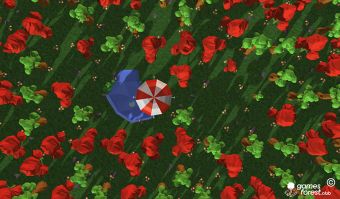
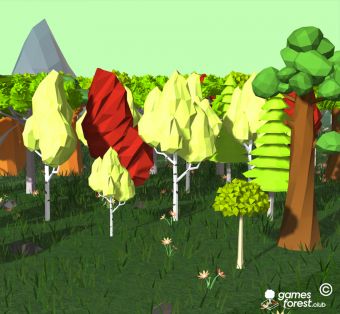
It is known that game mechanics—the elements that produce the gaming experience—can change behaviour. What if this potential were leveraged to support citizens in choosing carbon-neutral or -free products? What if this, in turn, motivated industries to follow new customer behaviour? And what if gamers themselves opted to invest attention, time and purchasing power—a market valued at $175.8bn2 in 2021—in forestation?!
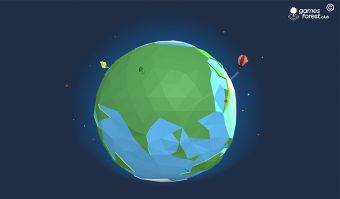
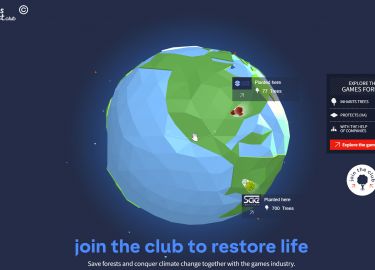
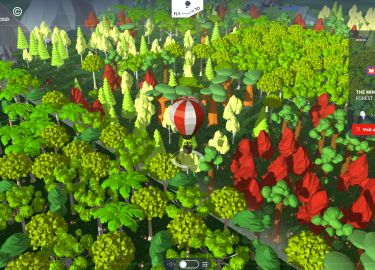
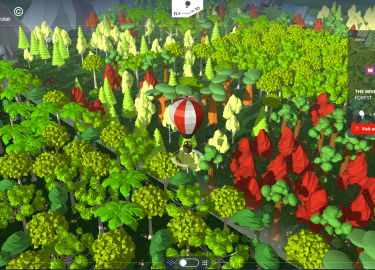
Specifically, we propose to measure and manage carbon footprint and show it in a playful way so as to make the challenge of climate change fun. That’s why we created the gamesforest as a digital twin to our analogue world.
Climate change is, of course, by far the biggest challenge Humankind has ever faced. By the same token, however, with the stakes no less than the survival of Humankind, the journey ahead of us promises to be heroic and full of potential. Luckily, gaming companies know best how to design massive challenges in a way that encourages players to rise to those challenges and to have fun with them.
We’ve already seen huge interest and engagement with the climate change challenge in the games industry. With GamesForest.Club we want to extend that engagement. All restoration activities in real life will therefore be shown simultaneously in gamesforest so we can all keep track of the efforts that the games industry is making to avert catastrophic climate change.
Save the planet playfully!
While saving the planet in playful way might sound like a strange proposition, we must give it a chance. After all, Humanity’s non-playful approach to saving the planet in the last 50 years, say, has not worked out well. Saving the planet playfully is no less than a cultural revolution: a culture of joyful, voluntary choices of the masses joining the cultures of science and policy-making in the service of saving the planet. As Albert Einstein once said, “No problem can be solved from the same level of consciousness that created it.”
Sources
1 Stubley, Peter. 25 April,2005. ‘Enough rainforest to fill 30 football pitches destroyed every minute last year.’
The Independent [Online]. [Accessed 28 January 2022]. Available from https://www.independent.co.uk/climate- change/news/tropical-rainforest-lost-destroyed-football-pitches-every-minute-a8886911.html
2 ‘Global Video Games Market’.
Ukiepedia. [Online]. [Accessed 28 January 2022]. Available from: https://ukiepedia.ukie.org.uk/index.php/Global_Video_Games_Market
All pictures: Copyright by GamesForestClub
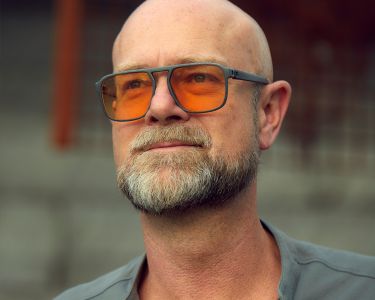
Georg Broxtermann
Initiator of the GamesForest.Club, Founder and Chairman of GameInfluencer GmbH
Georg is an Entrepreneur and Business Angel based in Munich, Germany. He is the initiator of the GamesForest.Club, a non-profit company with the goal to protect nature with the power of gaming and together with the good hearts and minds of the games industry. Georg founded the Influencer Marketing and Talent Management Company GameInfluencer GmbH in 2016 and still acts as its chairman. Georg is an active Business Angel and Advisor in several Start-ups, among them Phoenix Games, ThankyouJane and others.
Picture: © Georg Broxtermann

Artists and Ateliers in times of Exponential Change
Épica Foundation La Fura dels Baus
Artists and Ateliers in times of Exponential Change – What a multidisciplinary concept of art production could contribute today to a fair digital society?
Our world has been undergoing a spectacular evolutionary change. From the moment science and technology were aligned, the appearance of new advances became exponential, and these have become the new evolutionary driver, giving rise to a new era full of possibilities, as remote as if we were talking to a contemporary of Leonardo Da Vinci about a mobile phone or a tunnel boring machine. This piece analyses how art can continue under these circumstances to be able to anticipate these advances to society.
The Arts in crisis
The exponential advance of science and technology in recent years has become the driver of most of the major economic, social and even geopolitical changes at a global level.
Changes so far-reaching that they are modifying, and will increasingly modify, pillars such as social relations and our privacy, the labour market and our children’s education, health and its ethical implications. Changes so overwhelming for society that, far from being understood and accepted, they are being imposed before we are aware of them.
Art, which has always been one of the main means of expression of human beings, through which they express their ideas and feelings and the way they relate to the world, is being relegated to exclusively aesthetic expressions in this complex and rapid context, obviating its necessary contribution to understanding and critical capacity in society.
Is a new space for co-creation possible?
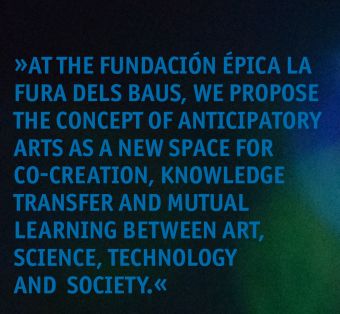
At the Fundación Épica la Fura dels Baus, we propose the concept of Anticipatory Arts as a new space for co-creation, knowledge transfer and mutual learning between art, science, technology and society.
A space of encounter and hybridisation where art becomes the driving force and catalyst of horizontal multidisciplinary processes. A space to create false but plausible realities, based on scientific-technological evidence, to be perceived as „real“ by society, and to be able to experience situations that may arrive in a nearer future than we imagine.
A space of real connection with society that allows, through knowledge, to maintain and amplify the critical thinking necessary for society to face the abrupt and accelerated changes that are about to come.
And at the same time, to help science and technology to anticipate the impact, the risks, but also the opportunities, that these advances will have in this new renaissance, where present and future are ever closer, and which will alter human relations in the next 500 years.
Picture Header: Copyright by By Fundación Épica La Fura dels Baus
Anticipatory Arts by Fundación Épica la Fura dels Baus
A selection of video documentations of a new concept of the arts in exponentially changing worlds:
European Performing Science Night 2021 (GA 101036143) – Performance: https://youtu.be/AMGq9Zg_S9U
Complex Systems 2019: https://youtube.com/playlist?list=PLQQ04W3CTIRYHr-R6f7NpuZ2av8ry91zB
About the institiution – the concept of an artist atelier as a Renaissance Laboratory:
Teaser Epica 2021: https://youtu.be/–0t8Stnhyw
More info at: https://lafura.com/en/
Pep Gatell
Artistic Director of La Fura dels Baus since 1980 and President of the Épica Foundation La Fura dels Baus
Pep Gatell (Barcelona, 1958) created over 250 different staging, integrating all kinds of technology such as synthesisers, CD-rom, web pages, dynamics between user-show 3D stereoscopic images, mobile phones App, etc., in the company’s shows. Always seeking to integrate new experiences for spectators, Gatell has had contacts with different multidisciplinary entities and research centers. Since 2012 he collaborates with the R&D team at Mugaritz, the third best restaurant in the world, with which he has directed the documentary Campo a través (Berlinale, 2016). Among his most recent and well-known works, in 2014, he premiered M.U.R.S., developing a new mobile platform for interaction with the audience, he co-directed the opening ceremony of the Olympic Games for Young People in the city of Nanjin and was responsible for the artistic direction of the opening of La Valetta, European cultural city of 2018. Since 2017, Gatell has focused its efforts on the Epica Foundation aiming to position the CCIs as relevant agents in the R+D+i processes necessary to face the global challenges of the 21st century.
Picture: © Fundación Epica La Fura dels Baus La Fura dels Baus
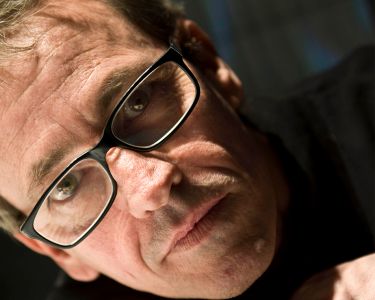
Fco. Javier Iglesias Gracia
General Manager of the Épica Foundation La Fura dels Baus & CEO, CFO, and co-founder of IGLOR Soluciones Audiovisuales Avanzadas S.L
Fco. Javier Iglesias Gracia’s (Barcelona, 1982) expertise as telecommunication engineering researcher began in 2004 with his staging in the IIS group of the Fraunhofer Institute. Iglesias has worked in recognized institutions as i2CAT Foundation or ESADE Business School where he even reached the Spanish secretariat of the ISO Sub-Group JTC1 SC6 dedicated to Future Networks. Iglesias has also dedicated half of his career to foster innovation ecosystems, especially those dedicated to merge science and technology with CCIs. He has been engaged in several national and international projects merging tech and art as, among others, Catalan „Anella Cultural“, the European “Creative Ring”, the „Anillo Latino Americano“, „GREC Innovación“ or „M.U.R.S.” by La Fura del Baus, led the city level innovation ecosystem in Barcelona through the Barcelona Lab project (2011-2015) on behalf of the Direction of Creativity and Innovation of the Institute of Culture, and the business mentoring and support for the Catalan Hub of the CREATIFI European Funded project, for boosting CCI with new technologies.
Picture: © Fundación Epica La Fura dels Baus La Fura dels Baus

It’s not about saving the world!
Cultural Manager, Creative Industries Expert and Design Aficionado
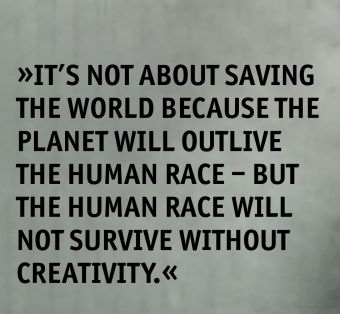
IT'S NOT ABOUT SAVING THE WORLD!
Renaissance is a word that you could associate with many things, on different levels and in various disciplines. If the concept of a “New European Renaissance in the Making” is to be discussed comprehensively at this point, then we should nevertheless keep in mind relevant historical landmarks and, to an even greater extent, the humanistic and social impact of the Renaissance, simply because we should be aware of the consequences. Accordingly, what could be subsumed under that term—despite all of its varied manifestations as Renaissance, Humanism or Reformation—is the concept of radical change, of a paradigm shift. We shall talk about that below when Creative Industries shift into the focus.
In recent decades, the need for change—you could also call it a restart or a reset—has become increasingly virulent and perceptible, especially in the creative sector and, above all, in the field of design. What had initially begun as a rather vague feeling of uneasiness is now becoming a visible constant in societal discourse. Behind it is the vast transformation of society and media which has caused radical change to our living and working environments. In order to present evidence for those transformations, you do not necessarily need to mention an epochal happening like a pandemic, although the pandemic has certainly sharpened our perspective on those upheavals. In that respect, then, there is no better time than now to address the “New European Renaissance in the Making”. And creativity will play a crucial role in it.
the human race will not survive without creativity
The idea is as simple as it is provocative: It’s not about saving the world because the planet will outlive the human race—but the human race will not survive without creativity. Now, at this point we could maintain that things have always been that way, and that is, of course, correct. There is, however, one fundamental difference: Today, in the 21st century, we are aware of the situation. It is no longer about mere inventions that could make something easier, faster or bigger, but rather about avoiding man’s extinction. That may sound somewhat pessimistic, but a glance at today’s state of the world (climate change, a migration crisis, and so on) seems to justify this dramatic momentum. In view of that, many people, above all younger people, are no longer prepared to uncritically perpetuate the quasi-natural mechanisms of life and work. Hence, the above-mentioned change can only happen through us and it will only succeed if we—which at first glance seems to be a paradox—do not put man, the individual person, at the centre of considerations.
To that end, we are in need of design, but the kind of design that can shoulder the current challenges. Over the past 150 years, design has taken on growing social responsibility as a key player in the developments of industrial society. If design had previously been perceived as a predominantly aesthetic and visual amenity serving the financial success and profit maximisation of big business, towards the end of the 20th century it started to become a tool for human needs that accounted for the capabilities and behaviour patterns of individual users. So-called user-centred design was suddenly in the limelight, triggering a process of unprecedented individualisation and commercialisation that completely disregarded the political and societal dimensions of design. However, that met with prompt criticism. As early as 1971, Victor Papanek in his book Design for the Real World criticised the trend towards producing “increasingly useless, potentially harmful, irresponsible and—from an ecological viewpoint—questionable items of mass consumption.” He spoke out against irresponsible design and developed a radio for the Third World based on an old tin can.
The answer to the question as to whether the time is ripe for revolution is, unequivocably, Yes
Fifty years on, Papanek’s approaches are meeting with increasing approval. Many designers are no longer prepared to pander to the demands of wealthy clients with aesthetically exalted tastes, but are instead beginning to question their role in the context of a widening schism between rich and poor and in the light of environmental problems. They participate in social movements, support grassroots initiatives and try to contribute to improving the world in a simple and quite unobtrusive way. This development marks a distinct turning point in the discourse on design, reflecting new standards that will determine how we shape our environment. A fundamentally different way of thinking is born: In place of nurturing individualism to the point of perversion, a genuine search has started for meaningful creative activities that focus on the bigger picture to deliver the best solution for man, society and nature. This approach to design will revolutionise future creativity and the future of creativity. It is about society-centred design that not only caters to users or to economic considerations, but above all to society and our environment.
The answer to the question as to whether the time is ripe for revolution is, unequivocably, Yes. It is high time and we can prove that by the fact that this attitude towards design has already arrived on the economic level. Businesses are experiencing a growing client demand for products and services that do not necessarily have to offer “more” (faster, further, bigger, more expensive), but should be fundamentally “different”. Those enterprises realise that they could have a competitive advantage if they pursue that strategy, which means that one of the toughest barriers for the widespread acceptance of society-centred design has been overcome.
Of course, that does not exempt us as representatives of Creative Industries—who often negotiate the topic on a highly theoretical level—from the responsibility of actively promoting this approach and introducing it with greater vehemence to enterprises. From the very start, we must rule out any suspicion that the matter could again end up in self-referencing ritualised academic discourse enriched with theoretical considerations on university level without, however, yielding any practical effects. The order of the day is, therefore, to act now and to implement the developed concepts at once. We know from experience that there is no lack of ideas, but rather a certain hesitance to implement them.
creativity as a maxim for future actions
Creativity and Creative Industries play a crucial part in that respect because they often allow unexpected solutions to unfold. Human creativity therefore makes the big difference, and again, it is not just about intelligence that could be made by a machine. There is no doubt that artificial intelligence will have an enormous impact on our future life. Creativity, however, is a profoundly human phenomenon that we should maintain at all costs. But precisely because is associated with a quantum of uncertainty, creativity—acting creatively—is rarely planable in a strict sense. We therefore have a dilemma. Creativity cannot be practiced to produce a solution, like an athlete training for a competition. For that reason, we are required not only to allow creativity to flourish on all levels, but also to actively promote it. Essentially, it is about augmenting the potential for creativity to a maximum and letting it permeate all areas right to the finest ramifications and niches of life. Maybe the solution for one of many challenges will originate from there. At the same time, it is a procedure of trial and error as well as creatio ex nihilo. The latter, i.e. creation out of nothing which is known from early Christian cosmogony, also found its way into modern physics: Stephen Hawking, too, argued that the Universe could have been created out of nothing—thus illustrating the principles of creative work. That would not only explain creativeness most aptly—it would also restore creativity to our lives as a maxim for future actions.
Eberhard Schrempf
Cultural Manager, Creative Industries Expert and Design Aficionado in Austria
Eberhard was vice-artistic director and managing director of the European Capital of Culture – GRAZ 2003 and is the director of the „Creative Industries Styria“ network since 2007. In this function, he developed the festival „Design Month Graz“ and was responsible for the successful application of the city of Graz to become a UNESCO City of Design, as well as developing many innovative projects and formats. Schrempf advises numerous companies and institutions in the areas of creativity, design and management. He is lecturing at the Institute for Design and Communication at the FH Joanneum, University for applied sciences, a lateral thinker and guest speaker at international conferences.
Picture: © Raneburger

Preparing Cities for the Future
What to learn from You Say Amsterdams‘ inclusive city strategy
Preparing Cities for the Future: What to learn from Amsterdams' inclusive city strategy?
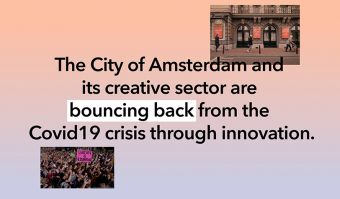
The City of Amsterdam and its creative sector are bouncing back from the Covid19 crisis through innovation. Maximizing resources already present, and strengthening the sector in years to come – aims cities in Europe share in the attempt to re-built better, especially if focusing carbon neutrality by 2050. In Europe around 80 cities are UNESCO Creative Cities focusing the cultural creative industries as driver for revitalizing the urban communities after the Covid-19 pandemic.
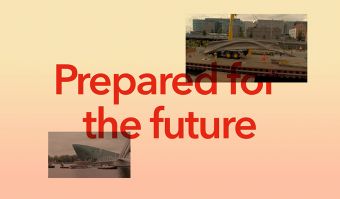
We, at the City of Amsterdam, want to prepare our city for the future by the focus on inclusive city strategies for a creative, diverse, fair and green community. But where do we start? And where do we want to go to concretely? In this piece we outline the major elements of our inclusive city strategy for the years to come and hope they are inspirational for all cities in finding their ways.
Where do we start?
When people think of Amsterdam, they often think of our rich cultural heritage and a thriving creative sector. From our museums to our cultural incubators, from festivals to the facades of centuries-old canal houses splashed with art projections. Arts and culture are present at every corner of this city. Even after sunset, in our lively club scene.
Home to some of the most forward thinking entrepreneurs and creatives, Amsterdam is a natural testbed for startups as well as a magnet to some of the world’s best-known creative brands. The region offers a strong support system and collaborative spirit that’s ideal for driving growth, while local connections between businesses, investors and universities are strengthened by its frequent community meet-ups.
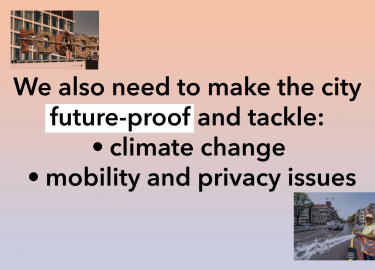
The pandemic has had an immense impact on the creative sector of Amsterdam. It underscored existing urban problems such as inequality of opportunity and in representation. To top these challenges, we need to make the city future-proof in times of climate change, while finding answers for urban mobility- and privacy issues.
Elements for the inclusive city strategy
Digitalization
Due to lockdowns, digitalization and innovation got a head start. Inspiring makers and cultural institutions to discover new uses of digitalization and online business models. We want to use this momentum to make our cultural sector more future proof. Attracting broader audiences and extending the reach of culture and the arts.
Inclusion and diversity
Amsterdam’s unique character and culture have been shaped by its diversity. Already before the pandemic, our city’s cultural and creative sector emphasized inclusion, diversity and participation. Working on solidarity, strengthening intercultural connections by making diversity and our collective cultural heritage more visible and accessible.
Sustainability
We’re making museums and theaters future-proof in times of energy crisis and climate change. It’s a must. Particularly for those institutions housed in historical buildings. In general we are dedicated to making our cultural heritage more sustainable. And we’re supporting the Amsterdam festival scene to turn circular. The Amsterdam fashion industry is also committed to sustainability and innovation.
Education
Our ecosystem for interdisciplinary and multidisciplinary arts education is an unique breeding ground for creative students and talent. By supporting cultural education in schools Amsterdam encourages access to arts and culture for all young children
Tackling urban challenges with creativity
We invited creative minds to come up with innovative solutions and design methods for our city’s social challenges. Artists and other creatives contribute by using their vast imagination and unorthodox approaches.
A livable and creative city for everyone
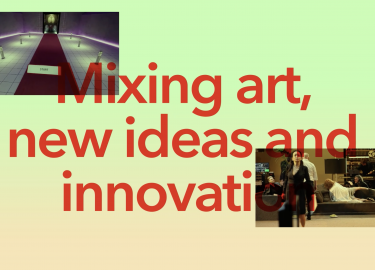
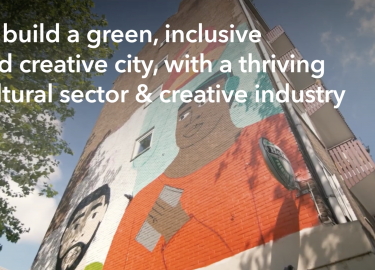
Together with citizens, visitors, education & knowledge institutes and businesses, we mix art, new ideas and innovation to a unique blend of new technology and creativity. Studying the impact of technology on our city and translating the latest developments into new policies and investments. Like a new 21th Renaissance. The 14th century Renaissance partially succeeded due to its embrace of the sciences and arts after recovering the plague. So in these equally unprecedented times, we might find insights to positively alter cities for generations to come. Together we strive for an open, green, creative and inclusive city. A livable city, for everyone.
Sources
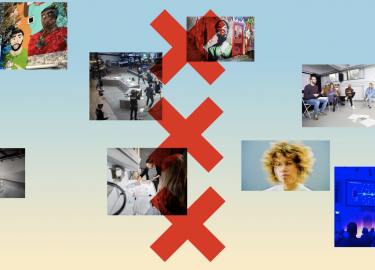
All pictures on this page are taken from the City of Amsterdam’s promotion video, which was especially prepared for the Next Renaissance Project. It can be downloaded below.
Copyright: City of Amsterdam
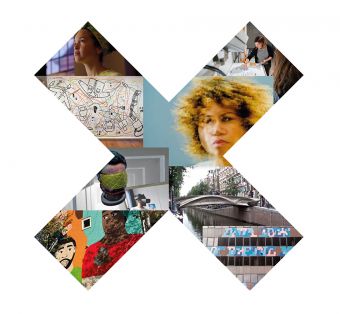
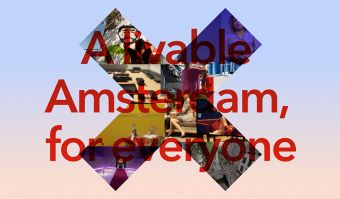
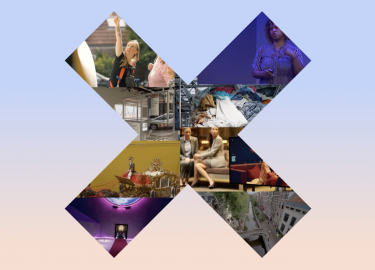
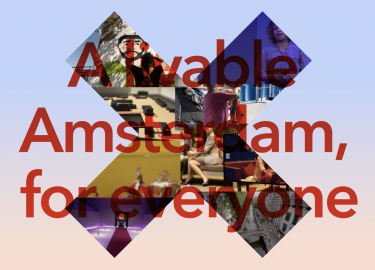
Captions & Sources of the pictures in the Cross Visual underneath the header above are as following:
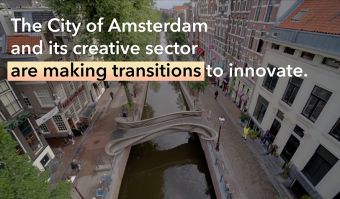
Expositions Gouden Koets & Refresh (artwork: Elisa van Joolen) at Amsterdam Museum; virtual reality artist Ali Eslami during ‘Digitale Daadkracht’; Privacy Project by Street Art Museum Amsterdam (SAMA) – artwork York One; Installation ‘Amsterdam Senses’ at NEMO’s studio developed by the Responsible Sensing Lab (credit DigiDaan); futurist Karen Palmer opening the festival ‘Me Myself & AI’ at cultural centre Felix Meritis; world-first 3D printed 12-meter long stainless steel pedestrian bridge crossing one of the Amsterdam’s canals designed by Joris Laarman and printed by MX3D; Privacy Project by Street Art Museum Amsterdam (SAMA) – artwork Oxenmystic.
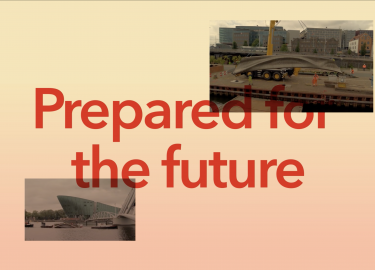
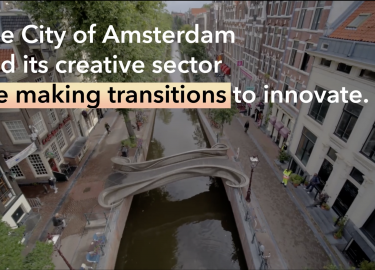
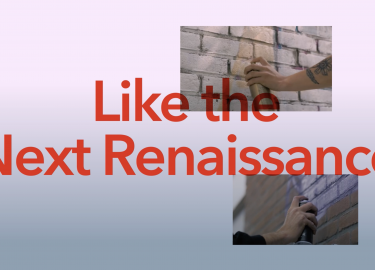
City of Amsterdam
You Say Amsterdam, we say creativity & innovation
When people think of Amsterdam, they often think of our rich cultural heritage and a thriving creative sector. From our museums to our cultural incubators, from festivals to the facades of centuries-old canal houses splashed with art projections. Arts and culture are present at every corner of this city. Even after sunset, in our lively club scene.
Home to some of the most forwardthinking entrepreneurs and creatives, Amsterdam is a natural testbed for startups as well as a magnet to some of the world’s best-known creative brands. The region offers a strong support system and collaborative spirit that’s ideal for driving growth, while local connections between businesses, investors and universities are strengthened by its frequent community meet-ups.

Transformation & European-African cooperation- A podcast
Game-thinking, Gamification and Digital Transformation experts
A podcast about Transformation & European-African cooperation
Bethlehem Anteneh and Christoph Deeg got to know each other during a workshop on the transformation of cities through game mechanics in Addis Ababa. This was the beginning of an intensive, international cooperation and a special mutual transformation process. In this podcast the two talk about their common path, their view of transformation and whether the European-African cooperation means special opportunities for transformation processes. It’s a podcast about transformation, gamification, cooperation, learning, failure and life.
Bethlehem Anteneh
Game-thinking expert and Founder of BlueLeaf and PlayLab
Bethlehem Anteneh is a game-thinking expert with an architectural design background who uses games as tools to design environments, frameworks and processes that elevate human perception, experience and problem-solving-instinct. In this field, she has worked by managing various projects, conducting workshops, speaking/talks, and designing platforms with partners, organizations and universities internationally in 25+ countries around Africa and Europe being invited in happenings such as Gamescom Congress, AmazeBerlin, DeutscheWelle, Electronic Arts, ZKM-Karlsruhe, etc. After being the Game-Thinking Lead in 15 African countries on the project ‚EnterAfrica-Gamify Your City Future!‘ with the Goethe-Institut, she’s currently consulting the GIZ on learning experience design (LX) and curating the first of its kind gaming convention in Addis Abeba with the Goethe-Institut amongst other major projects such as ‚LUtopia: Rethinking the City of Ludwigshafen‘. She had co-founded an international and national play-based networks and companies such as ‚Chewata-Awaqi‘ and recently founded BlueLeaf & PlayLab; an entity bringing together GAME-Thinking, ART-thinking, and FUTURES-Thinking.

Christoph Deeg
Consultant and Speaker for the topics of Digital Transformation, Gamification & playful participation
Christoph Deeg describes himself as a “designer of the digital-analog living space”. He is a consultant and speaker for the topics of digital transformation, gamification and playful participation. In this context, he advises and supports national and international companies and organizations in the development of comprehensive and sustainable overall digital-analog strategies. He also deals with the strategic use of gamification, for example in the context of digital transformation processes, urban development or the development of digital-analog cultural strategies. Another focus of his work is the development of participation processes using analog and digital games or game models. The basic idea behind his work is the idea that digitization is not essentially about technologies, but about people with their individual digital-analog realities.


Creating cities of greater resiliency
Group of Architects, Designers, Urbanists, Landscape Professionals, Interior & Product Designers, Researchers & Inventors
Creating cities of greater resilience: On the changes in architecture's paradigms for a Renaissance of life in cities for citizens
“Our cities and buildings are built on a paradigm of front of house and back of house. City infrastructure projects are utilitarian machines, isolated from the urban inhabitants they serve. You can find them on Google like cancerous tissue on a city map. The more specialized a utility becomes, the more reasons to separate it from the public to improve its efficiency and performance. We all know that a piece of infrastructure can have negative side effects, like the underside of an overpass, the shadow cast by a chimney, the noise of a highway, or the gaping wound of a parking lot. But we also know that once a piece of infrastructure shuts down, it can be reborn with positive programs. Trains become a park. A power plant becomes a museum. What if we could start by combining the utilitarian and the social? What if our urban infrastructures opened on day one with positive social and environmental side effects?
“Taking the profane and the elevated, we can create a city of higher complexity and greater resilience. If one use dissipates, the other consolidates. One is nocturnal, the other is diurnal. In fact, the more different two activities are, the more likely they are to produce the unprecedented. In architecture, as in love, opposites attract.” 1
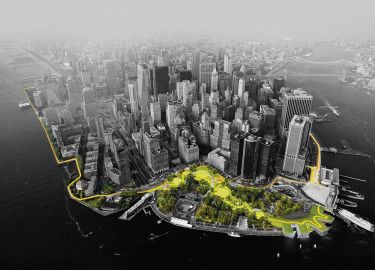
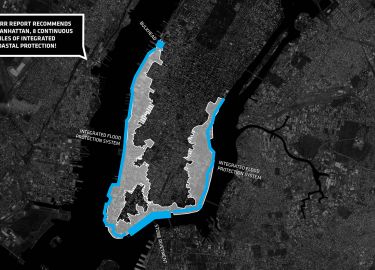
The BIG U: Marrying physical resilience with social resilience
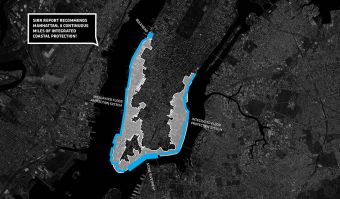
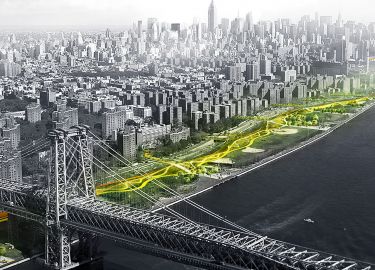
The 10 miles flood protection for Lower Manhattan stretches from West 57th street south to The Battery, and up to East 42nd street, and comprises low-lying geography with the incredibly dense and vibrant, yet vulnerable urban area. The BIG U rethinks infrastructure as a social amenity—what we call social infrastructure.
All pictures of BIG U: Copyright by Bjarke Ingels Group
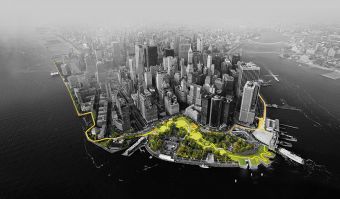
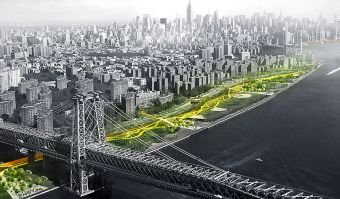
Infrastructure in the United States as it’s traditionally conceived has not been civic, accessible, or designed for interaction with the public in mind. Rather, it has been imposed upon our cities without engagement with community needs at a large scale, at times with terrible consequences for the urban experience. The BIG U combines the mandate to create large-scale protective infrastructure with a commitment to meaningful community engagement. The BIG U’s flood protection won’t look like a wall, and it won’t separate the community from the waterfront. Instead, the structures protecting us from the elements will become attractive recreational centres that enhance the city and lay a positive groundwork for its future public realm.
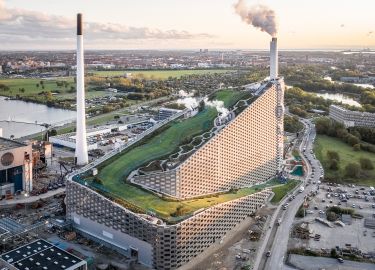
CopenHill – Amager Ressourcecenter (ARC): a destination economically, environmentally and socially profitable
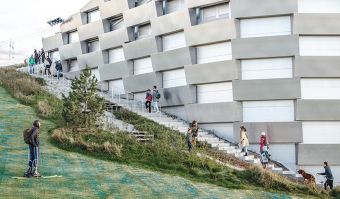
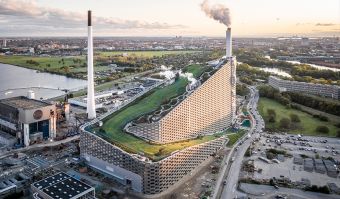
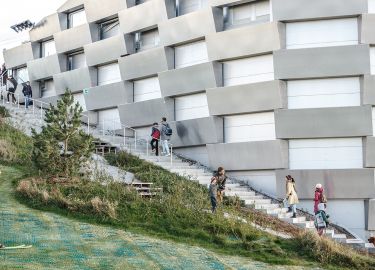
CopenHill, also known as Amager Bakke, opens as a new breed of waste-to-energy plant topped with a ski slope, hiking trail and climbing wall, while aligning with Copenhagen’s goal of becoming the world’s first carbon-neutral city by 2025..
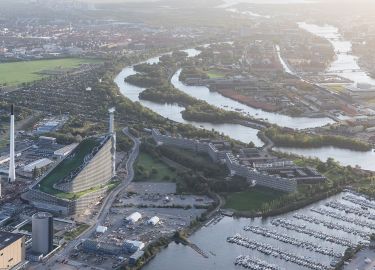
Replacing the adjacent 50-year-old waste-to-energy plant with Amager Ressourcecenter (ARC), CopenHill’s new waste incinerating facilities integrate the latest technologies in waste treatment and energy production. Due to its location on the industrial waterfront of Amager, where raw industrial facilities have become the site for extreme sports from wakeboarding to go-kart racing, the new power plant adds skiing, hiking and rock climbing to thrill-seekers’ wish lists. At its new top, experts can glide down the artificial ski slope or test the freestyle park while beginners and kids practice on the lower slopes. Recreation buffs and visitors reaching the summit of CopenHill feel the novelty of the highest viewing plateau in the city, enjoying its rooftop bar and the sensation of a mountain in an otherwise-flat country.
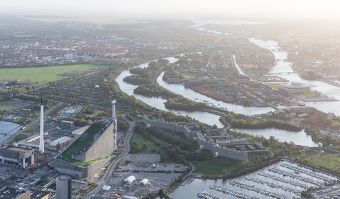
ARC is not an isolated architectural object but envelopes the local history and context while forming a destination. Formerly a piece of infrastructure in an industrial zone, CopenHill becomes the new destination for families, friends and celebration, one that is economically, environmentally and socially profitable.
ARC won World Building of the Year at the World Architecture Festival 2021.
Copyright Picture left: Laurian Ghinitoiuby & BIG – Bjarke Ingels Group
Copyright pictures below: Rasmus Hjortshoj & BIG – Bjarke Ingels Group
BIG – Bjarke Ingels Group
Copenhagen, New York, London, Barcelona and Shenzhen based group of architects, designers, urbanists, landscape professionals, interior and product designers, researchers and inventors
The BIG office is currently involved in a large number of projects throughout Europe, North America, Asia and the Middle East. BIG’s architecture emerges out of a careful analysis of how contemporary life constantly evolves and changes. Not least due to the influence from multicultural exchange, global economical flows and communication technologies, that all together require new ways of architectural and urban organization. We believe that in order to deal with today’s challenges, architecture can profitably move into a field that has been largely unexplored. A pragmatic utopian architecture that steers clear of the petrifying pragmatism of boring boxes and the naïve utopian ideas of digital formalism. Like a form of programmatic alchemy, we create architecture by mixing conventional ingredients such as living, leisure, working, parking and shopping. By hitting the fertile overlap between pragmatic and utopia, we architects once again find the freedom to change the surface of our planet, to better fit contemporary life forms.
Picture: © Rainer Tepper

New worlds emerge from old sounds
Artist, Music producer, Label owner and Co-Founder of Electronica & Techno label Kompakt, Cologne
New worlds emerge from old sounds: What we can learn from music about making new worlds when Man and Machine meet in new ways?
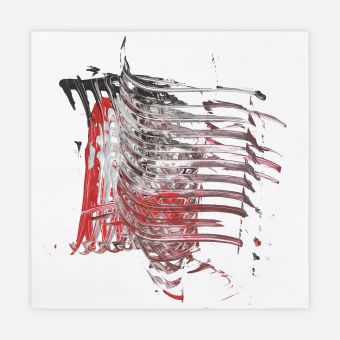
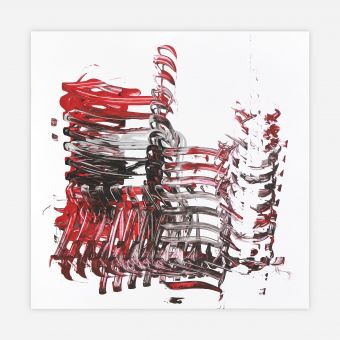
My work RÜCKVERZAUBERUNG 4 is an ambient trip of one hour through more than three centuries of musical history—and more. It resembles the Renaissance principle of constructing new worlds—in this case in music—with new scientific methods building on historical inspirations. Aligning Man and Machine in radically fresh, innovative ways is a method to create and make the new. My interpretation of this Renaissance method, applied in the 21st century, is “Looping”—in music and painting.
We hear the medieval sounds of lutes and flutes weaving into fragments of baroque falsetto singing, bells and bugles, creating abstract, amorphous sound constructs. Little spinet and harp loops gyrate intoxicatedly across beautifully feverish violin planes. Atonality and euphony flow into each other effortlessly and part again. New worlds emerge from old sounds.
In my musical and pictorial work I have mostly followed strictly conceptual principles, which I repeatedly refine and variegate. Besides a predominantly sample-based, sometimes abstract, sometimes gestural, sometimes figurative musical language, it is mainly the loop principle that has fascinated me all along. The static or varied replay of minimalistic, repetitive structures births certain patterns and shapes. This way of creating is influenced and structured by computer-based programs. And although, or maybe because of, the computer being my primary artistic medium in both disciplines—and I mainly considers myself a digital artist—I occasionally transpose my conceptual, mostly serial ideas to the „live“ instrument (Freiland Klaviermusik) and „real“ colour (machine painting).
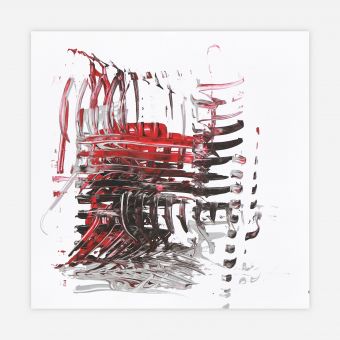
My work since 1990 can be understood in light of one of today’s most pressing questions: How are Man and Machine related? My work has been driven by the rapid development of Artificial Intelligence which is constantly changing our understanding of this relationship. The traditional balance of Man and Machine, of Artificial and Artistic Intelligence, formerly carved out in the Renaissance, is being changed in the 21st century by new emerging technologies. RÜCKVERZAUBERUNG 4 is an exploration of this change expressed in the musical and visual arts: The Loop as a Method.
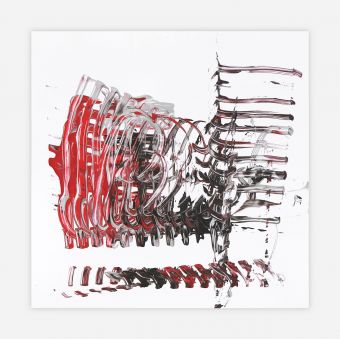
About the work of Wofgang Voigt:
The creative body of Wolfgang Voigt has always been characterised by complexity, boundlessness, unpredictability. The negation of the bounds of genre, style, and taste has been and still is today a crucial element of his body of work, just like the uptake, quotation and processing of external contents through universal sampling. Having been socialised in the pop culture of the 1970s and 80s, Voigt has since been creating his very own art-music cosmos influenced by glam rock and jazz, new wave and folk music, pop art, and digital expressionism. In the 1990s, Voigt, a founding member and influential part of the Cologne-based electronic label Kompakt, advanced in the wake of the globally booming techno movement, restlessly driven by his iconic straight bass drum, producing countless projects ranging from formally rigorous minimalism and expressive hardcore acid, to gabber and polka, to driving the conceptual techno made in Cologne (Sound of Cologne). His audiovisual project GAS, based on psychedelically-compressed classical sound sources in combination with ecstatically-focused forest photographs and films, has captured audiences far beyond electronic music and techno.
Listen to & Buy WOLFGANG VOIGT – RÜCKVERZAUBERUNG 4 10/2011 Profan CD11: https://kompakt.fm/releases/rueckverzauberung_4_digital_album
Wolfgang Voigt
Grown up and socialized in the pop sub-culture of the 1970s and 1980s, Voigt has developed his own art and sound that cross genres, mixing music styles such as glam rock, pop, jazz, classic, punk, and new wave, and art movements such as pop art and the Neue Wilde (the ‘New Wild Ones’). Inspired by the minimalist structures of this creative expressions, Voigt works around the most diverse facets of his own ideas of subversive concept art and music. Two fundamental approaches, through innumerable variations, characterize Voigt’s music and artwork. The first: the loop principle – the static or varying repetition of minimalist, repetitive structures which generate specific patterns. The structure of computer-based music production and associated software clearly and strongly influences this artistic concept, reflected in Voigt’s body of art and music. The second: the abstract deforming and condensing of external resources, i.e. the sampling of different sounds or images reduced to their original basic structure, their raw aesthetics, in a certain sense their (hypothetical) liberation, and transferred into a new context – a process that Voigt calls „Entdeutung“, i.e. de-signification.
Picture: © Unland